


The landscape of global medtech underwent a significant strategic shift when Massimiliano Colella, within days of being appointed Chief Executive Officer of CMR Surgical, made the high-stakes decision to halt the company’s imminent launch in the United States. This move, characterized by a refusal to settle for a "first-generation" entry, underscores the intensifying pressure on surgical robotics firms to deliver near-perfection in a market long dominated by a single incumbent. By choosing to wait for the more advanced Versius Plus platform, Colella signaled that the Cambridge-based firm is prioritizing long-term market stability and clinical excellence over immediate revenue gains. The decision delayed the company’s U.S. entry by approximately one year, but with recent Food and Drug Administration (FDA) clearances in hand, CMR Surgical is now positioned to challenge the status quo of the American surgical landscape.
A Calculated Delay in a High-Stakes Market
When Massimiliano Colella stepped into the leadership role at CMR Surgical—initially as interim CEO in late 2024 before a permanent appointment in January 2025—the company was on the precipice of its most significant milestone: entering the United States. The original Versius system had already secured an initial FDA de novo authorization for soft tissue surgery. However, Colella’s assessment of the competitive environment led to a radical change in course. He recognized that the U.S. healthcare system, while lucrative, is notoriously unforgiving toward new entrants that do not offer a clear leap in utility or efficiency.
The decision to bypass the first generation of Versius in favor of the "Plus" model was rooted in the philosophy that a "single mistake" could derail the brand’s reputation in the world’s largest medtech market. The Versius Plus system represents a refined iteration of the technology, incorporating feedback from over 40,000 procedures conducted internationally. Improvements include enhanced visualization capabilities, more sophisticated surgical instruments, and integrated data-tracking tools designed to optimize hospital workflows. While the original system was already a success in Europe and Asia, the "Plus" iteration is intended to meet the specific, high-intensity demands of U.S. surgical suites.
The Evolution of CMR Surgical: A Chronology of Growth
Founded in 2014 in Cambridge, England, CMR Surgical was born from the vision of creating a modular, portable robotic system that could mimic the dexterity of a human surgeon while fitting into existing operating rooms without massive infrastructure overhauls.
- 2014–2018: The company focused on research and development, securing early-stage funding to build a system that differed from the "mainframe" approach of existing robots.
- 2019: CMR Surgical achieved its first major regulatory milestone, receiving the CE Mark for the Versius system in Europe. This allowed the company to begin commercialization across the European Union and several other international markets.
- 2020–2023: The company underwent rapid global expansion, placing systems in more than 30 countries. During this period, Versius became the second most widely adopted soft-tissue surgical robot globally, trailing only the industry pioneer, Intuitive Surgical.
- Late 2024: Massimiliano Colella was appointed to lead the company through its next phase of maturity. During this time, the strategic decision was made to pivot the U.S. launch strategy toward the Versius Plus.
- December 2024: The FDA granted 510(k) clearance for the Versius Plus specifically for gallbladder removal (cholecystectomy), marking the official start of the company’s U.S. commercial journey.
- 2025 and Beyond: CMR is currently pursuing additional FDA clearances for gynecology, urology, and general surgery, with a "soft launch" strategy currently underway in select U.S. hospitals and ambulatory surgery centers (ASCs).
Technical Differentiation and the Modular Advantage
The core of CMR Surgical’s value proposition lies in the modularity of the Versius Plus system. Unlike traditional robotic platforms that often consist of a large, multi-armed unit that requires a dedicated operating room, Versius Plus utilizes independent modular arms. Each arm is mounted on its own portable base, allowing surgical teams to use only the number of arms required for a specific procedure.
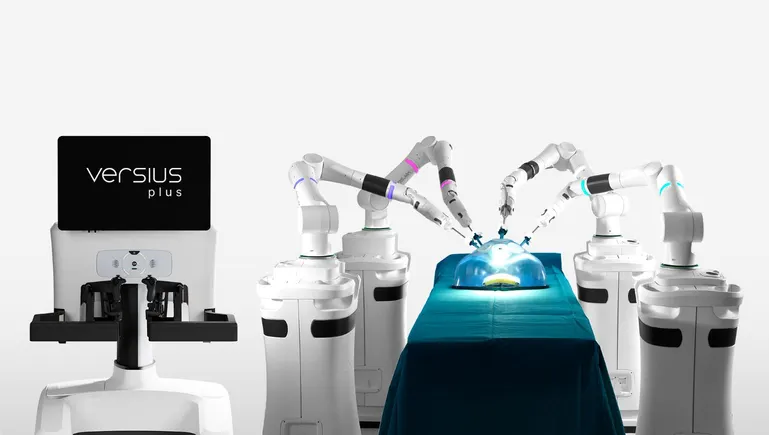
This portability is a critical factor in the company’s U.S. strategy. Many American hospitals are currently struggling with "robotic bottlenecks," where expensive, fixed robotic systems are monopolized by high-revenue specialties like urology or cardiothoracic surgery. This leaves general surgeons or gynecologists with limited access to robotic assistance. The Versius Plus can be moved between operating rooms, effectively allowing a hospital to "scale" its robotic program without the need for significant construction or the purchase of multiple fixed units.
Furthermore, the system is designed to replicate the workflow of traditional laparoscopic surgery. Surgeons operate from a console using a 3D HD display and "v-wrist" technology, which provides the instruments with seven degrees of freedom. This design intent is to shorten the learning curve for surgeons already proficient in manual laparoscopy, potentially accelerating the adoption rate within community hospitals and ASCs.
Financial Strength and Investor Confidence
The ambitious U.S. rollout is backed by a formidable "war chest." CMR Surgical has raised nearly $1.5 billion in venture capital and private equity funding, making it the highest-funded private surgical robotics company in history. Key investors include SoftBank Vision Fund 2, Tencent, and the Abu Dhabi Investment Authority.
In late 2024, the company secured an additional $200 million to specifically fund the U.S. commercialization and the continued development of the Versius Plus. This level of capitalization is essential for competing in a field where research and development costs are astronomical and the sales cycle for hospital capital equipment can span 12 to 24 months. Analysts note that this financial stability allows CMR to weather the initial costs of establishing a U.S. supply chain, training centers, and a specialized sales force.
The Competitive Landscape: Breaking the Monopoly
For over two decades, Intuitive Surgical’s da Vinci system has been synonymous with robotic surgery. However, the entry of CMR Surgical coincides with a broader "opening" of the U.S. market. Medtech giants Medtronic and Johnson & Johnson are also making significant strides with their respective platforms, the Hugo RAS and the Ottava system.
Colella has been clear that CMR’s goal is not necessarily to "topple" Intuitive Surgical but to expand the total addressable market. Industry data suggests that despite the ubiquity of robots in major academic centers, the majority of soft-tissue procedures globally are still performed via traditional open surgery or manual laparoscopy. By offering a more affordable, flexible, and portable alternative, CMR aims to capture the "middle market" of healthcare providers who find the current leading systems too cumbersome or expensive.

"We are coming because we know that this market is going to become so big around the world that we truly believe there is space for us," Colella noted. This sentiment is shared by many healthcare economists who believe that increased competition will drive down the cost of robotic procedures, eventually making them the standard of care for even routine surgeries.
Regulatory Outlook and Future Implications
The current FDA clearance for gallbladder removal is only the beginning of CMR’s regulatory roadmap. The company is actively submitting data for 510(k) clearances in gastrointestinal surgery, urology, and gynecology. These indications represent some of the highest-volume surgical procedures in the U.S., and securing them will be vital for the platform’s commercial viability.
The implications of CMR Surgical’s entry extend beyond just another product on the market. It represents a shift toward "democratized" robotics. If the Versius Plus succeeds in the U.S. ASC market, it could validate a new model of surgical delivery where advanced technology is not confined to elite institutions but is available in local outpatient clinics.
As the U.S. soft launch progresses throughout 2025, the medical community will be watching closely to see if the "Plus" generation lives up to Colella’s high expectations. By choosing to wait for a superior system, CMR Surgical has bet that in the high-stakes world of surgery, the winner is not always the first to arrive, but the one who arrives with the most reliable and adaptable solution. The coming years will determine if this strategic patience pays off in the form of market share and, more importantly, improved patient outcomes across the United States.
