

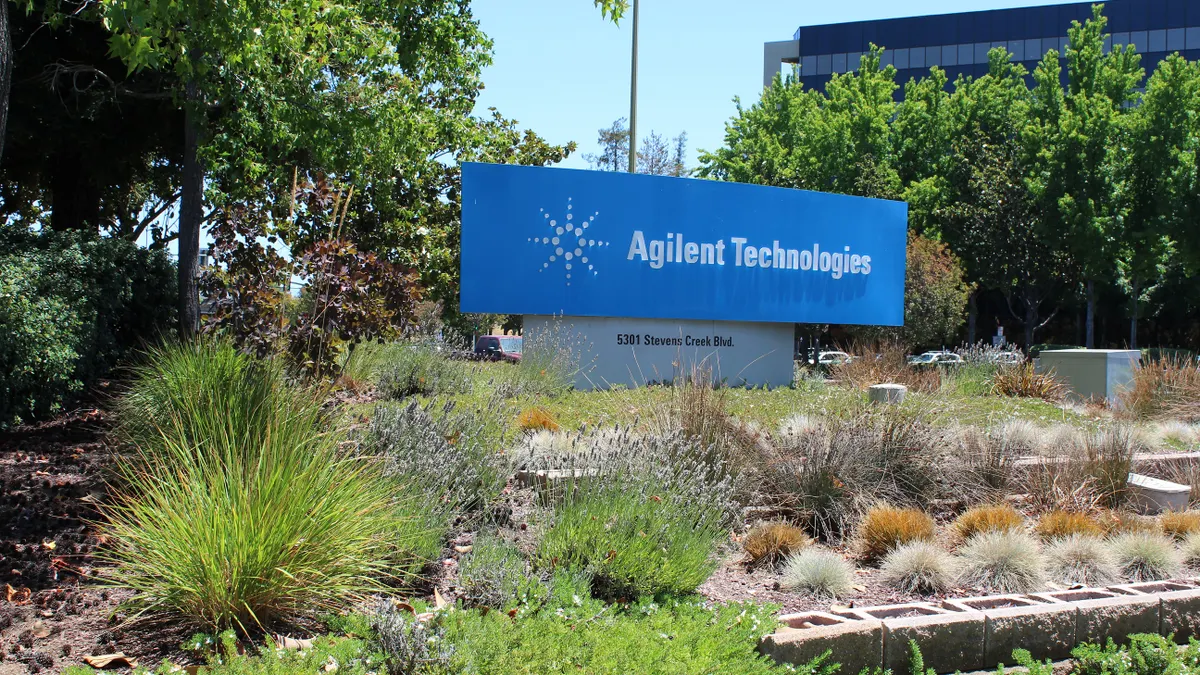
Agilent Technologies Inc. has officially announced a definitive agreement to acquire Biocare Medical, a leading developer of immunohistochemistry (IHC) instrumentation and reagents, in a transaction valued at $950 million. This strategic move is designed to significantly bolster Agilent’s presence in the rapidly evolving cancer diagnostics market, specifically enhancing its capabilities in tissue-based diagnostics and the development of next-generation in vitro diagnostic (IVD) antibodies. The acquisition represents one of Agilent’s most substantial investments in its pathology business since its landmark purchase of Dako in 2012, signaling a renewed commitment to the precision medicine and oncology sectors.
Based in Pacheco, California, Biocare Medical has established itself as a critical player in the pathology laboratory space, offering a comprehensive portfolio of more than 300 specialized antibodies and a robust pipeline of research and development projects. The company is recognized for its innovation in IHC and molecular pathology, providing tools that allow clinicians to identify specific biomarkers within tissue samples to guide treatment decisions. By integrating Biocare’s expansive library of antibodies and its technical expertise, Agilent aims to create a more comprehensive diagnostic workflow for pathology labs worldwide, ranging from initial sample preparation to final diagnostic interpretation.
Strategic Objectives and the Role of Immunohistochemistry
The primary driver behind this acquisition is the increasing clinical demand for sophisticated cancer diagnostics. Immunohistochemistry (IHC) has become the gold standard in pathology for identifying the origin and characteristics of tumors. The process involves using labeled antibodies to detect specific proteins (antigens) in a tissue section. When these antibodies bind to their targets, they produce a visual signal—often a color change—that pathologists can examine under a microscope. This information is vital for determining the type of cancer, its stage, and the likelihood that a patient will respond to specific targeted therapies.
While Agilent already maintains a strong position in the IHC market through its Dako brand, the addition of Biocare Medical provides immediate access to a broader range of specialized antibodies that are essential for diagnosing rare or complex cancers. Furthermore, Biocare’s expertise in "multiplex" IHC—a technique that allows for the detection of multiple biomarkers on a single tissue slide—is expected to be a major asset. Multiplexing is increasingly important in the era of immunotherapy, where understanding the complex interactions within the tumor microenvironment is key to predicting patient outcomes.
In addition to IHC, the acquisition touches upon the field of in situ hybridization (ISH). While IHC detects proteins, ISH is used to evaluate genetic abnormalities, such as gene amplifications or translocations, within the tissue. By combining Biocare’s antibody portfolio with Agilent’s existing ISH and digital pathology solutions, the company is positioning itself as an end-to-end provider for oncology departments that require high-throughput, accurate, and reproducible diagnostic results.
Financial Overview and Market Implications
The $950 million purchase price reflects Agilent’s confidence in the long-term growth potential of the pathology consumables market. According to financial disclosures from Agilent, the acquisition is structured to be immediately beneficial to the company’s financial profile. It is expected to be accretive to Agilent’s top-line growth rate and its margin profile within the first year of ownership. Furthermore, the deal is projected to become accretive to Agilent’s non-GAAP earnings per share (EPS) approximately 12 months after the transaction’s close.
One of the key financial motivations for the deal is the shift toward a "non-instrument" revenue mix. While diagnostic hardware, such as automated stainers, represents a significant capital investment for hospitals, the recurring revenue generated by the sale of antibodies, reagents, and consumables provides a more stable and high-margin income stream. Biocare Medical’s business model is heavily weighted toward these consumables, which aligns with Agilent’s broader corporate strategy of increasing its proportion of recurring revenue to mitigate the cyclical nature of capital equipment sales.
Industry analysts suggest that the global immunohistochemistry market is poised for steady growth, driven by the rising global incidence of cancer and the expansion of personalized medicine. Current estimates place the IHC market’s compound annual growth rate (CAGR) between 6% and 8% over the next decade. By absorbing a high-growth competitor like Biocare, Agilent not only eliminates a market rival but also secures a larger share of this expanding segment.
Chronology of the Acquisition and Integration Plan
The acquisition process is expected to follow a rigorous regulatory review period. Agilent has indicated that the transaction is likely to close no later than the company’s fourth fiscal quarter of 2026. Agilent’s fiscal year typically concludes in late October, suggesting a potential completion date in the autumn of 2026, though both parties are working toward an earlier resolution if regulatory approvals permit.
Once the deal is finalized, Biocare Medical will be integrated into Agilent’s Life Sciences and Diagnostics Markets Group (LDG). This group is responsible for providing laboratories with the tools and clinical workflows necessary to identify, quantify, and analyze physical and biological properties of substances and systems. The integration is expected to be seamless, as both companies share a customer base of clinical pathology labs, academic research institutions, and pharmaceutical companies involved in companion diagnostic development.
The timeline for integration will likely focus on three phases:

- Regulatory Clearance: Navigating antitrust reviews in the United States and other key international markets.
- Operational Alignment: Consolidating supply chains and manufacturing processes for antibody production to achieve economies of scale.
- Commercial Synergy: Training Agilent’s global sales force on the Biocare portfolio to expand the reach of Biocare’s specialized antibodies into international markets where Agilent already has a strong presence.
Executive Perspectives on the Partnership
Leadership from both organizations have expressed optimism regarding the merger. Padraig McDonnell, President and CEO of Agilent Technologies, emphasized the clinical impact of the deal, noting that the combination of the two companies will allow Agilent to better serve pathology customers across both clinical and research settings. McDonnell highlighted that the acquisition is a pivotal step in Agilent’s mission to accelerate innovation and support long-term value creation for shareholders through a more robust oncology offering.
Luis de Luzuriaga, CEO of Biocare Medical, echoed these sentiments, framing the acquisition as the logical next step for the company he has led through a period of significant growth. De Luzuriaga stated that joining Agilent would provide the operational scale necessary to accelerate the development of new diagnostic tools. He noted that the alignment between the two companies regarding product quality and clinical impact was a deciding factor in the transaction, ensuring that Biocare’s legacy of innovation would continue under Agilent’s stewardship.
Broader Impact on the Oncology Diagnostics Landscape
The acquisition of Biocare Medical by Agilent takes place against a backdrop of consolidation within the medical diagnostics industry. Large-scale laboratory equipment manufacturers are increasingly looking to acquire specialized reagent and antibody companies to provide more holistic solutions to their clients. Agilent’s move mirrors similar strategies employed by competitors such as Roche (Ventana Medical Systems), Danaher (Leica Biosystems), and Thermo Fisher Scientific.
For the broader medical community, this consolidation could lead to several significant outcomes:
- Standardization of Assays: As Agilent integrates Biocare’s antibodies into its automated platforms, there is a greater potential for the standardization of diagnostic assays. This can lead to more consistent results across different laboratories, reducing the risk of misdiagnosis.
- Acceleration of Companion Diagnostics (CDx): Pharmaceutical companies developing new cancer therapies require "companion diagnostics" to identify which patients are eligible for their drugs. The combined R&D power of Agilent and Biocare is likely to make them a more attractive partner for big pharma in the development of these essential tests.
- Innovation in Digital Pathology: While the deal focuses on antibodies and reagents, it also complements Agilent’s efforts in digital pathology. High-quality staining from Biocare’s antibodies is a prerequisite for accurate digital imaging and AI-driven image analysis, which are becoming increasingly prevalent in modern pathology.
Conclusion and Future Outlook
Agilent’s $950 million acquisition of Biocare Medical marks a significant milestone in the company’s evolution as a leader in life sciences and clinical diagnostics. By securing a vast library of specialized antibodies and a proven R&D engine, Agilent is not only expanding its current market share but also investing in the future of precision oncology.
As the healthcare industry continues its shift toward personalized treatment plans based on a patient’s specific genetic and protein profile, the tools provided by Agilent and Biocare will remain at the forefront of clinical decision-making. Investors and industry observers will be closely watching the integration process over the next two years, looking for signs that the projected financial synergies and innovation accelerations are being realized. For now, the deal stands as a clear indication that Agilent intends to remain a dominant force in the quest to provide more accurate, timely, and impactful cancer diagnostics on a global scale.
