


The Advanced Research Projects Agency for Health, a division of the Department of Health and Human Services tasked with driving high-stakes biomedical breakthroughs, has officially unveiled the Delphi program, a multi-year research initiative aimed at revolutionizing the capabilities of wearable medical technology. By focusing on the development of sophisticated biosensors capable of tracking multiple physiological signals simultaneously, the program seeks to transition healthcare from reactive, hospital-based interventions to proactive, continuous monitoring in the home environment. This announcement comes at a critical juncture for ARPA-H, as the agency navigates a period of significant internal restructuring, budget reallocations, and shifts in strategic priorities under current federal leadership.
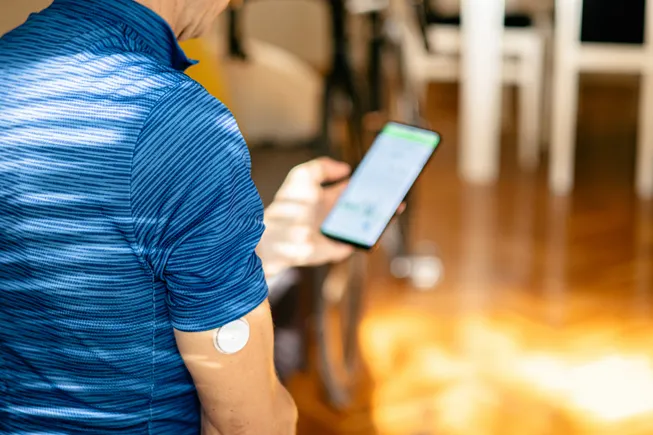
The Delphi program is designed to address a fundamental limitation in the current wearables market: the "single-signal" bottleneck. While consumer and medical-grade devices such as continuous glucose monitors (CGMs), smartwatches, and blood pressure cuffs have become ubiquitous, they generally provide a narrow window into a patient’s health. ARPA-H officials contend that for wearables to truly facilitate early hospital discharge and comprehensive chronic disease management, they must evolve into integrated platforms capable of sensing a diverse array of biomarkers—ranging from electrolytes and metabolites to complex hormonal shifts—within a single, non-invasive or minimally invasive form factor.
The Technological Vision: From Single Metrics to Modular "Chiplets"
At the heart of the Delphi initiative is a move toward modularity in sensor design. During a Monday press call, an ARPA-H official described the agency’s interest in "chiplet" technology, comparing the approach to Lego blocks. In traditional semiconductor and sensor manufacturing, components are often built as monolithic units, making it difficult and expensive to alter the device’s function once designed. The chiplet approach, however, allows developers to retain core components—such as power management, data transmission, and signal processing units—while swapping or adding specific sensing modules for different biomarkers.
This modular architecture is intended to drastically shorten the development cycle for new medical devices. If a developer creates a reliable platform for monitoring heart rate and oxygen saturation, the Delphi framework would theoretically allow them to integrate a new sensor for cortisol or lactate levels without redesigning the entire system from scratch. This flexibility is viewed as essential for addressing the "human factors" of medical technology; by consolidating multiple tests into one wearable, the agency hopes to reduce "device fatigue" among patients and increase long-term compliance with monitoring protocols.
The official noted that while the public is now accustomed to tracking basic metrics like temperature and heart rate, these data points often lack the clinical specificity required for complex medical decision-making. By expanding the library of detectable biomarkers, the Delphi program aims to provide physicians with a high-fidelity "digital twin" of a patient’s internal chemistry, updated in real-time.
A Three-Phase Roadmap for Clinical Integration
The Delphi program is structured as a four-and-a-half-year endeavor, divided into three distinct phases designed to move technology from the laboratory bench to the patient’s bedside. Each phase includes specific technical hurdles and "challenges" that require developers to prove the scalability and accuracy of their systems.
Phase 1, which is expected to span the first two years of the program, focuses on the creation of initial prototypes. During this stage, participants will be tasked with demonstrating the feasibility of their sensing technologies and the viability of the modular chiplet architecture. The emphasis will be on accuracy, power efficiency, and the ability to detect multiple signals without cross-interference—a common problem in multi-analyte sensing.
Phase 2 will shift the focus toward system integration and the regulatory pathway. Developers will work on refining their prototypes into "working systems" that can communicate securely with healthcare provider networks. This phase is critical for establishing the data standards and cybersecurity protocols necessary for medical-grade wearables. During this period, the agency expects participants to begin engaging with the Food and Drug Administration (FDA) to map out the requirements for de novo or 510(k) clearances.
Phase 3, the final stage of the program, will involve rigorous clinical trials and human factors testing. The goal is to validate the sensors in real-world environments, ensuring they remain accurate across diverse patient populations and activity levels. A unique aspect of the Delphi program is the requirement for iterative improvement; in each of the three phases, developers will be challenged to add new biomarkers to their existing prototypes, proving the "Lego-like" adaptability of their designs.
Funding and Contractual Structure
While ARPA-H has not disclosed the specific total budget for the Delphi program, the agency typically operates through milestone-based contracts rather than traditional grants. According to the press call transcript, past ARPA-H projects have received funding ranging from $30 million to as much as $150 million, depending on the complexity and potential impact of the research.
This milestone-based approach ensures that federal funds are tied to tangible technical achievements. If a research team fails to meet the specific "biomarker addition" or "accuracy" benchmarks set for Phase 1, their contract may not be renewed for Phase 2. This model, borrowed from the Defense Advanced Research Projects Agency (DARPA), is intended to minimize "sunk cost" risks while incentivizing rapid innovation. Solution summaries from interested parties are due by April 8, 2026, with full proposals expected to follow shortly thereafter.

Institutional Turbulence: ARPA-H in a Transition Period
The launch of the Delphi program occurs against a backdrop of significant organizational change at ARPA-H. The agency, which was initially championed as a centerpiece of the "Cancer Moonshot" and pandemic preparedness efforts, has recently undergone a period of contraction and redirection.
Reports from late 2025 and early 2026 indicate that the Trump administration has moved to significantly alter the agency’s mandate. According to Politico, research programs in areas such as cybersecurity for healthcare infrastructure, artificial intelligence in diagnostic imaging, and broad preventive care initiatives were shut down last summer. These cuts were part of a broader effort to streamline federal spending and pivot the agency away from software-centric solutions toward hardware and "hard science" breakthroughs.
Furthermore, internal leadership changes have sparked debate within the biomedical community. Last year, the agency’s data chief departed following disagreements over the cancellation of certain mRNA vaccine contracts. More recently, STAT reported that ARPA-H laid off a significant portion of its staff dedicated to "commercialization." These employees were responsible for helping academic researchers and small startups navigate the "valley of death"—the gap between laboratory discovery and commercial viability. The loss of this expertise has raised questions among industry analysts about how the breakthroughs generated by programs like Delphi will eventually reach the mass market.
Market Implications and the Shift to Decentralized Care
Despite the internal agency challenges, the Delphi program aligns with a broader macroeconomic shift in the healthcare sector. Hospitals across the United States are facing acute staffing shortages and rising operational costs, leading to a desperate need for technologies that allow for "hospital-at-home" models.
Current continuous glucose monitors, produced by companies like Dexcom and Abbott, have already demonstrated the value of this model by reducing emergency room visits for diabetic ketoacidosis. However, the medical community has long sought similar "always-on" monitoring for other conditions, such as congestive heart failure (monitoring electrolytes and fluid retention), chronic kidney disease (monitoring creatinine and urea), and post-operative recovery (monitoring for early signs of sepsis).
The Delphi program’s focus on multi-signal sensors could provide the technical foundation for these clinical applications. By providing a platform that can be customized for specific diseases, ARPA-H is betting that it can catalyze a new sub-industry of "bespoke wearables."

Industry experts suggest that if Delphi is successful, it could lower the barrier to entry for smaller medtech firms. Currently, developing a new biosensor from scratch requires tens of millions of dollars in R&D and years of engineering. If a standardized "chiplet" architecture emerges from the Delphi program, startups could focus on developing the specific sensing chemistry for a new biomarker while utilizing off-the-shelf components for the rest of the device.
Broader Impact and Future Outlook
The success of the Delphi program will likely be measured not just by the technical specs of the sensors produced, but by their ability to integrate into the existing healthcare workflow. One of the primary criticisms of the current "wearables revolution" is data overload; physicians often report being overwhelmed by the volume of raw data generated by patient devices, much of which lacks actionable clinical context.
To address this, the Delphi initiative will need to ensure that the "multi-signal" output of its sensors is paired with sophisticated data synthesis. While the agency has pulled back from some of its general AI programs, the Delphi official emphasized that the integration of components into "working systems" in Phase 2 will include the development of algorithms to interpret complex biomarker patterns.
As the April 8 deadline for solution summaries approaches, the medtech industry is watching closely to see which consortiums of universities and private firms will step forward. The program represents a high-stakes gamble that hardware modularity can solve the stagnation in wearable diagnostics. If successful, Delphi could mark the beginning of an era where a single patch on the arm provides a comprehensive, real-time window into human health, fulfilling the agency’s mission to drive "health version 2.0" despite the political and budgetary headwinds currently facing the organization.
