

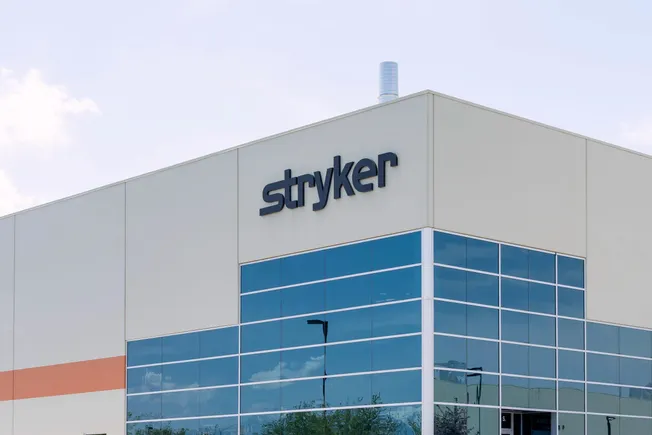
Stryker Corporation, a leading global medical technology firm, is currently navigating the aftermath of a sophisticated cyberattack that has triggered widespread disruption across its international network and Microsoft-based digital environment. The Portage, Michigan-based company, which plays a critical role in the global healthcare supply chain, confirmed the breach after identifying unauthorized activity within its systems on Wednesday. In a series of public disclosures, including a formal filing with the Securities and Exchange Commission (SEC) and statements via professional networking platforms, Stryker detailed its ongoing efforts to contain the incident and restore full functionality to its global operations. While the company maintains that the attack does not appear to involve traditional ransomware or common malware strains, the nature of the disruption—characterized by the remote wiping of company devices—points toward a more destructive intent often associated with state-linked threat actors.
Discovery and Immediate Containment Measures
The breach was first identified on Wednesday, prompting Stryker to immediately activate its comprehensive cybersecurity response plan. According to the company’s SEC filing, external advisors and high-level cybersecurity experts were brought in to lead a forensic investigation into the depth and origin of the intrusion. As an immediate precautionary measure to prevent the further spread of the attack, Stryker issued an internal directive to its 56,000-strong global workforce, instructing employees to disconnect from all corporate networks and refrain from powering on any company-issued devices, including laptops and mobile phones.
In a statement posted to LinkedIn, Stryker expressed a degree of cautious optimism regarding the containment of the event, suggesting that the initial breach had been cordoned off from further expansion. "Our teams are working rapidly to understand the impact of the attack," the company stated, emphasizing that business continuity measures have been enacted to minimize the ripple effects on healthcare providers and patients who rely on Stryker’s medical equipment. Despite these efforts, the company has admitted that a definitive timeline for the full restoration of its electronic systems remains elusive.
Technical Nature of the Attack and the "Handala" Connection
The technical specifics of the incident distinguish it from the profit-motivated ransomware attacks that have plagued the healthcare sector in recent years. Reports from industry analysts and The Wall Street Journal indicate that the hackers utilized a "wiper" tactic, remotely deleting data and operating systems from devices running Microsoft Windows. This method is designed to cause maximum operational paralysis rather than to encrypt data for a ransom payout.
Responsibility for the attack has been claimed by a threat group known as Handala. According to Check Point Research, Handala has historically presented itself as a pro-Iranian hacktivist collective, though cybersecurity intelligence suggests a much deeper affiliation. Analysts from Palo Alto Networks’ Unit 42 have previously linked Handala to the Iranian Ministry of Intelligence and Security (MOIS). The group has recently gained notoriety for targeting organizations in the Middle East, but the assault on Stryker marks a significant escalation in their operational scope, representing their first major strike against a primary U.S. commercial entity.
Sergey Shykevich, threat intelligence group manager at Check Point Research, noted the gravity of this shift. "The fact that they’ve set their sights on a major medical device company is particularly alarming," Shykevich said. He noted that while data loss is a standard concern in cyber warfare, the disruption of critical healthcare infrastructure introduces immediate risks to patient safety and the stability of medical services.
Operational Impact and Safety of Medical Devices
The most visible impact of the cyberattack has been the suspension of Stryker’s electronic ordering system. This disruption has forced the company to manually examine orders placed after the onset of the event. In a Thursday update on its official website, Stryker assured customers that it retains visibility into orders placed prior to the disruption and that these items would be shipped as soon as system communications are securely restored.
Crucially, Stryker has moved to reassure the medical community regarding the safety and functionality of its core clinical products. The company confirmed that its Mako surgical robots—widely used in orthopedic procedures for joint replacements—remain fully operational and safe for clinical use. Similarly, communication and monitoring tools such as Vocera and the LifePak35 monitor/defibrillator have been cleared of any compromise. Stryker also noted that it remains safe for healthcare partners to communicate with company representatives via phone and email, suggesting that certain communication channels remain outside the affected Microsoft environment or have been successfully isolated.
Geopolitical Context and the Rise of State-Linked Cyber Warfare
The attack on Stryker does not exist in a vacuum; it occurs against a backdrop of intensifying geopolitical friction. In early 2026, regional tensions involving the United States, Israel, and Iran escalated into direct conflict, leading to a surge in state-sponsored cyber activity. Security researchers have tracked several Iranian-linked actors, such as Seedworm (also known as MuddyWater), which have been actively targeting U.S. corporate networks to establish backdoors and facilitate long-term surveillance or disruptive strikes.
The targeting of a medical technology giant like Stryker reflects a broader trend where "soft targets" in the private sector are utilized as leverage in international disputes. By disrupting a company that operates in 61 countries and reported $25.1 billion in revenue in 2025, threat actors can project power far beyond the traditional battlefield. The medtech sector is particularly vulnerable because its products are deeply integrated into hospital workflows, meaning any disruption in the supply chain can lead to the postponement of essential surgeries and a decline in the quality of acute care.
Stryker’s Market Position and Financial Considerations
As one of the world’s leading medical technology companies, Stryker’s stability is a matter of significant concern for investors and the global healthcare market. Based in Portage, Michigan, the company has built a massive footprint in orthopedics, medical and surgical equipment, and neurotechnology. Its 2025 financial performance, characterized by record revenues, underscored its dominance in the manufacture of joint implants, surgical navigation software, and hospital infrastructure like specialized beds and emergency equipment.
In its SEC filing, Stryker stated that it has not yet determined whether the cyberattack will have a "material impact" on its financial condition or results of operations. Under recent SEC regulations, public companies are required to disclose significant cybersecurity incidents within four business days of determining their materiality. Stryker’s rapid filing suggests a commitment to transparency, but the full scope of the financial damage—including potential lost sales, the cost of forensic recovery, and possible legal liabilities—will likely not be known for several months.
Industry Reactions and Broader Implications for Cybersecurity
The broader medical technology industry is watching the Stryker situation closely, as it highlights the persistent vulnerabilities in the global "Internet of Medical Things" (IoMT). Microsoft, whose environment was the primary target of this disruption, has stated it is aware of the situation but has yet to provide a detailed technical commentary on how the environment was compromised or what specific vulnerabilities were exploited.
Cybersecurity experts argue that the Stryker incident should serve as a wake-up call for the healthcare sector. For years, the primary concern was the theft of Protected Health Information (PHI). However, the Handala attack demonstrates that the "availability" and "integrity" of systems are now equally at risk. If a nation-state actor can remotely wipe devices across a global network, the traditional perimeter-based defense models are clearly insufficient.
The incident also raises questions about the resilience of global supply chains. When a company responsible for a significant portion of the world’s orthopedic implants goes offline, the "just-in-time" delivery model of modern hospitals is put under extreme stress. Hospitals often do not keep large inventories of specialized implants, relying instead on rapid ordering and delivery from manufacturers like Stryker.
Conclusion and Future Outlook
As of the latest updates, Stryker continues to operate under its business continuity protocols. While the company has managed to maintain the safety of its active surgical and monitoring equipment, the restoration of its administrative and ordering infrastructure remains the primary challenge. The investigation into Handala’s methods continues, with federal authorities and international cybersecurity agencies likely involved behind the scenes to trace the origin of the wiper commands.
For Stryker, the coming weeks will be a test of its digital resilience and its ability to maintain customer trust in an era of persistent cyber threats. For the global medtech industry, the event is a stark reminder that in the modern landscape, the frontline of international conflict is often found within the servers and networks of the world’s most essential corporations. The company has pledged to keep stakeholders informed as the investigation yields more definitive answers regarding the breach’s long-term impact.
