








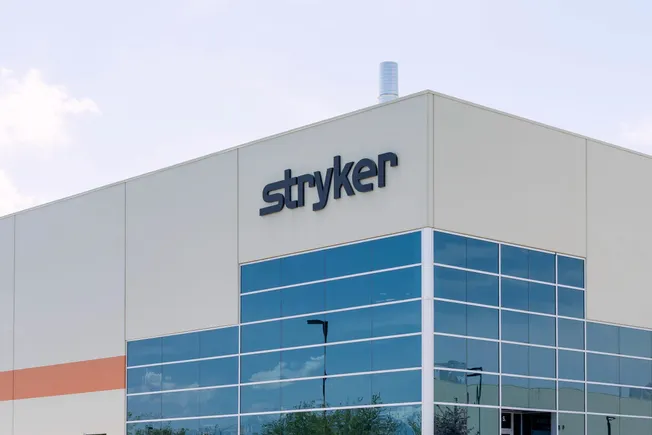
Stryker, a global leader in medical technology, confirmed this week that a sophisticated cyberattack has significantly impacted its internal systems, leading to widespread disruptions in manufacturing, order processing, and shipping operations. The Portage, Michigan-based company, which plays a critical role in the global healthcare supply chain through the production of surgical equipment, orthopedic implants, and robotic-assisted surgery systems, disclosed the incident through a series of regulatory filings and public statements. While the company maintains that the attack has been contained and that patient-related services remain operational, the breach highlights the growing vulnerability of critical medical infrastructure to state-linked cyber threats.
The disruption began on Wednesday when Stryker’s security teams identified unauthorized activity within its global network environment. According to a statement released by the company on Thursday night, the incident was localized to its internal Microsoft environment. In response, Stryker activated its cybersecurity incident response plan, which involved taking certain systems offline to prevent further spread and launching an investigation alongside third-party cybersecurity experts and federal law enforcement agencies. Despite these efforts, the temporary suspension of key digital tools has created a bottleneck in the company’s ability to fulfill orders and move products through its global distribution network.
Chronology of the Incident and Immediate Response
The timeline of the breach reveals a rapid escalation of defensive measures by Stryker’s leadership. On Wednesday, the company first detected the anomaly and filed an initial report with the Securities and Exchange Commission (SEC). At that stage, the full scope of the disruption was unknown, and the company could not provide a definitive timeline for the restoration of its systems. By Thursday, Chief Information Security Officer Dave Nathans provided a detailed update to key customers and members of the cybersecurity community, clarifying that the attack appeared to be a targeted effort rather than a broad, opportunistic malware infection.

By Thursday evening, CEO Kevin Lobo issued a message to employees via LinkedIn, stating that the attack had been "fully contained" and that the organization had transitioned into the restoration phase. Lobo emphasized that the company’s primary objective was to ensure that healthcare providers could continue to deliver patient care without interruption. This sentiment was echoed in a subsequent SEC filing, where Stryker noted that it does not believe its connected medical products—such as its Mako robotic arms or smart hospital beds—were compromised, nor have patient-facing services been directly hindered.
Despite the optimistic tone regarding containment, the operational fallout remains significant. Stryker operates in over 60 countries and employs approximately 56,000 people. The disruption of its manufacturing and shipping pipelines has the potential to cause "spotty disruptions" in hospital supply chains, particularly for elective orthopedic procedures that rely on just-in-time delivery of implants and specialized surgical instruments.
Technical Analysis of the Attack Vector
Cybersecurity researchers have identified the attack as a "wiper" event rather than a traditional ransomware incident. While ransomware typically involves encrypting data and demanding a payment for the decryption key, a wiper attack is designed to delete or destroy data, rendering systems inoperable. According to reports from Check Point Research and Halcyon, the attack was claimed by a group known as Handala, an Iran-linked threat actor.
Technical analysis suggests that the attackers exploited Microsoft Intune, a cloud-based endpoint management solution used by large enterprises to manage mobile devices and workstations. By gaining access to the Intune environment, the threat actors were reportedly able to push a Base64-encoded payload to thousands of company devices. This payload contained remote wipe commands, which effectively "factory reset" or erased the operating systems and data on affected phones and workstations.
"Intune is a device management component used to push software or manage devices," explained Johnny Collins, director of intelligence operations at Halcyon. "In this case, the encoded payload contained remote wipe commands, effectively wiping the affected devices." This method allowed the attackers to bypass traditional endpoint security protections, as the commands appeared to come from a trusted administrative source within the company’s own infrastructure.
Profile of the Threat Actor: Handala
The group claiming responsibility, Handala, has characterized itself as a pro-Iranian hacktivist organization. However, researchers at Palo Alto Networks’ Unit 42 have linked the group’s activities to the Iranian Ministry of Intelligence and Security (MOIS). Handala has been increasingly active in 2024 and 2025, targeting organizations in Israel, the United States, and the Persian Gulf.
In a statement posted to their dark web leak site, Handala claimed to have wiped thousands of Stryker’s servers and mobile devices. More alarmingly, the group alleged that they exfiltrated 50 terabytes of critical data before initiating the wipe commands. While Stryker has not confirmed the theft of data, the group’s claims have raised concerns regarding the potential exposure of proprietary intellectual property or sensitive corporate information.
Handala’s tactics represent a shift in state-sponsored cyber activity, where the goal is often more focused on geopolitical signaling and economic disruption than on direct financial gain. By targeting a major American medtech firm, the group has demonstrated its ability to impact critical infrastructure sectors that are vital to public health.
Financial and Market Implications
The financial community has been closely monitoring Stryker’s disclosures to determine the "materiality" of the event—a legal standard under SEC rules that requires companies to report incidents that could significantly impact their financial health or stock price. In a note to investors on Thursday, analysts at J.P. Morgan expressed a cautiously optimistic view, suggesting that the long-term impact on Stryker’s bottom line would likely be minor.
"Procedures around the world still took place yesterday, and while management isn’t yet ready to comment on whether or not there will be an impact, our impression is that it will ultimately be minor," the J.P. Morgan analysts wrote. They noted that while spotty disruptions might occur during the restoration phase, the company’s obligation to disclose a material impact would only trigger once the full financial damage was "estimable and known."
Stryker’s stock performance has remained relatively stable following the news, reflecting investor confidence in the company’s ability to recover. However, the cost of remediating a 50-terabyte data breach and restoring thousands of wiped devices is expected to be substantial. These costs typically include forensic investigations, legal fees, increased insurance premiums, and potential regulatory fines if it is discovered that personal data was inadequately protected.
The Broader Context of MedTech Vulnerabilities
The attack on Stryker is part of a broader trend of escalating cyber threats against the healthcare and medical technology sectors. In recent years, the industry has seen high-profile attacks on companies like Change Healthcare and various hospital networks, which have caused massive disruptions to patient billing and care delivery.
Medical technology companies are particularly attractive targets for state-sponsored actors for several reasons:
- Critical Infrastructure: Disrupting the supply of surgical tools and implants can cause immediate logistical crises for hospitals, making it a potent tool for geopolitical leverage.
- Intellectual Property: Medtech firms hold valuable patents and research data that are prime targets for industrial espionage.
- Legacy Systems: While Stryker’s attack targeted modern cloud environments like Microsoft Intune, many parts of the healthcare ecosystem rely on legacy software that is difficult to patch and secure.
The Cybersecurity and Infrastructure Security Agency (CISA) confirmed on Thursday that it is investigating the Stryker incident. CISA has recently issued several warnings regarding the vulnerability of cyber-physical systems and the increased activity of state-backed actors from Iran and China targeting U.S. critical sectors.
Restoration and Future Outlook
As of Friday, Stryker continues its "restoration phase," a process that involves meticulously scrubbing and re-imaging thousands of devices to ensure they are free of residual threats before bringing them back online. The company has not provided a definitive date for when manufacturing and shipping will return to 100% capacity.
The incident serves as a stark reminder of the complexities involved in modern supply chain security. Even when a company’s primary products—the physical hardware used in surgeries—remain safe, the digital "connective tissue" that manages orders, logistics, and employee communication remains a high-value target.
Stryker’s commitment to "ensuring our customers can continue to deliver seamless patient care" will be tested in the coming weeks as hospital procurement departments navigate the backlog created by the outage. For the broader industry, the Stryker breach is likely to prompt a re-evaluation of how administrative tools like Microsoft Intune are secured, specifically regarding the prevention of "authorized" wipe commands from being used as a weapon of mass disruption.
The collaboration between Stryker, law enforcement, and federal agencies like CISA remains ongoing. As the investigation continues, the healthcare industry will be looking for more granular details on how to defend against similar wiper attacks that leverage legitimate system management tools to bypass traditional defenses. For now, the focus remains on stabilization and the gradual return to normal operations for one of the world’s most vital medical suppliers.