








Vicarious Surgical, a medical technology company once hailed as a primary contender to challenge the market dominance of Intuitive Surgical, has announced a sweeping series of strategic maneuvers designed to stabilize its financial position and preserve its long-term viability. Faced with mounting development costs, regulatory delays, and the threat of delisting from the Nasdaq Stock Market, the company is implementing a reverse stock split, aggressive cost-cutting measures, and a fundamental shift in its research and development strategy. These actions represent a critical juncture for the firm as it attempts to transition from an ambitious startup to a commercially viable entity in the increasingly crowded field of robotic-assisted surgery.
The company’s most recent financial guidance indicates that these restructuring efforts are already yielding significant projections for fiscal health. Vicarious Surgical has revised its full-year 2026 cash burn forecast downward to approximately $19 million, a substantial reduction from the $35 million previously estimated. Management asserts that these reductions have been achieved through operational efficiencies and the outsourcing of non-core design elements, without compromising the development momentum of its flagship robotic system.
The Evolution of Vicarious Surgical: From Breakthrough to Bottleneck
The trajectory of Vicarious Surgical began with significant industry fanfare. In 2019, the company emerged as a "darling" of the MedTech world when it secured a roster of high-profile investors, most notably Microsoft co-founder Bill Gates. The excitement was bolstered by the U.S. Food and Drug Administration (FDA) granting the company’s robotic platform a "breakthrough device" designation. This status is reserved for medical devices that provide for more effective treatment or diagnosis of life-threatening or irreversibly debilitating human disease or conditions, and it is intended to provide patients and healthcare providers with timely access to medical devices by expediting their development and review.

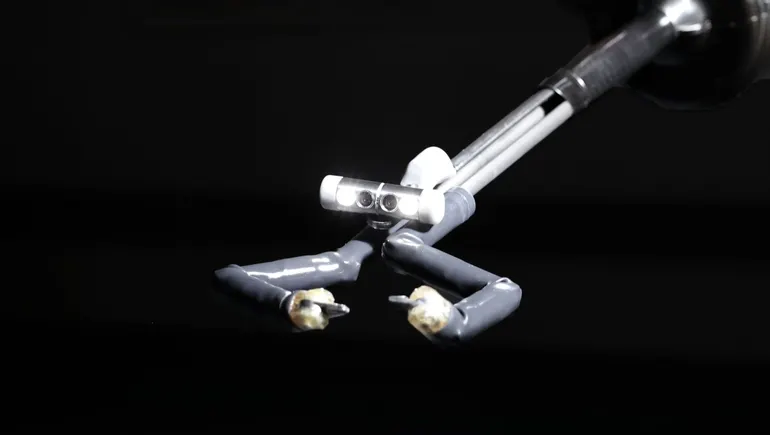
The Vicarious system was designed to address the limitations of existing robotic platforms. While the industry standard, the Da Vinci system by Intuitive Surgical, requires multiple incisions for various robotic arms, Vicarious proposed a miniaturized robotic system capable of entering the body through a single, small incision. The technology promised a high degree of maneuverability and an immersive visualization experience for surgeons, potentially reducing recovery times and improving surgical outcomes for complex abdominal procedures.
However, the transition from a conceptual breakthrough to a market-ready product has proven more difficult than anticipated. While competitors like Medtronic and Johnson & Johnson have made strides with their respective Hugo and Ottava systems, Vicarious has faced a series of technical integration challenges. These setbacks have resulted in multiple extensions of the company’s regulatory submission timeline, causing investor anxiety and putting pressure on the company’s valuation.
Strategic Pivot and the 2025 Management Shift
A significant turning point occurred in early 2025 following a leadership transition. Upon being named Chief Executive Officer, Randy Fromm initiated a rigorous audit of the company’s roadmap. Under this new leadership, Vicarious made the difficult decision to scrap its existing plans to commence clinical trials by the end of 2024. Instead, the company shifted its entire focus toward finalizing the design of the commercial version of the robot.
This pivot was driven by the realization that rushing into clinical trials with a prototype that did not fully mirror the intended commercial product could lead to further regulatory friction and increased costs in the long run. By prioritizing the commercial design, the company aims to ensure that the data gathered during upcoming trials is directly applicable to its final FDA submission.
To facilitate this focus while conserving capital, Vicarious has adopted a hybrid development model. The company has moved to outsource specific components of the robot’s hardware design to specialized third-party engineering firms. This move allows Vicarious to leverage external expertise and infrastructure, reducing the need for heavy internal overhead. Despite this outsourcing, the company maintains strict control over its core intellectual property. Critical components, such as the proprietary miniaturized robotic arms and the immersive 3D visualization technology—the features that distinguish the system from its competitors—remain developed and managed entirely in-house.
Financial Restructuring and Nasdaq Compliance
The financial pressures on Vicarious Surgical have been exacerbated by the broader economic environment, characterized by tighter capital markets for pre-revenue MedTech companies. To address these challenges, the company has filed a preliminary proxy statement with the Securities and Exchange Commission (SEC) seeking shareholder approval for a reverse stock split.
A reverse stock split is a corporate action in which a company reduces the total number of its outstanding shares by consolidating them into a smaller number of shares. For Vicarious, this move is primarily intended to increase the per-share trading price of its common stock. The company’s shares have recently traded below the $1.00 minimum bid price required for continued listing on the Nasdaq Global Market. A failure to regain compliance with this requirement would result in delisting, which typically reduces a stock’s liquidity and makes it more difficult for a company to raise capital.
In tandem with the reverse split proposal, Vicarious has applied to upgrade its quotation to the OTCQB Venture Market from the OTCID market. This move is intended to provide a transparent trading platform while the company works through the requirements to maintain its primary Nasdaq listing. Management has also indicated that it is actively exploring further capital-raising strategies, including potential equity offerings or strategic partnerships, to bolster its balance sheet as it nears the final stages of product development.
A Chronology of Key Events
The following timeline illustrates the path Vicarious Surgical has taken from its inception to its current restructuring phase:
- 2019: Vicarious Surgical receives FDA Breakthrough Device Designation for its robotic system. The company secures $10 million in funding led by Bill Gates’ Gates Frontier.
- 2021: The company goes public via a merger with a Special Purpose Acquisition Company (SPAC), D8 Holdings, in a deal valued at approximately $1.1 billion.
- 2022: Initial delays in the "Beta 2" version of the robot are reported. The company begins to face increased scrutiny over its timeline for a de novo regulatory submission.
- 2023: Vicarious implements its first major round of layoffs, cutting roughly 14% of its workforce to extend its cash runway.
- 2024: Further restructuring results in additional staff reductions and a decision to delay the integration of certain software features.
- 2025: Randy Fromm is appointed CEO. The company announces the cancellation of near-term clinical trials to focus on commercial design and signs a partnership with an external software development firm.
- Late 2025: The company forecasts a reduced cash burn for 2026 and initiates the process for a reverse stock split to maintain Nasdaq compliance.
Industry Implications and Competitive Analysis
The challenges faced by Vicarious Surgical are emblematic of the broader "Robotics 2.0" wave. For decades, Intuitive Surgical has enjoyed a near-monopoly in the soft-tissue robotic space. As patents have expired and technology has advanced, a new generation of companies has attempted to enter the fray with specialized, smaller, or more affordable systems.
However, the barrier to entry remains incredibly high. Surgical robotics requires the convergence of advanced mechanical engineering, low-latency software, high-definition imaging, and rigorous clinical validation. For a company like Vicarious, which is attempting to miniaturize the entire robotic apparatus to fit through a single port, the physics of "force feedback" and "instrument triangulation" become significantly more complex.
Industry analysts suggest that Vicarious’ decision to outsource non-core components is a pragmatic response to these complexities. By functioning more like a systems integrator for certain parts of the machine, the company can focus its limited resources on the "brain" and "hands" of the robot. If successful, this could provide a blueprint for other MedTech startups struggling with the high costs of vertical integration.
Future Outlook: The Path to Regulatory Approval
The road ahead for Vicarious Surgical remains narrow but defined. The company’s primary objective for the next 18 to 24 months will be the completion of its commercial-grade system and the subsequent commencement of the clinical trials it recently postponed. These trials will be essential for generating the safety and efficacy data required by the FDA.
The reduction in projected cash burn to $19 million provides the company with a much-needed buffer, but it also leaves little room for further technical errors. Shareholders will be watching closely to see if the reverse stock split succeeds in stabilizing the stock price and if the company can secure the additional capital necessary to fund its final push toward commercialization.
While the "breakthrough" excitement of 2019 has been tempered by the realities of medical device development, Vicarious Surgical remains a significant player to watch. Its success or failure will likely serve as a bellwether for the future of specialized, single-port robotic surgery and the ability of venture-backed startups to compete with established healthcare giants. In the high-stakes world of medical technology, Vicarious is betting that a leaner, more focused approach will finally allow its miniaturized vision to reach the operating room.