








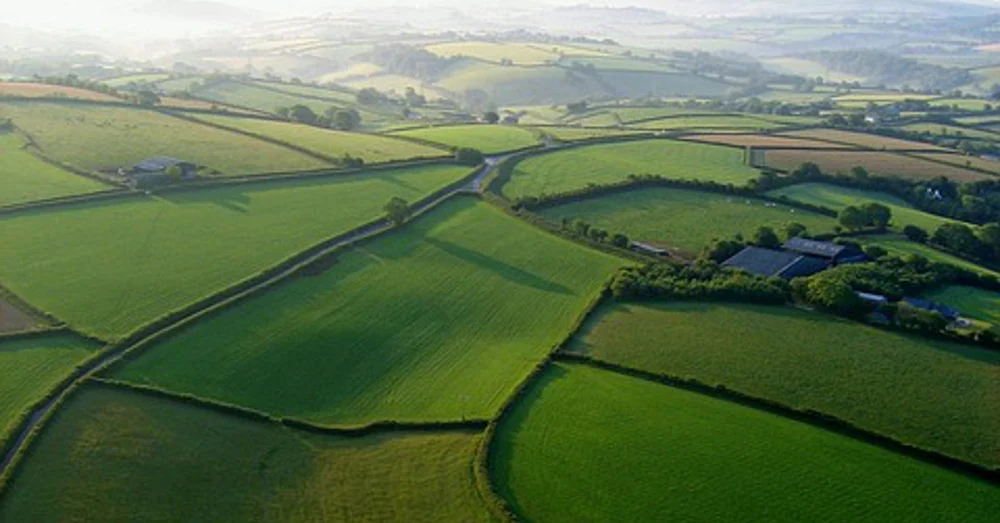
Recent aerial surveillance of the Holnicote Estate in Somerset has provided a stark visual manifestation of the efficacy of nature-based solutions in mitigating the impacts of the escalating climate crisis. As the United Kingdom navigated a series of five intense heatwaves throughout the summer season, large swaths of the British countryside succumbed to record-breaking temperatures, leaving the landscape parched, brittle, and brown. However, within the boundaries of the National Trust-managed Holnicote Estate, specifically in areas where rewilding initiatives have been implemented, the terrain remained remarkably lush, green, and resilient. This contrast has sparked renewed debate among environmental scientists, policymakers, and land managers regarding the role of hydrological restoration in national climate adaptation strategies.
The footage captures a landscape divided by management philosophy. On one side, traditionally managed agricultural and drainage-heavy lands appear dormant and dehydrated. On the other, the restored wetlands and "Stage 0" river systems of the Holnicote Estate flourish. These rewilded zones, where rivers have been liberated from artificial channels to find their own natural courses across the floodplain, have acted as massive environmental sponges. By retaining water within the landscape rather than shunting it toward the sea, these areas have maintained high water tables and soil moisture levels, even as ambient temperatures soared to unprecedented highs.
The Holnicote Project: A Paradigm Shift in Land Management
The Holnicote Estate, a 12,000-acre expanse on the edge of Exmoor, has become a flagship site for the National Trust’s broader strategy to restore natural processes to the British landscape. For decades, the prevailing logic of UK land management focused on efficiency, which often translated to the straightening of riverbanks and the extensive drainage of wetlands to facilitate agriculture and prevent localized pooling. While these methods were effective for mid-20th-century food production goals, they have left the landscape vulnerable to the "flashiness" of modern climate patterns: rapid flooding followed by prolonged droughts.
Ben Eardley, the project manager at the Holnicote Estate, noted that the success of the project stems from a fundamental reversal of historical practices. "Nature is providing solutions to some of the biggest challenges facing society today," Eardley stated during a review of the summer’s ecological data. "For generations as a nation, we’ve drained wetlands, straightened rivers, and moved water off the land as quickly as possible. Here, we’ve reversed that approach, and the results are remarkable."
The core of the Holnicote initiative is the "Stage 0" restoration of the River Aller. Unlike traditional restoration, which might simply add meanders to a single channel, Stage 0 aims to return the river to a complex, braided system of multiple channels, pools, and riffles spread across the entire valley floor. This allows water to slow down, spread out, and soak into the earth, replenishing groundwater reserves that provide a lifeline for vegetation during periods of low rainfall.
Chronology of the Holnicote Restoration
The transformation of the Holnicote Estate did not happen overnight. It is the result of a carefully phased multi-year strategy designed to test the limits of nature-based resilience.
- 2019: The Inception of the River Aller Project. The National Trust began the first phase of its ambitious plan to reconnect the River Aller with its floodplain. This involved removing old embankments and allowing the river to spill over into the surrounding fields during high-flow events.
- 2020: The Reintroduction of Ecosystem Engineers. In a landmark move, beavers were reintroduced to the estate for the first time in centuries. The enclosures allowed these natural engineers to build dams, further slowing water flow and creating diverse wetland habitats that support a vast array of biodiversity.
- 2021: Expansion of Stage 0 Techniques. Following the success of initial trials, the National Trust expanded the Stage 0 approach to larger sections of the valley. This period saw the deliberate "re-wetting" of approximately 15 hectares of land, creating a mosaic of habitats including wet woodland and fen.
- 2022-2023: Monitoring and Data Collection. Ecological surveys during these years began to show a significant increase in bird populations, insect biomass, and the return of rare flora. Hydrological sensors confirmed that the water table in restored areas was significantly higher than in adjacent drained fields.
- 2024-2025: Extreme Weather Testing. The estate faced its first major test during a series of volatile winter storms followed by a dry spring. The rewilded areas successfully mitigated downstream flooding by holding back millions of gallons of water.
- Summer 2026: The Heatwave Benchmark. The most recent data, highlighted by the aerial footage, comes from a summer defined by five distinct heatwaves. While the surrounding Somerset countryside registered record soil moisture deficits, the Holnicote wetlands remained vibrant, providing a thermal refuge for wildlife.
Supporting Data: The Hydrology of Resilience
The resilience observed at Holnicote is supported by a growing body of empirical data regarding the cooling effects of wetlands. According to hydrological studies, wet soil and dense vegetation can lower local ground temperatures by several degrees through the process of evapotranspiration. As plants release water vapor into the air, they consume heat energy, effectively acting as a natural air conditioning system for the surrounding environment.
Data collected from the Holnicote site during the peak of the August heatwaves showed that soil moisture levels in the restored "Stage 0" zones were up to 40% higher than in the adjacent traditionally managed pastures. Furthermore, the presence of standing water and saturated peat acted as a carbon sink, preventing the oxidation and release of carbon dioxide that often occurs when peatlands dry out.
The biodiversity benefits are equally quantifiable. The National Trust reported a 300% increase in sightings of certain wetland bird species within the rewilded zones compared to pre-restoration levels. The presence of permanent water sources also ensured the survival of aquatic invertebrates and amphibians that perished in other parts of the region where streams and ponds evaporated entirely.
Countering the Wildfire Narrative
The visual evidence from Somerset also serves as a potent rebuttal to recent political and media narratives regarding rewilding and wildfire risk. Some commentators have argued that rewilding—specifically the abandonment of traditional grazing and the accumulation of "scrub"—creates a "tinderbox" effect that increases the likelihood and intensity of wildfires.
However, the Holnicote model demonstrates that rewilding, when focused on hydrological restoration, achieves the exact opposite. By keeping the landscape hydrated, rewilding creates natural firebreaks. A wet, green landscape is significantly harder to ignite than a dry, brown monoculture of parched grass.
"The idea that rewilding increases fire risk is often based on a misunderstanding of what rewilding actually entails," explained an environmental consultant familiar with the project. "If rewilding just means letting land dry out and grow tall, dry grass, then yes, there is a risk. But the Holnicote approach is about ‘re-wetting.’ You cannot easily burn a swamp. By bringing water back to the land, we are building a literal shield against the fires that are becoming more common in our warming climate."
In the summer of 2026, the UK saw a 25% increase in moorland fires compared to the previous decade. Notably, none of these major incidents occurred in areas where active wetland restoration or beaver-led hydrological management was in place.
Official Responses and Strategic Implications
The success at Holnicote has caught the attention of government agencies and environmental NGOs. The Department for Environment, Food & Rural Affairs (DEFRA) has been under increasing pressure to integrate re-wetting strategies into its Environmental Land Management schemes (ELMs), which provide subsidies to farmers and landowners for ecological stewardship.
A spokesperson for the Environment Agency commented on the findings: "The results from the Holnicote Estate provide a compelling case for the integration of nature-based solutions into our national flood and drought strategy. As we face more extreme weather patterns, we must move toward a model of ‘catchment-wide’ resilience. The ability of these restored lands to hold water during droughts and slow it down during floods is a dual benefit that traditional engineering struggles to match."
The National Trust has expressed its intention to scale these interventions across other properties in its portfolio. The organization, which manages over 250,000 hectares of land in the UK, views the Holnicote project as a blueprint for "climate-proofing" the British heritage landscape.
Broader Impact: A Blueprint for the Future
The implications of the Somerset rewilding project extend far beyond the borders of the Holnicote Estate. As the UK government seeks to meet its "30 by 30" goal—protecting 30% of land and sea for nature by 2030—the Holnicote model offers a tangible example of how conservation goals can align with climate adaptation and economic pragmatism.
From an economic perspective, the "Stage 0" restoration and re-wetting projects offer significant cost savings. Traditional flood defenses, such as concrete walls and dredging, require high capital investment and ongoing maintenance costs. In contrast, nature-based solutions, once established, are largely self-sustaining. The reduction in downstream flood damage alone can save local authorities and insurance companies millions of pounds annually.
Furthermore, the green corridors created by these projects provide essential migration routes for species shifting their ranges in response to climate change. As temperatures rise, the ability of wildlife to find "refugia"—cool, moist habitats within a heated landscape—will determine the survival of many native British species.
The aerial images of Somerset serve as a clarion call for a shift in perspective. In an era of climate volatility, the traditional human desire to control and drain the landscape may be our greatest vulnerability. The lush, resilient meadows of Holnicote suggest that the path to security lies in surrendering some of that control and allowing natural systems to reclaim their roles as the primary architects of the land. As the UK prepares for future summers that may be even hotter and drier than those of the mid-2020s, the green oasis in Somerset stands as a testament to the power of working with, rather than against, the natural world.