









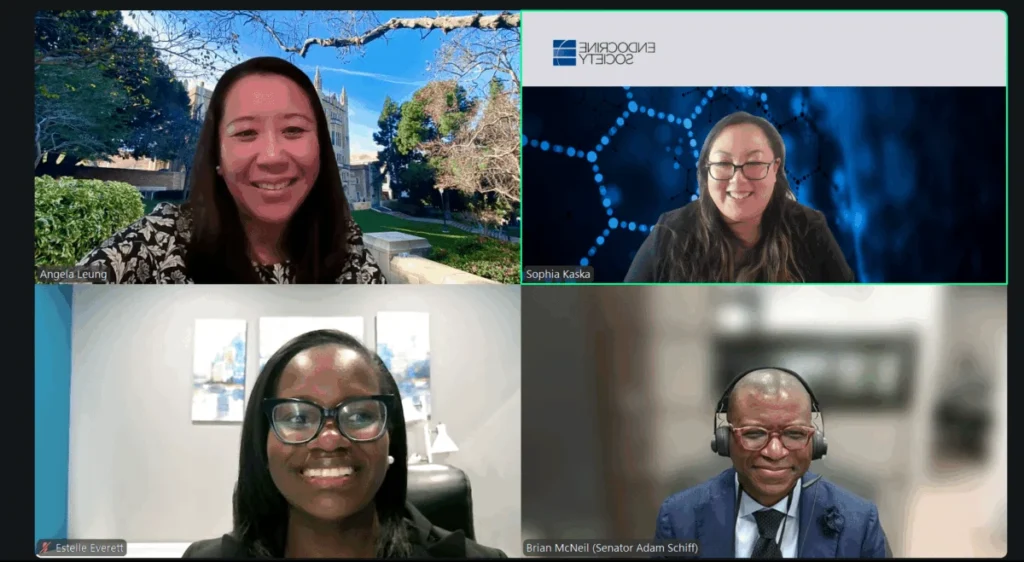
In a significant mobilization of scientific and medical expertise, the Endocrine Society recently concluded a high-impact virtual Hill Day, marking a pivotal moment in the organization’s ongoing efforts to shape federal policy regarding biomedical research and public health access. On March 13, more than 40 leading endocrinologists and researchers, representing diverse congressional districts across the United States, engaged in over 100 meetings with lawmakers and their staff. The primary objective of this advocacy push was to secure increased funding for the National Institutes of Health (NIH) for fiscal year 2027 and to address systemic hurdles currently impeding the progress of endocrine science.
The Society’s advocacy comes at a critical juncture in the federal budget cycle. While Congress continues to grapple with the complexities of the appropriations process, the Endocrine Society has taken a proactive stance, emphasizing the necessity of a stable and robust NIH budget to maintain the United States’ global leadership in medical innovation. Beyond general funding, the Society’s delegates specifically advocated for the establishment of a dedicated Women’s Health Research Fund within the NIH Office of the Director, reflecting a growing national consensus on the need to close historical gaps in health research related to biological sex and gender.
Navigating the Fiscal Year 2027 Appropriations Landscape
The timing of the Endocrine Society’s Virtual Hill Day was strategically aligned with the early stages of the fiscal year 2027 budget deliberations. By engaging with members of the House and Senate Appropriations Committees, the Society sought to ensure that endocrine-related research remains a top priority during a period of intense fiscal scrutiny. The NIH, which serves as the largest public funder of biomedical research in the world, has seen its purchasing power fluctuate due to inflationary pressures and the expiration of one-time supplemental funding.

Endocrine research is foundational to understanding and treating some of the most prevalent and costly chronic conditions in the United States, including diabetes, thyroid disorders, osteoporosis, and hormonal cancers. Society members informed congressional offices that any stagnation in NIH funding could result in a "lost generation" of researchers, as early-career scientists face increasingly slim odds of securing the grants necessary to establish independent laboratories. The Society’s message was clear: protecting NIH research is not merely a scientific concern but a matter of national public health and economic stability.
Addressing Systemic Obstacles in Grant Disbursement
A central theme of the March 13 meetings was the growing concern over administrative delays within the federal funding ecosystem. Despite the passage of recent funding bills, many researchers have reported significant obstacles in accessing approved funds. The Endocrine Society highlighted a troubling trend involving the slow release of Notices of Funding Opportunities (NOFOs) and a backlog of "forecasted" opportunities that have yet to be formally published.
These delays have tangible consequences for the scientific community. When funding opportunities are postponed, research projects are stalled, staffing becomes precarious, and the momentum of discovery is interrupted. Society representatives urged lawmakers to investigate why these bottlenecks persist and to work with the NIH and the administration to streamline the drawdown process for approved funds. By bringing these ground-level realities to the attention of Congress, the Society aims to foster a more efficient and responsive federal research infrastructure.
Expanding Access to Obesity Care through the BALANCE Model
While research funding was a primary pillar of the advocacy day, the Society also focused on the immediate clinical needs of patients, particularly those struggling with obesity. Recently, the Centers for Medicare and Medicaid Services (CMS) released new details regarding its "Better Approaches to Lifestyle and Nutrition for Comprehensive hEalth" (BALANCE) Model. This pilot program represents a significant shift in federal policy toward obesity management, which has historically been underfunded and restricted within the Medicare framework.
The BALANCE Model, slated for a 2027 launch, aims to provide eligible Medicare and Medicaid beneficiaries with expanded access to glucagon-like peptide-1 (GLP-1) receptor agonists and comprehensive lifestyle interventions. Under the proposed model, certain beneficiaries would be able to access these highly effective medications at a capped cost of $50 per month. This initiative addresses a major barrier to care, as the high out-of-pocket costs of GLP-1 medications have rendered them inaccessible to many of the nation’s most vulnerable populations.
The Endocrine Society expressed strong support for the CMS pilot program but emphasized that it is only a first step. The Society continues to champion the Treat and Reduce Obesity Act (TROA), a piece of legislation that would permanently allow Medicare to cover medications for weight loss. Currently, a 2003 law prevents Medicare from covering weight-loss drugs under Part D, a policy that many medical professionals argue is outdated given the scientific understanding of obesity as a chronic, biological disease rather than a lifestyle choice.
Chronology of Endocrine Society Advocacy Efforts
The March Virtual Hill Day is part of a sustained, multi-phase advocacy strategy deployed by the Endocrine Society to influence health policy throughout the year.
- January: The Society hosted a high-level congressional briefing on Capitol Hill focusing on the intersection of obesity and liver disease, specifically addressing the rise of metabolic dysfunction-associated steatotic liver disease (MASLD). During this event, the Society distributed educational resources to congressional staff to highlight the systemic impacts of endocrine-related conditions.
- March 13: The Virtual Hill Day facilitated 100 meetings between endocrine experts and legislative offices, focusing on NIH funding, women’s health, and administrative grant delays.
- Spring/Summer: The Society is currently analyzing the clinical criteria and eligibility requirements of the CMS BALANCE Model to provide formal feedback to the agency. Additionally, an updated version of the Obesity Playbook—a comprehensive guide for policymakers—is set for release.
- Fall: The Society has announced plans for an in-person Hill Day, where members will return to Washington, D.C., to follow up on funding developments and advocate for legislative priorities ahead of the year-end budget deadlines.
Supporting Data: The Economic and Health Stakes of Endocrine Science
The urgency of the Endocrine Society’s advocacy is underscored by the sheer scale of the health challenges under its purview. According to the Centers for Disease Control and Prevention (CDC), more than 38 million Americans have diabetes, and approximately 98 million have prediabetes. The total estimated cost of diagnosed diabetes in the U.S. reached $412.9 billion in 2022, including $306.6 billion in direct medical costs and $106.3 billion in reduced productivity.
Furthermore, the prevalence of obesity in the United States remains at record levels, affecting nearly 42% of the adult population. The medical costs associated with obesity are estimated to be nearly $173 billion annually. The Endocrine Society argues that investing in NIH-funded research and expanding access to treatments like those included in the BALANCE Model could significantly reduce these long-term economic burdens by preventing the progression of chronic diseases.
In the realm of women’s health, the data is equally compelling. For decades, women were excluded from many clinical trials, leading to a deficit in data regarding how hormonal differences affect drug metabolism and disease progression. The Society’s push for a dedicated Women’s Health Research Fund is supported by recent executive actions aimed at prioritizing research into conditions that uniquely or disproportionately affect women, such as menopause, endometriosis, and polycystic ovary syndrome (PCOS).
Analysis of Implications and Future Outlook
The Endocrine Society’s advocacy represents a bridge between the laboratory and the legislative chamber. By providing lawmakers with first-hand accounts of how federal policy impacts scientific discovery and patient care, the Society is attempting to shift the narrative from abstract budget numbers to human outcomes.
The success of these efforts will likely depend on the broader political climate. With a divided Congress and a looming presidential election, the appropriations process is expected to be fraught with delays. However, the Society’s focus on bipartisan issues—such as the fight against obesity and the promotion of women’s health—may provide a pathway for progress even in a polarized environment.
The proposed $50 cap on GLP-1 medications within the BALANCE Model could set a precedent for how the federal government manages high-cost, high-demand pharmaceuticals. If successful, this pilot program could serve as a blueprint for broader Medicare reform, potentially leading to the eventual passage of TROA. For researchers, the Society’s pressure on the NIH to resolve grant delays is a vital lifeline. If the administrative hurdles are not cleared, the "innovation gap" between the U.S. and other nations could widen, potentially ceding leadership in the burgeoning field of precision medicine and endocrine-disrupting chemicals (EDC) research.
As the Society prepares for its in-person Hill Day this fall, the focus will remain on ensuring that the voice of the endocrine community is heard at every level of government. The organization continues to invite its members and the public to participate in its online advocacy campaigns, stressing that the future of endocrine science depends on a collective effort to keep these issues at the forefront of the national agenda.