

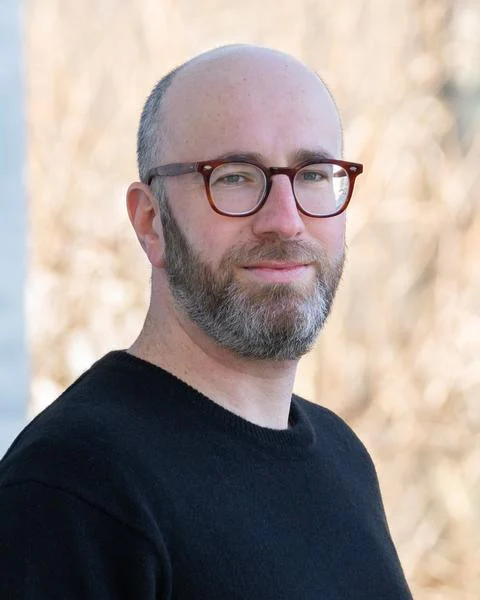
The Pershing Square Foundation has officially announced that Dr. Daniel Hochbaum, a distinguished member of the Endocrine Society and an assistant professor at Harvard Medical School, is among the select recipients of the 2026 "MIND" (Maximizing Innovation in Neurodegenerative Diseases) Prize. This prestigious accolade includes a $750,000 grant, distributed over a three-year period, designed to catalyze high-risk, high-reward research into the underlying mechanisms of cognitive decline. Dr. Hochbaum, who also serves within the Program in Neuroscience at Beth Israel Deaconess Medical Center, will utilize these funds to investigate the intricate relationship between thyroid hormone signaling and the progression of Alzheimer’s disease. His work stands at the intersection of endocrinology and neurology, seeking to uncover whether restoring hormonal balance within the brain can effectively halt or reverse neurodegeneration.
The Scientific Foundation of Dr. Hochbaum’s Research
At the core of Dr. Hochbaum’s investigation is the hypothesis that age-related declines in thyroid hormone signaling within the central nervous system play a fundamental role in the pathogenesis of Alzheimer’s disease. While the medical community has long understood the systemic importance of the thyroid gland in regulating metabolism, the specific local production and utilization of thyroid hormones within the brain’s microenvironment remain an area of emerging study. Dr. Hochbaum’s project focuses specifically on triiodothyronine (T3), the active form of the thyroid hormone, and how its availability is compromised in the aging brain.
Preliminary data suggests that chronic inflammation—a hallmark of neurodegenerative conditions—disrupts the local enzymatic conversion processes that generate T3. In a healthy brain, T3 is essential for maintaining synaptic plasticity, which is the ability of neurons to strengthen or weaken their connections over time in response to activity. When T3 signaling fails, these synaptic connections weaken, leading to the cognitive deficits and memory loss characteristic of dementia. By utilizing advanced Alzheimer’s models, Dr. Hochbaum aims to test whether the exogenous restoration of brain-specific T3 signaling can rescue these behavioral and synaptic deficits. If successful, this research could pave the way for a novel, endocrine-based therapeutic strategy, offering a significant departure from traditional amyloid-focused treatments.
Addressing the Global Challenge of Neurodegeneration
The urgency of Dr. Hochbaum’s work is underscored by the escalating global crisis of neurodegenerative diseases. Alzheimer’s disease and related dementias currently affect more than 55 million people worldwide, a number that is projected to reach 139 million by 2050 as the global population ages. In the United States alone, approximately 6.7 million individuals aged 65 and older are living with Alzheimer’s. The economic burden is equally staggering, with costs associated with care and treatment exceeding $345 billion annually in the U.S.
Despite decades of intensive research, the pharmaceutical industry has faced significant challenges in developing effective disease-modifying therapies. Many previous clinical trials focused on clearing amyloid-beta plaques have met with limited success in restoring cognitive function. This has led to a growing consensus among the scientific community that a more multifaceted approach is required—one that considers metabolic, vascular, and endocrine factors. Dr. Hochbaum’s research fits precisely into this new paradigm, exploring how the body’s internal regulatory systems interact with the brain to maintain cognitive health.
The Pershing Square Foundation and the MIND Prize
The MIND Prize was established by the Pershing Square Foundation (PSF) to bridge the funding gap for innovative neuroscience research. The foundation recognizes that traditional funding sources often favor conservative, incremental studies, whereas the complexity of the human brain requires "next-frontier" thinking. By providing substantial financial support to early-to-mid-career investigators, the PSF aims to foster a community of scientists who can deliver breakthroughs in basic and translational research.
Since its inception in 2006, the Pershing Square Foundation has committed more than $930 million to various causes, with a heavy emphasis on health, medicine, and innovation. Co-trustees Bill Ackman and Neri Oxman have positioned the foundation as a catalyst for scalable and sustainable global impact. The MIND Prize specifically targets the "Eldredge knot" of Alzheimer’s disease—a metaphor for the tangled and complex nature of the condition—by encouraging interdisciplinary collaborations across academic, industrial, and philanthropic sectors.
Dr. Neri Oxman, PSF Trustee, highlighted the importance of this year’s cohort of winners, noting that the integration of advanced technology, biological research, and human creativity is finally making Alzheimer’s appear as a remediable disorder rather than an inevitable consequence of aging. The foundation’s support for Dr. Hochbaum reflects a belief that the synergy of molecular biology, behavioral patterns, and genetic insights will eventually yield the tools necessary to combat neurodegeneration effectively.
Timeline and Upcoming Engagement at ENDO 2026
The recognition of Dr. Hochbaum’s work arrives at a pivotal moment in his career and within the broader endocrine research community. As a prominent member of the Endocrine Society, his achievements will be highlighted at the upcoming ENDO 2026 conference, scheduled to take place in Chicago, Illinois. This event is one of the world’s premier gatherings for endocrine researchers and clinicians, providing a platform for the dissemination of cutting-edge scientific discoveries.
On Sunday, June 14, 2026, Dr. Hochbaum is scheduled to participate in a high-profile session titled “Thyroid Hormone on the Brain,” beginning at 10:30 a.m. During this session, he will deliver a presentation entitled “Synchronizing Body and Brain: Coordination of Metabolism and Exploration by Thyroid Hormone.” This talk is expected to detail the progress of his MIND Prize-funded research and provide further insights into how thyroid hormones coordinate complex behaviors and metabolic states. The session will likely attract significant interest from both neurologists and endocrinologists, fostering the very type of interdisciplinary dialogue that the Pershing Square Foundation seeks to promote.
Broader Implications for Clinical Practice and Research
The implications of Dr. Hochbaum’s research extend far beyond the laboratory. If the study confirms that T3 signaling can be manipulated to rescue synaptic function, it could lead to the development of new diagnostic markers and therapeutic interventions. Currently, thyroid function is typically assessed through blood tests measuring systemic levels of TSH (thyroid-stimulating hormone) and T4. However, these systemic levels do not always accurately reflect the hormonal environment within the brain. Dr. Hochbaum’s work could emphasize the need for "neuro-endocrine" diagnostics that assess brain-specific hormonal health.
Furthermore, this research contributes to the growing field of "metabolic psychiatry" and "neuro-endocrinology," which posits that many brain disorders are fundamentally linked to how the brain processes energy and responds to hormonal signals. By identifying inflammation as the primary disruptor of T3 production, Dr. Hochbaum’s work also aligns with current research into the "inflammaging" process—the chronic, low-grade inflammation that characterizes old age and contributes to a variety of diseases.
Collaborative Efforts and Future Outlook
The structure of the MIND Prize encourages recipients to work across institutional boundaries. As an assistant professor at Harvard Medical School and Beth Israel Deaconess Medical Center, Dr. Hochbaum is situated within one of the world’s most robust biomedical research ecosystems. The $750,000 grant will not only support his direct laboratory costs but also facilitate collaborations with experts in neuro-imaging, proteomics, and computational biology.
The 2026 cohort of MIND Prize winners represents a diverse array of perspectives, ranging from researchers utilizing artificial intelligence to map neural circuits to those, like Dr. Hochbaum, focusing on the molecular signaling of the endocrine system. This diversity is intentional; the Pershing Square Foundation believes that the solution to Alzheimer’s will not come from a single discipline but from the convergence of multiple fields.
As Dr. Hochbaum begins his three-year project, the scientific community will be watching closely. The hope is that by the time he presents his findings at ENDO 2026 and beyond, the path toward an endocrine-based treatment for Alzheimer’s will be significantly clearer. In a field where breakthroughs have been historically rare, the innovative approach of targeting brain-specific thyroid signaling offers a beacon of hope for millions of patients and their families. Through the support of the Pershing Square Foundation and the Endocrine Society, Dr. Hochbaum is well-positioned to turn this innovative hypothesis into a clinical reality, potentially changing the paradigm of how we understand and treat neurodegenerative disease in the 21st century.