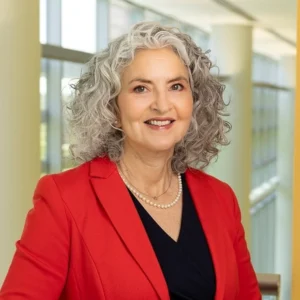








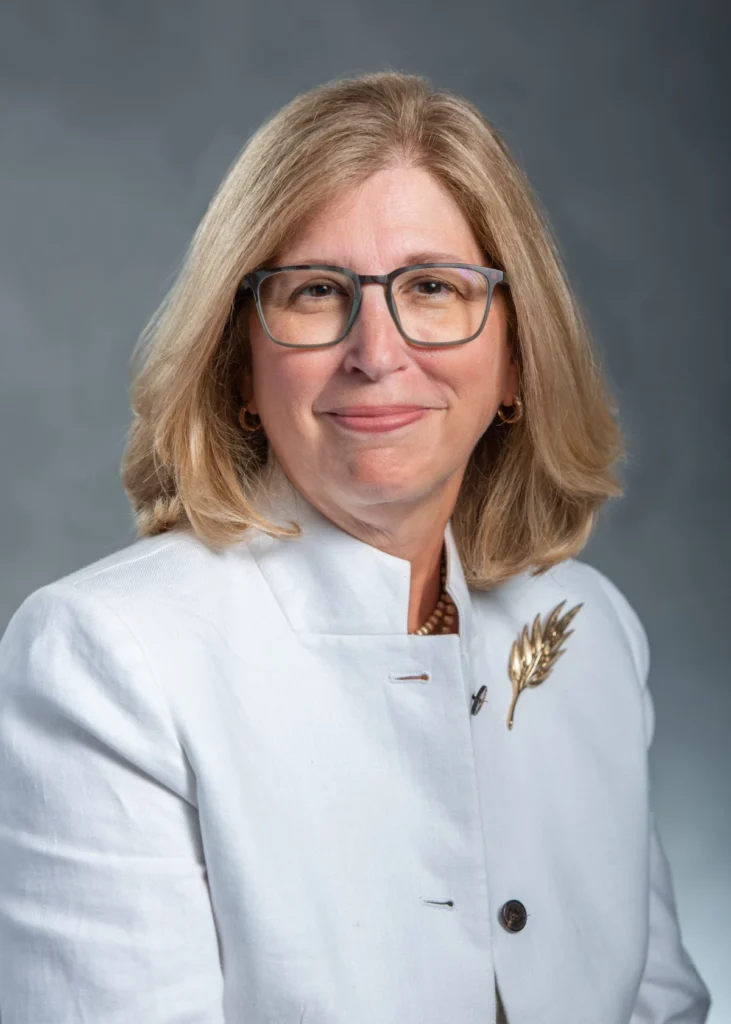
Dr. Teresa K. Woodruff, a world-renowned reproductive scientist and the former president of the Endocrine Society, has been elected to the Fellowship of the Royal Society and the American Philosophical Society (APS). These dual honors represent some of the highest accolades achievable in the global scientific and academic communities, recognizing Woodruff’s transformative contributions to reproductive biology and her pioneering work in the creation of the field of oncofertility. The announcement marks a significant milestone in a career defined by the translation of fundamental laboratory discoveries into clinical practices that have fundamentally altered the landscape of cancer survivorship.
The Royal Society, based in London, is the oldest scientific academy in continuous existence, having been founded in 1660. Woodruff joins an elite lineage of Fellows that includes monumental figures such as Sir Isaac Newton, Charles Darwin, Albert Einstein, and Stephen Hawking. Election to the Royal Society is a peer-reviewed process based on a substantial contribution to the improvement of natural knowledge, including mathematics, engineering science, and medical science. Simultaneously, her election to the American Philosophical Society (APS) connects her to the oldest learned society in the United States. Founded in 1743 by Benjamin Franklin, the APS was established to "promote useful knowledge" and has historically included members such as George Washington, Thomas Jefferson, and Marie Curie.
A Legacy of Leadership in Endocrinology and Academia
Woodruff’s election to these prestigious bodies is a reflection of decades of leadership within the scientific community. She served as the president of the Endocrine Society from 2013 to 2014, a period during which she championed the importance of sex as a biological variable in research—a movement that eventually led to changes in National Institutes of Health (NIH) policy. Her service to the society also included a tenure as the editor-in-chief of Endocrinology, the field’s premier journal for basic science research.

In 2021, the Endocrine Society honored her with the Gerald D. Aurbach Laureate Award for Outstanding Translational Research. This award recognized her "seminal discoveries about gonadal structure, function, and hormones, as well as female fertility and its regulation." Her work has consistently bridged the gap between bench science and the bedside, ensuring that molecular insights are utilized to solve real-world medical challenges.
Beyond her specialized field, Woodruff has held significant administrative roles in higher education. She served as the Provost and Executive Vice President for Academic Affairs at Michigan State University (MSU) beginning in August 2020. During a period of transition and challenge for the university, she stepped into the role of interim president, eventually becoming President Emerita. Currently, she remains a powerhouse in the MSU research community as an MSU Research Foundation Distinguished Professor, holding appointments in the Department of Obstetrics, Gynecology, and Reproductive Biology within the College of Human Medicine, as well as the Department of Biomedical Engineering within the College of Engineering.
The Birth and Evolution of Oncofertility
Perhaps Woodruff’s most enduring legacy is the founding of "oncofertility," a term she coined 20 years ago to describe a new interdisciplinary field at the intersection of oncology and reproductive medicine. Before the emergence of this discipline, young cancer patients—children, adolescents, and young adults—often faced life-saving treatments like chemotherapy and radiation without a clear path to preserving their future fertility. These treatments, while effective at eradicating malignant cells, frequently caused collateral damage to the ovaries and testes, leading to premature menopause or permanent infertility.
The field of oncofertility was born out of a necessity to provide these patients with options. Woodruff’s vision was to integrate the expertise of reproductive endocrinologists, oncologists, social workers, and bioethicists to ensure that fertility preservation became a standard part of the cancer care continuum. Today, the Oncofertility Consortium, which Woodruff leads, is a global network of providers and scientists dedicated to advancing these strategies.
Reflecting on the 20th anniversary of the field, Woodruff noted that the landscape has shifted dramatically. "Today, young cancer patients can expect a consult from an oncofertility specialist, and I am honored to have worked with so many caring scientists and clinicians to make these real-world outcomes a reality," she stated. The evolution of the field has seen the development of various technologies, from the cryopreservation of oocytes and embryos to more experimental techniques like ovarian tissue cryopreservation, which was recently moved from "experimental" to "standard of care" status by the American Society for Reproductive Medicine (ASRM).
Scientific Breakthroughs: The Zinc Spark and Beyond
At the heart of Woodruff’s recognition by the Royal Society and the APS are her specific biological discoveries. One of the most visually and scientifically arresting of these is the "zinc spark." Working alongside MSU Research Foundation Distinguished Professor Tom O’Halloran, Woodruff identified a massive release of zinc ions at the exact moment of fertilization.
This "spark" is not merely a biological curiosity; it serves as a critical indicator of egg quality. The intensity of the zinc release can predict the viability of the resulting embryo, providing a non-invasive way for embryologists to select the best candidates for implantation during in vitro fertilization (IVF). This discovery has profound implications for improving the success rates of assisted reproductive technologies, which currently hover around 30-50% depending on the patient’s age and health profile.
Furthermore, Woodruff’s lab has made significant strides in maturing ovarian follicles outside the body. This process, known as in vitro follicle maturation (IVM), involves taking immature follicles from ovarian tissue and culturing them in a laboratory setting until they reach maturity and are ready for fertilization. This technology is particularly vital for prepubertal girls undergoing cancer treatment, as they do not yet produce mature eggs that can be frozen. By preserving ovarian tissue and maturing the follicles later, scientists can offer these young survivors a chance at biological motherhood that was previously impossible.
Supporting Data and the Growing Need for Fertility Preservation
The importance of Woodruff’s work is underscored by current oncological data. According to the American Cancer Society, there are approximately 85,000 new cancer diagnoses in adolescents and young adults (ages 15-39) each year in the United States alone. With modern treatments, the five-year survival rate for many of these cancers now exceeds 80%. This growing population of survivors faces decades of life post-cancer, making quality-of-life issues—including reproductive health—paramount.
Data from the Oncofertility Consortium suggests that when fertility counseling is provided at the time of diagnosis, patient distress is significantly reduced, and long-term satisfaction with survivorship is increased. Despite this, disparities remain. Research indicates that while fertility preservation is more common than it was two decades ago, access varies based on socioeconomic status, geographic location, and insurance coverage. Woodruff’s advocacy has been central to pushing for legislative changes that mandate insurance coverage for fertility preservation for cancer patients in several U.S. states.
Broader Impact and Global Implications
The election of Woodruff to these societies is a testament to the global reach of her work. The Oncofertility Consortium now includes partners in over 100 countries, facilitating the sharing of protocols, research data, and clinical best practices. This international collaboration ensures that a child diagnosed with leukemia in a developing nation might eventually have access to the same fertility-saving technologies as a patient in a major metropolitan medical center.
The implications of her research also extend into the realm of "bio-inspired" engineering. By utilizing 3D-printing and microfluidic technologies (often referred to as "organ-on-a-chip"), Woodruff’s team has created models of the female reproductive tract. These "EVATAR" systems allow researchers to study the effects of new drugs and hormones on the reproductive system without the need for animal testing or human trials in the early stages of development. This intersection of biology and engineering is a hallmark of her current role in MSU’s Department of Biomedical Engineering.
Analysis: The Intersection of Science and Humanity
The dual election to the Royal Society and the APS highlights a rare synergy in Woodruff’s career: the ability to perform high-level basic science while maintaining a steadfast focus on the human element of medicine. In many ways, Woodruff’s career trajectory serves as a blueprint for the modern "physician-scientist" (or in her case, the PhD scientist in a clinical world).
Her work challenges the traditional silos of medical research. By forcing oncologists to think about life after cancer and reproductive biologists to think about the cellular stresses of chemotherapy, she has created a more holistic approach to patient care. Her philosophy is best captured in her own words: "I believe the promise of fundamental science in medicine is that tomorrow’s patient is treated better than today’s. That is the distinction that matters most."
Future Directions at Michigan State University
Even with these lifetime achievement honors, Woodruff remains active in the laboratory. At Michigan State University, her current research continues to probe the mysteries of the "zinc spark." Her team is investigating the specific molecular mechanisms that trigger the zinc release and how these pathways might be manipulated to improve egg health in older women or those with diminished ovarian reserve.
The "zinc spark" research has also opened new avenues in understanding how heavy metals and minerals interact with cellular development, potentially offering insights into other areas of biology beyond reproduction. Woodruff expresses "tremendous excitement" about the future of this work, noting that each discovery often leads to more complex and vital questions about the beginnings of life.
As she assumes her place among the Fellows of the Royal Society and the members of the American Philosophical Society, the scientific community looks to Woodruff not just for her past achievements, but for her ongoing role as a mentor and visionary. Her career serves as a reminder that the most profound scientific advancements are those that not only explain the world but also provide tangible hope to those facing its most difficult challenges. Through the lens of oncofertility, Woodruff has ensured that for many, a cancer diagnosis is no longer the end of a dream to have a family, but a hurdle that science has helped them clear.