The United Nations Environment Programme (UNEP) and the World Health Organization (WHO) have released a comprehensive and definitive global assessment titled "The State of the Science of Endocrine-disrupting Chemicals 2026 Report," signaling a critical turning point in international chemical safety and public health policy. This landmark document, developed with the foundational leadership of four prominent members of the Endocrine Society, provides an exhaustive review of the escalating evidence linking exposure to endocrine-disrupting chemicals (EDCs) with severe adverse health outcomes in both human populations and global wildlife. The report underscores a troubling reality: human exposure to these substances is not only ubiquitous but often begins in utero, potentially altering the developmental trajectory of future generations before they are even born.
The four Endocrine Society experts who served as lead section authors—Laura N. Vandenberg, PhD, and R. Thomas Zoeller, PhD, of the University of Massachusetts Amherst; Juliette Legler, PhD, of Utrecht University; and Leonardo Trasande, MD, MPP, of the NYU School of Medicine—brought a multidisciplinary approach to the report. Their collective expertise covers the spectrum of endocrinology, including human and animal pathology, socioeconomic impact modeling, and the translation of complex biological data into actionable policy frameworks. All four experts were instrumental in drafting the report’s concluding chapter, which serves as a strategic roadmap for global decision-makers tasked with mitigating the risks posed by these pervasive substances.
Defining the Threat: Mechanisms of Endocrine Disruption
Endocrine-disrupting chemicals are a diverse class of substances, both synthetic and naturally occurring, that interfere with the intricate signaling of the endocrine system. The endocrine system serves as the body’s internal communication network, utilizing hormones to regulate nearly every biological process, including metabolism, growth, sleep, mood, and reproduction. EDCs disrupt this delicate balance through several primary mechanisms. Some act as "hormone mimics," binding to cellular receptors and triggering biological responses at inappropriate times or with excessive intensity. Others function as "antagonists" or blockers, preventing natural hormones from binding to their receptors and thus halting essential physiological processes.

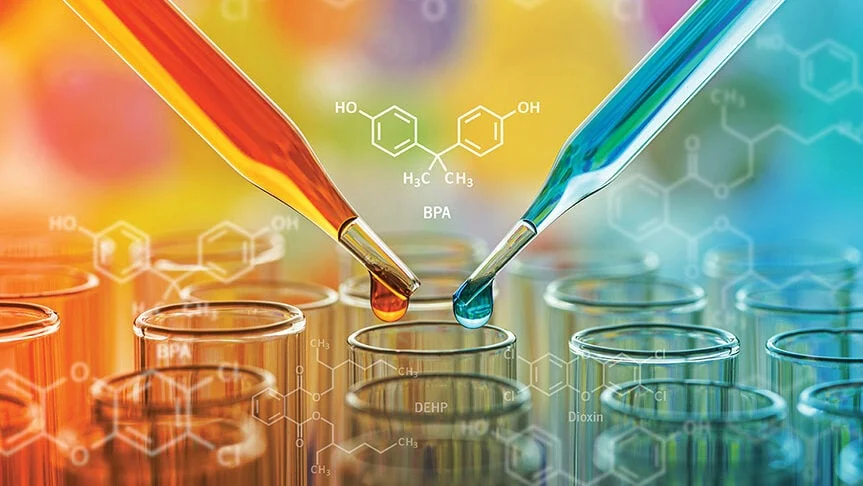
The 2026 report emphasizes that EDCs do not follow traditional toxicological patterns where "the dose makes the poison." Instead, many EDCs exhibit non-monotonic dose-response curves, meaning that even infinitesimal concentrations can cause significant biological disruption, particularly during "windows of susceptibility" such as fetal development, infancy, and puberty. Common EDCs identified in the report include bisphenols (like BPA), phthalates used in plastics and cosmetics, per- and polyfluoroalkyl substances (PFAS), certain pesticides, and flame retardants.
A Chronology of Scientific Concern and Policy Evolution
The release of the 2026 report is the culmination of decades of scientific inquiry and increasing alarm within the medical community. The trajectory of EDC research has moved from isolated observations of reproductive abnormalities in wildlife to a systemic understanding of global human health risks.
- Early 1990s: The "Wingspread Statement" first popularized the term "endocrine disruptor," as scientists began to notice developmental issues in birds and fish exposed to industrial chemicals.
- 2002: The WHO and UNEP published their first major assessment on the state of the science regarding EDCs, which identified the potential for harm but called for more rigorous data.
- 2009: The Endocrine Society issued its first Scientific Statement, a foundational document that formally recognized EDCs as a significant public health threat and established the society’s role as a leading advocate for science-based regulation.
- 2012: An updated WHO/UNEP report noted that the evidence for EDC-related health effects was growing stronger and that many previous uncertainties were being resolved by more sophisticated testing methods.
- 2015: The Endocrine Society released its second Scientific Statement, detailing the causal links between EDCs and obesity, diabetes, and cardiovascular disease.
- 2020–2025: A surge in peer-reviewed longitudinal studies provided the "smoking gun" evidence needed for the 2026 report, particularly regarding the transgenerational effects of chemical exposure.
- 2026: The current report is released, concluding that the evidence is now sufficient to warrant immediate, large-scale regulatory intervention worldwide.
Supporting Data: The Magnitude of Global Exposure
The 2026 assessment presents a sobering array of data points that illustrate the scale of the EDC problem. According to the report, nearly every person on the planet carries a "body burden" of multiple EDCs. Testing of blood, urine, and breast milk samples across diverse geographic populations has consistently detected complex mixtures of these chemicals.
Of particular concern to the lead authors is the data regarding prenatal exposure. Research synthesized in the report indicates that hundreds of synthetic chemicals can cross the placental barrier. This early-life exposure is linked to a higher incidence of low birth weight, shortened gestational periods, and altered neurodevelopment. Longitudinal data cited in the report shows that children exposed to high levels of phthalates and bisphenols in the womb are at a statistically higher risk for developing Attention Deficit Hyperactivity Disorder (ADHD), autism spectrum disorders, and diminished IQ scores.
Furthermore, the report highlights the impact on reproductive health. Global trends show a precipitous decline in sperm counts and quality over the last several decades, alongside an increase in the incidence of endometriosis and polycystic ovary syndrome (PCOS) among women. The 2026 report correlates these trends with the rising production and environmental persistence of EDCs, noting that the rate of increase in these health conditions far outpaces what could be explained by genetic shifts alone.
Socioeconomic Analysis and Economic Burdens
Dr. Leonardo Trasande, one of the report’s lead authors, has been at the forefront of quantifying the economic toll of endocrine disruption. The 2026 report incorporates sophisticated socioeconomic modeling to illustrate that the cost of inaction far outweighs the cost of regulation.
The analysis estimates that EDC-related health conditions—including obesity, neurodevelopmental disabilities, and reproductive disorders—cost the global economy hundreds of billions of dollars annually in direct healthcare expenditures and lost productivity. In the European Union and the United States alone, the annual economic burden associated with exposure to just a subset of known EDCs is estimated to exceed $300 billion. These figures are considered conservative, as they do not account for the ecological costs of wildlife population declines or the long-term impacts of environmental degradation.
Official Responses and the Call for Global Action
The publication of the report has elicited strong responses from the international scientific and regulatory communities. The Endocrine Society has reiterated its long-standing position that voluntary industry measures are insufficient. In a statement following the report’s release, the Society called for a fundamental shift in how chemicals are brought to market, advocating for the "precautionary principle"—the idea that substances should be proven safe before they are permitted for widespread use, rather than waiting for proof of harm after they have already entered the environment.
Officials from the UNEP have emphasized that the findings necessitate a global treaty or a unified regulatory framework, similar to the Montreal Protocol for the ozone layer. "The evidence is no longer in question," a UNEP spokesperson stated. "The challenge now is political. We must bridge the gap between scientific certainty and regulatory implementation to protect the most vulnerable populations, particularly pregnant women and children."
The report also highlights the disparity in regulation between developed and developing nations. While some regions, such as the European Union under the REACH (Registration, Evaluation, Authorisation and Restriction of Chemicals) regulation, have taken steps to restrict certain phthalates and bisphenols, many other nations have few to no protections in place. This has led to "toxic dumping," where products containing banned substances are diverted to markets with weaker oversight.
Broader Impact and Future Implications
The implications of "The State of the Science of Endocrine-disrupting Chemicals 2026 Report" extend far beyond the laboratory. It serves as a catalyst for a paradigm shift in public health, moving toward a "total environment" approach to medicine. Doctors and healthcare providers are increasingly being encouraged to consider environmental exposures when diagnosing chronic conditions.
For the manufacturing and chemical industries, the report signals an urgent need for "Green Chemistry"—the design of products and processes that minimize the use and generation of hazardous substances. The report suggests that the future of the chemical industry lies in innovation that prioritizes endocrine safety, potentially opening new markets for "EDC-free" consumer goods.
As the international community digests the findings of the 2026 report, the focus turns to the upcoming United Nations Environment Assembly, where delegates are expected to debate the creation of a new global science-policy panel on chemicals and waste. The work of Vandenberg, Zoeller, Legler, and Trasande provides the scientific bedrock for these negotiations, ensuring that endocrine health remains a central pillar of the global environmental agenda.
Ultimately, the 2026 report is a call to recognize that the chemical environment is a primary determinant of health. By documenting the pervasive and damaging nature of EDCs, the WHO and UNEP have provided the evidence necessary for a global transition toward a non-toxic environment, ensuring that the biological integrity of future generations is not compromised by the industrial legacies of the past.