


Intuitive Surgical, the global leader in robotic-assisted minimally invasive surgery, reported a complex set of second-quarter financial results for 2026 that highlighted both the company’s fundamental strength in capital equipment sales and the burgeoning challenges within the domestic healthcare landscape. While the company posted a significant double-digit increase in both revenue and net income, a slowdown in the growth rate of procedures performed in the United States triggered a sharp 12% decline in share price, as investors weighed the impact of expiring federal healthcare subsidies on long-term patient demand.
The company’s second-quarter revenue reached $2.89 billion, representing a 19% increase compared to the same period in 2025. This growth was bolstered by robust demand for the company’s latest hardware platform, the da Vinci 5, and a strong performance in international markets. Net income for the quarter rose to $818 million, a 24% year-over-year increase, reflecting improved operational efficiencies and a favorable product mix. However, the market’s focus remained squarely on the domestic procedure volume, which grew by 12% in the U.S.—a figure that, while positive, represented a moderation from previous quarters and fell short of the aggressive growth targets the company had signaled at the start of the year.
The Impact of Expiring ACA Subsidies on Patient Care
The primary catalyst for the domestic slowdown appears to be rooted in shifting federal healthcare policy. During the COVID-19 pandemic and the subsequent recovery years, the U.S. government provided enhanced premium subsidies for the Affordable Care Act (ACA) marketplace through the American Rescue Plan and the Inflation Reduction Act. These subsidies significantly lowered out-of-pocket costs for millions of Americans, facilitating a surge in elective and semi-elective surgical procedures.
These enhanced marketplace subsidies officially expired at the end of 2025. In the absence of Congressional action to extend the funding, the healthcare sector has witnessed a predictable decline in enrollment and a marked shift among consumers toward higher-deductible health plans. For many patients, the transition to plans with higher out-of-pocket requirements has led to the deferral of non-urgent surgical interventions.
During the earnings call, Intuitive CEO Dave Rosa noted that feedback from hospital administrators and surgeons suggests that patient coverage dynamics are now a primary variable in treatment timelines. When patients face higher financial burdens, they are more likely to postpone procedures that are not immediately life-threatening, such as certain urological or gynecological surgeries. This trend was particularly evident in the second quarter, where the moderation in growth was most pronounced in "deferrable" procedures.
Resilience in Capital Placements and the Da Vinci 5 Rollout
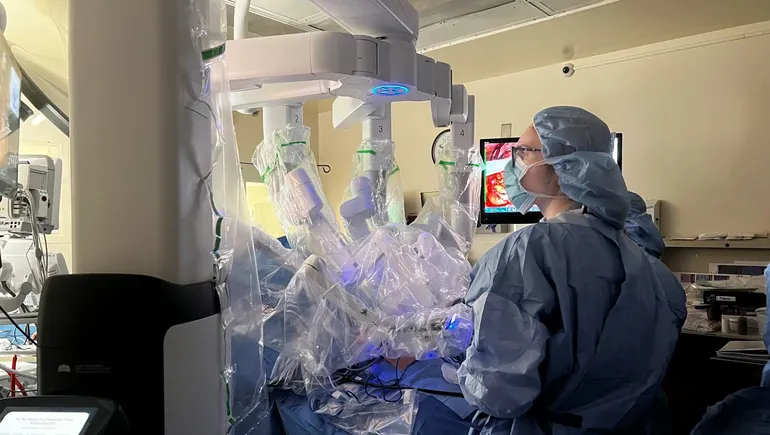
Despite the headwinds in procedure volume, Intuitive’s capital equipment business remains a bright spot. The company reported 468 total da Vinci system placements in the second quarter, a significant jump from the 395 systems placed in the second quarter of 2025. Central to this success is the continued rollout of the da Vinci 5, the company’s newest flagship platform.
Placements of the da Vinci 5 reached 246 units in the quarter, compared to 180 in the prior year’s corresponding period. The da Vinci 5 features advanced sensing technologies, including force feedback that allows surgeons to "feel" the resistance of tissue, and significantly higher computing power designed to integrate artificial intelligence and digital data analytics directly into the surgical workflow. The strong placement numbers suggest that while patient volume may be fluctuating due to insurance dynamics, hospital systems remain committed to long-term investments in robotic infrastructure.
Industry analysts suggest that hospitals are prioritizing the da Vinci 5 to maintain a competitive edge and to improve surgeon recruitment and retention. The platform’s ability to provide more precise data and potentially reduce procedure times offers a compelling value proposition for healthcare providers looking to optimize their operating room efficiency in a tightening economic environment.
International Expansion and Emerging Markets
While the U.S. market grappled with policy-induced volatility, Intuitive’s international segment demonstrated remarkable resilience. Outside of the U.S., da Vinci procedures grew by 20% year-over-year. This growth was driven by increasing adoption in Europe and Asia, where the clinical benefits of robotic-assisted surgery are becoming more widely recognized by national health systems.
A significant milestone for the company’s international strategy was the recent regulatory clearance for the da Vinci 5 in India. As one of the world’s fastest-growing healthcare markets, India represents a massive opportunity for Intuitive. The company has been working to build a robust training and support infrastructure in the region, aiming to tap into the growing middle-class demand for high-quality surgical care.
The 20% international growth rate provides a necessary hedge against domestic fluctuations. As healthcare systems in Japan, China, and Western Europe continue to integrate robotic platforms into their standard of care for oncology and complex general surgery, Intuitive is well-positioned to capitalize on a global scale.
Navigating a More Competitive Landscape
For over two decades, Intuitive Surgical enjoyed a near-monopoly in the robotic surgery space. However, the landscape has shifted dramatically as several well-funded competitors have entered the market with their own proprietary systems. Medtronic, with its Hugo system, and CMR Surgical, with its Versius platform, are actively competing for market share, particularly in Europe and Asia.
In the U.S., newer entrants such as Distalmotion and Moon Surgical are targeting specific niches, such as the ambulatory surgery center (ASC) market. These competitors often focus on lower-cost, modular designs that aim to lower the barrier to entry for smaller facilities.
Intuitive has responded to this competitive pressure with a multi-pronged strategy. One key initiative involves the sale of refurbished older-model da Vinci systems. By offering "certified pre-owned" hardware, Intuitive can appeal to ASCs and customers in cost-constrained developing nations who may not have the budget for a top-of-the-line da Vinci 5 but still want access to the Intuitive ecosystem. Furthermore, the company is focusing on "extended-use" instruments, which are designed to last for more procedures, effectively lowering the per-procedure cost for the hospital—a critical metric in the value-based care era.
Future Pipelines: GI Robotics and Specialized Oncology
Looking ahead, Intuitive is investing heavily in research and development to expand into new clinical areas. CEO Dave Rosa revealed that the company has submitted "multiple innovations" for Food and Drug Administration (FDA) clearance. Chief among these is a new flexible robotic endoscope system designed for use in the gastrointestinal (GI) tract.
The company has already submitted a 510(k) application for a noncommercial version of this device, signaling a major move into the diagnostic and therapeutic GI market. By moving beyond the traditional abdominal and thoracic cavities, Intuitive aims to address a wider array of disease states, including early-stage cancers and complex digestive disorders.
In addition to GI applications, CFO Jamie Samath highlighted promising growth in specialized procedures like cardiac surgery and nipple-sparing mastectomies. Procedure growth in these niche markets accelerated sharply in the second quarter. Intuitive is currently developing cardiac-specific instruments and funding clinical trials to build the necessary evidence base for widespread adoption in oncology, which could provide a new avenue for recurring revenue growth.
Analyst Perspectives and Market Outlook
The 12% drop in Intuitive’s stock price to $354.26 reflects a market that is currently sensitive to any signs of slowing growth in the "razor and blade" model—where the "razor" is the robot and the "blades" are the high-margin instruments and accessories used in every procedure.
Joanne Wuensch, an analyst at Citi Research, described the current outlook as "tricky," noting that the long-anticipated impact of ACA subsidy cuts is no longer a theoretical risk but a present reality. She suggested that while the company’s hardware sales are strong, the uncertainty surrounding patient behavior under high-deductible plans will likely weigh on the stock in the near term.
Conversely, BTIG analyst Ryan Zimmerman offered a more optimistic view, suggesting that the current softness in U.S. procedures is "transitory." Zimmerman argued that the underlying demand for robotic surgery remains intact and that the shift toward ASCs and new clinical indications like cardiac and GI will provide compelling long-term growth vectors. He emphasized that Intuitive maintains a dominant competitive position, and there are few signs of structural demand deterioration.
Intuitive has reiterated its full-year forecast for worldwide da Vinci procedure growth, projecting a range of 13.5% to 15.5%. The company expects the final figure to land near the midpoint of that range, suggesting a belief that the market will stabilize as patients and providers adjust to the new insurance environment in the second half of 2026.
As the healthcare industry continues to evolve, Intuitive Surgical remains at the forefront of surgical innovation. However, the company’s recent performance underscores a fundamental truth in modern medtech: even the most advanced technology is subject to the gravitational pull of healthcare policy and the economic realities of the patients it serves. The coming quarters will be a critical test of Intuitive’s ability to navigate these domestic headwinds while maintaining its global leadership.