

After more than three decades as a dominant force in the single-serve coffee market, Keurig, a brand synonymous with convenient home brewing, has finally introduced its own branded coffee with the launch of the Keurig Coffee Collective. This strategic move signals a significant evolution for the beverage giant, aiming to capture a larger share of the burgeoning premium coffee segment and deepen its connection with consumers. The Keurig Coffee Collective represents Keurig’s direct entry into the coffee product itself, a departure from its long-standing model of featuring a diverse array of third-party coffee brands on its platform.
A Natural Evolution into Coffee Mastery
The decision to launch its own coffee line was a deliberate and carefully considered strategy, according to Christine van den Broeck, vice president of Keurig Brand Marketing at Keurig Dr Pepper. "It felt like a very natural evolution to shift from coffee makers into coffee," van den Broeck stated in an interview. "But we absolutely want consumers to understand that it isn’t just another coffee." This sentiment underscores the company’s ambition to position the Keurig Coffee Collective not merely as another option, but as a distinct and superior offering within the crowded single-serve landscape.
For years, Keurig strategically held back from launching its own coffee brand. The company prioritized establishing the Keurig name as a household staple for brewing convenience, ensuring its brand had attained sufficient "standing and brand power" to support a successful coffee product. This cautious approach allowed Keurig to cultivate a loyal consumer base and build a robust distribution network, laying the groundwork for its eventual foray into coffee production.
Strategic Market Entry and Product Development
The development of the Keurig Coffee Collective was a two-year endeavor, from initial concept to market launch. Executives sought to create a product that would differentiate itself significantly from existing offerings, thereby attracting new consumers to the Keurig system and appealing to the growing public appetite for higher-quality, artisanal coffee. This required a deep dive into the intricacies of coffee itself, moving beyond the role of a brewer manufacturer to that of a coffee curator and creator.
Keurig has historically hosted a vast selection of coffee brands on its platform, encompassing over 80 names that it either owns, licenses, or partners with. This extensive portfolio includes well-known entities such as Dunkin’, Folgers, Cinnabon, McCafé, and Starbucks, demonstrating Keurig’s expansive reach and influence within the coffee industry. However, the introduction of the Keurig Coffee Collective signifies a desire to directly compete and innovate within the premium segment, leveraging its established brand equity.
The genesis of Keurig traces back to 1992 when two engineers approached Green Mountain Coffee Roasters (now Keurig Dr Pepper) with the concept of a single-cup brewing system. This innovation revolutionized home coffee consumption, transforming the morning ritual for millions. Today, Keurig Dr Pepper is a multi-billion-dollar enterprise, with the Keurig brewing system contributing approximately 40% of its net sales. The company estimates that nearly 40 million Americans own a Keurig brewer, with millions of cups being brewed daily.
Navigating a Competitive Landscape
Despite its dominant market position, the Keurig segment has faced increasing competition in recent years, prompting strategic adjustments. Keurig Dr Pepper’s financial reports for fiscal year 2025 indicated that Keurig sales remained largely stable at $4 billion, a figure consistent with 2024. This stability was achieved through enhanced pricing strategies that counteracted a decline in sales volume and a shift in product mix. However, sales in the segment have experienced a notable decrease of $230 million when compared to 2019 figures, highlighting the competitive pressures. In response to these challenges and to bolster its coffee business, Keurig Dr Pepper announced in August the acquisition of JDE Peet’s for $18 billion, a move aimed at strengthening its portfolio and market presence.
The launch of the Keurig Coffee Collective is a direct response to these market dynamics, seeking to recapture growth and elevate the brand’s standing in the premium coffee arena.
The Science and Artistry Behind the Keurig Coffee Collective
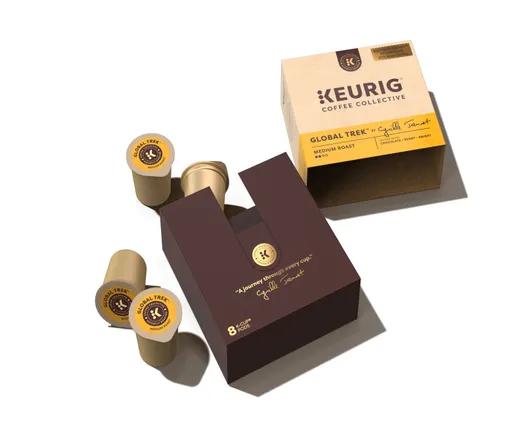
To craft a truly differentiated premium coffee experience, Keurig focused on the fundamental commodity: the coffee itself. The company enlisted its internal coffee experts, including a coffee chemist and a sensory scientist, to meticulously develop five distinct blends for the initial launch. A key innovation lies in the coffee’s grind density. The coffee used in the Keurig Coffee Collective is ground to a higher density, allowing for approximately 30% more coffee product within each K-Cup pod compared to standard offerings. This increased density is designed to unlock a richer, more nuanced flavor profile, directly addressing consumer demand for a more robust coffee experience.
The premiumization extends beyond the coffee itself to the packaging and presentation. The golden-hued boxes housing the pods are designed to be visually striking and informative. They highlight the advanced grinding technique that enables the higher density, feature the signature of the individual who developed each specific flavor profile, and provide detailed tasting notes to guide consumers. Further enhancing the premium feel, each individual K-Cup pod is rendered in a distinctive gold color, an intentional design choice to elevate the perceived value and quality.
"This package alone is very disruptive on a single-serve coffee ship where everything else looks the same," van den Broeck commented, emphasizing the visual distinction of the new line. "We made sure to bring those premium elements to the packaging so that as consumers are introduced to the coffee, especially in a retail setting, they understand what’s different." This focus on sophisticated aesthetics aims to communicate the premium nature of the product at first glance, encouraging consumers to explore beyond their usual choices.
Early Success and Future Aspirations
The Keurig Coffee Collective was first introduced on Keurig’s website in November, with shipments to retail partners commencing the following month. Early indications suggest a positive market reception. "We are seeing great results early," van den Broeck reported, expressing confidence in sustained momentum. "We knew consumers wanted this coffee, and now that it’s on the market, we are being proven correct."
Looking ahead, Keurig Coffee Collective plans to expand its flavor offerings, with a focus on limited-time releases that align with seasonal trends or "culturally relevant" themes. This strategy aims to maintain consumer engagement and introduce new taste experiences. As the brand gains further traction in the market, Keurig may explore additional avenues for the Keurig Coffee Collective, potentially expanding its reach beyond the single-serve pod format or into other premium coffee-related products.
Keurig Dr Pepper harbors optimistic expectations that this new line will significantly contribute to "further elevating the brand’s coffee credentials." The company also anticipates that the Keurig Coffee Collective will serve as a catalyst for increased Keurig brewer sales, thereby deepening the brand’s penetration within households.
The "incredibly valuable" equity of the Keurig brand is recognized as a pivotal strategic advantage in the successful launch of its own coffee line. "Bringing consumers from Keurig as a coffee maker to Keurig as a coffee master wouldn’t be possible without the brand’s power and equity, giving us permission to compete, not only in a new category, but in a premium segment," van den Broeck explained. "This was a move we knew we wanted to make, but we also knew we had to make it at the right time and with the right product." This strategic timing and product focus are crucial elements in Keurig’s ambitious plan to redefine its position in the evolving coffee market.
