

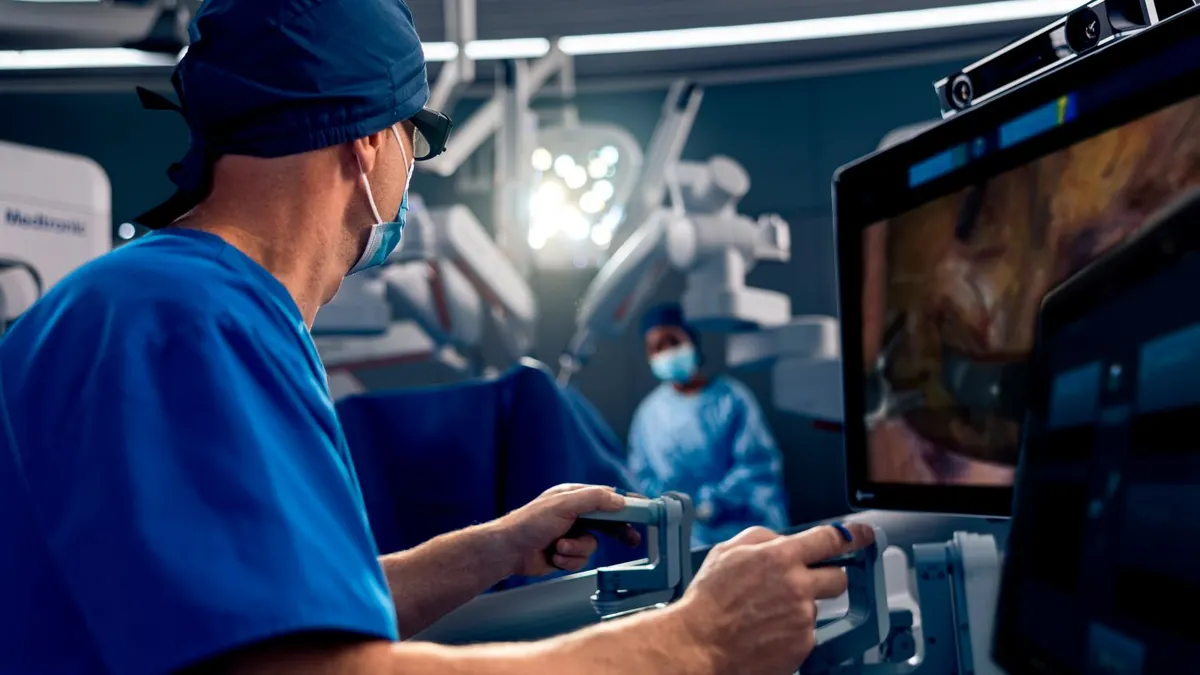
Medtronic, a global leader in medical technology, has officially introduced its latest innovation in digital surgery, the Touch Surgery Aide computing platform, marking a significant milestone in the company’s efforts to integrate artificial intelligence into the operating room. This new platform, featuring the proprietary Instrument Exit Prediction (IEP) application, is making its debut this week at the Society of Robotic Surgery (SRS) annual meeting. The launch represents a strategic move by Medtronic to challenge the long-standing dominance of Intuitive Surgical in the United States soft-tissue robotic surgery market, specifically by leveraging real-time data analytics and computer vision to improve surgical outcomes and safety.
The introduction of the Touch Surgery Aide platform comes at a critical juncture for Medtronic’s Hugo robotic-assisted surgery (RAS) system. Having recently secured U.S. Food and Drug Administration (FDA) clearance for urologic procedures in late 2023, Medtronic is now aggressively expanding the system’s capabilities and clinical indications. The new AI-driven computing platform is designed to provide surgeons with a layer of digital intelligence that was previously unavailable in a real-time intraoperative environment, shifting the focus from mechanical assistance to cognitive support.
Bridging the Gap Between Hardware and Software
The Touch Surgery Aide platform is an evolution of Medtronic’s existing Touch Surgery ecosystem, a digital suite already utilized in more than 1,500 operating rooms globally. While previous iterations of the ecosystem focused heavily on pre-operative planning, surgical education, and post-operative video review, the new platform brings these capabilities into the "live" phase of surgery. By utilizing computer vision—a field of AI that enables computers to derive meaningful information from digital images or videos—the system can process surgical video and procedural data as the operation unfolds.
Jim Peichel, Chief Technology Officer of Medtronic’s Surgical Robotics business, emphasized that this transition represents a fundamental shift in the philosophy of surgical technology. According to Peichel, the industry is moving beyond tools that merely assist a surgeon’s physical movements toward technology that enhances the surgical team’s collective intelligence. The goal is to allow teams to work more efficiently and respond to intraoperative events with greater speed and accuracy.
The Touch Surgery Aide is designed to run multiple AI applications simultaneously. This multi-threaded processing allows the system to monitor various aspects of the procedure without lag, providing a seamless experience for the surgical team. Furthermore, the platform is built on a machine-learning framework, meaning it is designed to continuously learn from the vast amounts of surgical data it processes, theoretically becoming more accurate and predictive over time.
Instrument Exit Prediction: A New Layer of Intraoperative Safety
At the heart of this new launch is the Instrument Exit Prediction (IEP) application, Medtronic’s first real-time AI application specifically tailored for robotic procedures. One of the inherent challenges in robotic surgery is the limited field of view provided by the endoscope. When surgical instruments move outside this visual frame, there is a risk of unintended contact with surrounding tissues or organs, which can lead to complications.
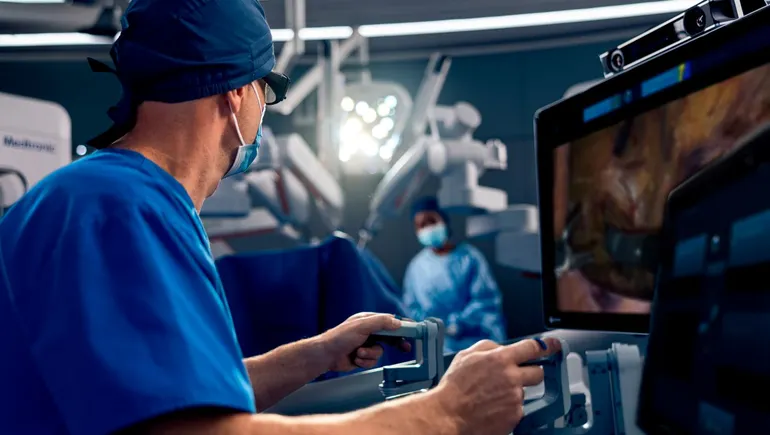
The IEP application addresses this risk by providing visual notifications to the surgeon when an instrument is about to move beyond the camera’s field of vision. By using predictive algorithms, the system can anticipate the trajectory of the robotic arms and alert the console surgeon before the instrument disappears from the screen. This proactive approach is intended to reduce the cognitive load on the surgeon, allowing them to maintain better spatial awareness of the surgical site.
While the initial rollout of IEP is focused on the Hugo RAS system, Medtronic has indicated that the platform’s architecture is flexible. The company plans to expand these AI-enabled support features to traditional laparoscopic surgery in the future. This is a strategic move, as laparoscopy remains the standard of care for many procedures worldwide, and bringing "smart" features to non-robotic cases could significantly broaden Medtronic’s market reach.
The Competitive Landscape: Medtronic vs. Intuitive Surgical
The timing of this announcement is particularly noteworthy given the competitive dynamics of the medical device industry. For over two decades, Intuitive Surgical’s da Vinci system has held a near-monopoly on the soft-tissue robotic surgery market in the United States. However, the landscape is shifting as major medtech players like Medtronic and Johnson & Johnson (with its upcoming Ottava system) enter the fray.
Medtronic’s strategy involves differentiating the Hugo system through modularity and digital integration. Unlike the integrated, multi-arm architecture of the da Vinci, the Hugo system features individual, modular robotic arms that can be moved between operating rooms and configured based on the specific needs of a procedure. By adding a robust AI computing platform like Touch Surgery Aide, Medtronic is attempting to close the "digital gap" with Intuitive, which recently launched its own next-generation system, the da Vinci 5, featuring enhanced sensing and data processing capabilities.
Market analysts suggest that the robotic surgery sector is currently valued at approximately $7 billion to $10 billion globally, with significant room for growth. Currently, only about 3% to 5% of all surgical procedures globally are performed robotically. The remaining 95% represents a massive opportunity for companies that can lower the barriers to adoption, such as cost, complexity, and training requirements. Medtronic’s focus on AI-driven efficiency and safety is seen as a direct attempt to capture a larger share of this expanding market.
Chronology of the Hugo RAS System Development
The debut of the Touch Surgery Aide platform is the latest chapter in a multi-year journey for Medtronic’s robotics program. The development of the Hugo system has been a centerpiece of the company’s long-term growth strategy:
- 2019: Medtronic officially unveils the Hugo RAS system to the public, highlighting its modular design and "open" console, which allows surgeons to maintain situational awareness in the OR.
- 2021: The Hugo system receives the CE Mark in Europe, allowing for its use in urologic and gynecologic procedures across the continent.
- 2022: Medtronic begins a global rollout, securing regulatory approvals in markets such as Canada, Australia, and several nations in Latin America and Asia.
- December 2023: The Hugo system receives FDA clearance for urologic procedures in the United States, marking its official entry into the world’s largest healthcare market.
- Early 2024: Medtronic files for additional FDA clearances, seeking to expand Hugo’s indications to include general surgery and gynecologic specialties.
- Present: The launch of the Touch Surgery Aide and IEP at the SRS meeting signals the beginning of Medtronic’s "AI-first" era in surgical robotics.
Supporting Data and Market Implications
The push toward AI in surgery is supported by a growing body of data suggesting that digital tools can reduce variability in surgical performance. According to industry reports, surgical errors and complications cost the global healthcare system billions of dollars annually. Studies have shown that real-time feedback and standardized training—both of which are core components of the Touch Surgery Aide platform—can reduce the "learning curve" for complex robotic procedures.

Medtronic’s existing Touch Surgery database includes tens of thousands of hours of surgical video, which serves as the "training set" for its AI algorithms. By leveraging this data, the company aims to provide insights that help hospital administrators optimize OR turnover times and help surgeons refine their techniques.
From a financial perspective, Medtronic’s investment in robotics and AI is a high-stakes endeavor. The company has invested hundreds of millions of dollars in the Hugo platform. Success in the U.S. market is essential for the company to achieve a return on this investment and to offset pressures in its more mature business segments, such as cardiac rhythm management and spine surgery.
Stakeholder Reactions and Industry Impact
The reaction from the surgical community at the SRS meeting has been one of cautious optimism. Surgeons have long advocated for better "heads-up" displays and safety features that prevent "out-of-sight" instrument movements. Dr. Vipul Patel, a prominent robotic surgeon and President of the Society of Robotic Surgery, has previously noted that the integration of AI will be the next great frontier in improving the precision of minimally invasive surgery.
Hospital administrators are also watching these developments closely. The modular nature of the Hugo system, combined with the data-driven insights provided by the Touch Surgery Aide, offers a potential path toward better asset utilization. If a computing platform can help a surgical team perform procedures more safely and efficiently, it could lead to shorter hospital stays and fewer readmissions, directly impacting a hospital’s bottom line in a value-based care environment.
Looking Ahead: The Future of Autonomous Assistance
While Medtronic’s IEP application is a predictive tool, it is not autonomous. The surgeon remains in full control of the robotic arms at all times. However, the industry is moving toward a future where "shared autonomy" may become a reality. In such a scenario, AI could handle routine tasks—such as suturing or camera positioning—while the surgeon focuses on the most critical aspects of the operation.
The launch of the Touch Surgery Aide is a foundational step toward that future. By establishing a robust computing platform capable of real-time processing, Medtronic has built the infrastructure necessary to deploy more advanced AI features as they are developed and cleared by regulators.
As Medtronic continues to pursue expanded FDA indications for the Hugo system, the integration of real-time AI will likely serve as a key differentiator. In a market where hardware capabilities are becoming increasingly standardized, the "software layer"—the intelligence that guides the hardware—is poised to become the primary battleground for medtech innovation. For now, Medtronic’s debut at the SRS meeting serves as a clear signal that the company intends to be a leader, not just a participant, in the digital transformation of the modern operating room.
