

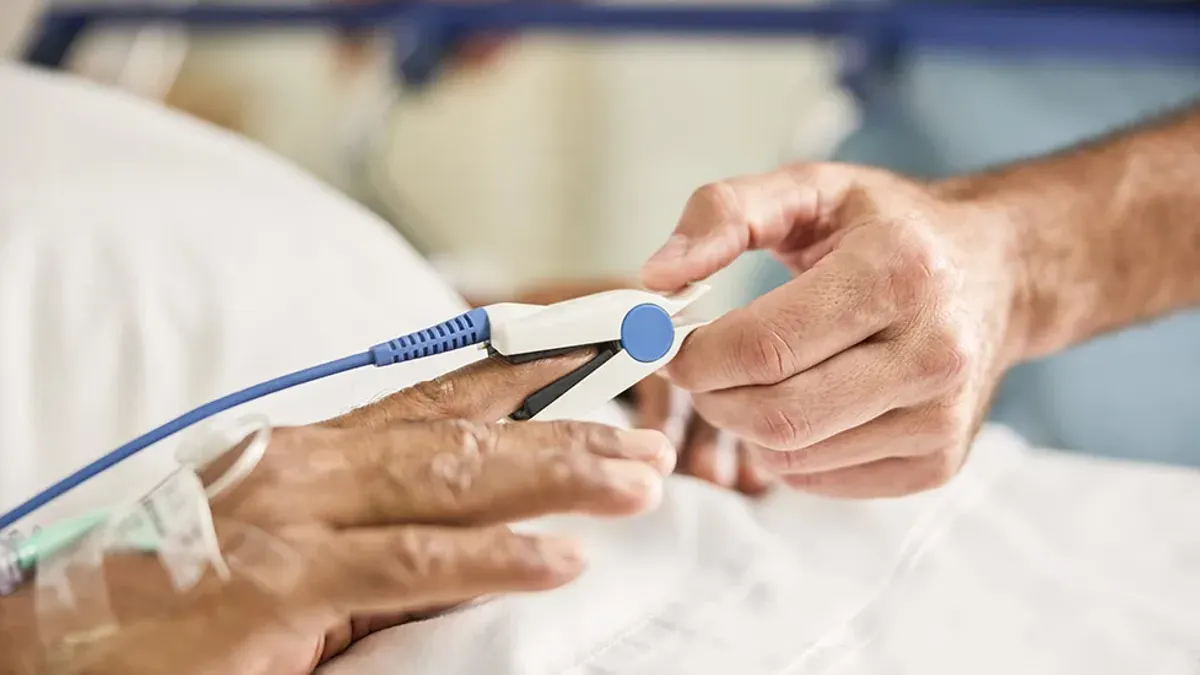
In a significant move toward addressing long-standing racial disparities in medical technology, Philips has announced that it received clearance from the U.S. Food and Drug Administration (FDA) for its newest SpO₂ clip sensor. The updated device is engineered to provide high-accuracy oxygen saturation readings across a diverse spectrum of skin tones, responding to years of clinical data suggesting that traditional pulse oximeters often fail patients with darker skin pigmentation. The company plans to introduce the sensor to select global markets later this year, positioning itself at the forefront of a broader industry shift toward equitable healthcare monitoring.
The clearance of the SpO₂ clip sensor follows a rigorous testing phase conducted under Philips’ pulse oximetry validation program. According to the company, the device was subjected to extensive desaturation studies designed to evaluate performance across varied patient demographics and clinical conditions. These studies demonstrated an accuracy root mean square (ARMS) value of 1.6%, a metric used to quantify the difference between the pulse oximeter’s readings and the actual arterial blood oxygen saturation. This performance level is notably higher than the 3% accuracy threshold recommended by the International Organization for Standardization (ISO) and currently recognized by the FDA.
Perhaps most critically, Philips reported that the device’s performance remained consistent across the full range of skin tones. The company stated that the variance in accuracy between individuals with light and dark skin pigmentation was less than 0.5%, a figure that suggests the technological gap in monitoring accuracy may finally be closing.
The Technical Challenge: Melanin and Light Absorption
To understand the importance of this clearance, it is necessary to examine the underlying physics of pulse oximetry. Pulse oximeters work by emitting two wavelengths of light—red and infrared—through a translucent part of the patient’s body, typically a fingertip or earlobe. The device measures how much light is absorbed by the blood, distinguishing between oxygenated and deoxygenated hemoglobin.
However, melanin—the pigment responsible for skin color—also absorbs light, particularly in the red spectrum. For decades, researchers have warned that higher levels of melanin can interfere with the sensor’s ability to accurately calculate oxygen levels, often leading to "occult" or hidden hypoxemia. In these cases, a device might display a "normal" oxygen reading while the patient’s actual arterial oxygen levels are dangerously low.
The Philips validation program sought to overcome this by refining the algorithms used to interpret light absorption and by testing the hardware on a more representative sample of the population. By achieving a variance of less than 0.5% across skin tones, the new SpO₂ clip sensor addresses the primary technical criticism of previous generations of pulse oximetry.
A History of Disparity and Clinical Consequences
The push for more accurate pulse oximeters is rooted in a growing body of evidence that racial bias in medical devices has led to poorer health outcomes for minority populations. The issue gained national prominence in 2020 during the height of the COVID-19 pandemic, when oxygen monitoring became a critical factor in determining hospital admissions and treatment protocols.
In December 2020, a landmark study published in the New England Journal of Medicine (NEJM) revealed that Black patients were nearly three times more likely than white patients to have undetected hypoxemia. The study, which analyzed thousands of paired pulse oximeter and arterial blood gas readings, found that the devices frequently overestimated oxygen levels in Black patients, potentially leading to the premature discharge of individuals who required supplemental oxygen or intensive care.
The clinical implications were further clarified in a 2022 study published in JAMA Internal Medicine. That research found that disparities in pulse oximeter accuracy led to significant delays in COVID-19 treatment eligibility for Black and Hispanic patients. Because many hospitals relied on pulse oximetry thresholds to determine who should receive therapies like remdesivir or dexamethasone, patients with darker skin were often excluded from life-saving treatments until their condition had deteriorated significantly.

The Regulatory Timeline: From Warnings to New Standards
The FDA has been under increasing pressure from clinicians, patient advocates, and lawmakers to overhaul the standards for pulse oximeter clearance. The timeline of regulatory action reflects a gradual but steady pivot toward requiring more robust evidence of equity in device performance.
- February 2021: The FDA issued a formal Safety Communication warning healthcare providers and the public that pulse oximeters may be less accurate in people with dark skin pigmentation. The agency advised that the devices should be used as an estimate and that clinical decisions should be based on trends over time rather than a single reading.
- November 2022: The FDA’s Medical Devices Advisory Committee held a public meeting to discuss the "hidden hypoxemia" crisis. Experts at the meeting emphasized that current "cleared" devices were often tested on groups that did not reflect the diversity of the U.S. population.
- Early 2025: In the final weeks of the Biden administration, the FDA issued a draft guidance document that significantly raised the bar for pulse oximeter manufacturers. The guidance called for clinical studies to include a minimum of 150 participants and provided specific mandates on the inclusion of various skin tones, utilizing the Monk Skin Tone (MST) Scale rather than the older, less precise Fitzpatrick scale.
- Present Day (2026): While the 2025 guidance remains on the FDA’s "under construction" list for the current fiscal year, the agency has begun applying these more stringent expectations to new submissions, as evidenced by the recent clearances for Philips and its competitors.
Competitive Landscape and Industry Response
Philips is not alone in its quest to capture the "equitable medtech" market. Just last month, Medtronic announced that it had received FDA clearance for an updated version of its Nellcor pulse oximetry system. Medtronic claimed its system performed better than the requirements set out in the FDA’s draft guidance, signaling a competitive race to provide the most reliable sensors for diverse patient populations.
The entry of these updated devices into the market represents a major shift for hospital procurement departments. For years, health systems have faced potential liability and ethical concerns regarding the use of biased monitoring equipment. With the arrival of cleared, high-accuracy alternatives from major players like Philips and Medtronic, many hospitals are expected to begin phased replacements of their existing sensor inventories.
Industry analysts suggest that the move toward equitable pulse oximetry is part of a larger trend in medical device development. From AI algorithms in radiology to wearable heart monitors, manufacturers are being forced to prove that their technologies work equally well for all patients, regardless of race, gender, or age.
Broader Implications for Health Equity
The clearance of the Philips SpO₂ clip sensor is being viewed by health equity advocates as a victory, but one that comes after years of avoidable harm. Dr. Thomas Sekeres, a clinical researcher specializing in health disparities, noted that while the technology is a step forward, the "medical community must remain vigilant."

"A more accurate sensor is a tool, not a cure-all," Sekeres said in a statement following the announcement. "We must ensure that these devices are actually deployed in the communities that need them most—safety-net hospitals and clinics that often operate on older equipment. The disparity doesn’t end when the technology is invented; it ends when the technology is accessible."
Furthermore, the data generated by Philips’ 1.6% ARMS value sets a new benchmark for the industry. By proving that near-identical accuracy is possible across skin tones, the company has effectively removed the technical excuse that "melanin interference is an unavoidable limitation of the physics." This may pave the way for the FDA to eventually mandate the retirement of older, less accurate sensors that do not meet these new equity standards.
Looking Ahead: Global Rollout and Future Monitoring
Philips has indicated that the new SpO₂ clip sensor will be rolled out in "certain markets around the world" later in 2026. The global nature of this rollout is significant, as the issues of pulse oximetry bias are not confined to the United States. In regions with predominantly dark-skinned populations, such as Sub-Saharan Africa and parts of Southeast Asia, the reliance on biased Western technology has long been a concern for international health organizations.
As Philips moves toward commercialization, the medical community will be watching closely to see how the device performs in real-world clinical settings, away from the controlled environment of validation studies. If the 0.5% variance holds true in busy emergency rooms and intensive care units, it will mark the end of an era of "hidden hypoxemia" and the beginning of a more precise, inclusive era in patient monitoring.
The success of this sensor also likely signals the future direction of Philips’ wider patient monitoring portfolio. As healthcare continues to move toward home-based care and remote patient monitoring, the need for accurate, consumer-friendly, and equitable sensors will only grow. For now, the FDA clearance of the SpO₂ clip sensor stands as a milestone in the ongoing effort to ensure that the color of a patient’s skin does not determine the quality of their care.
