









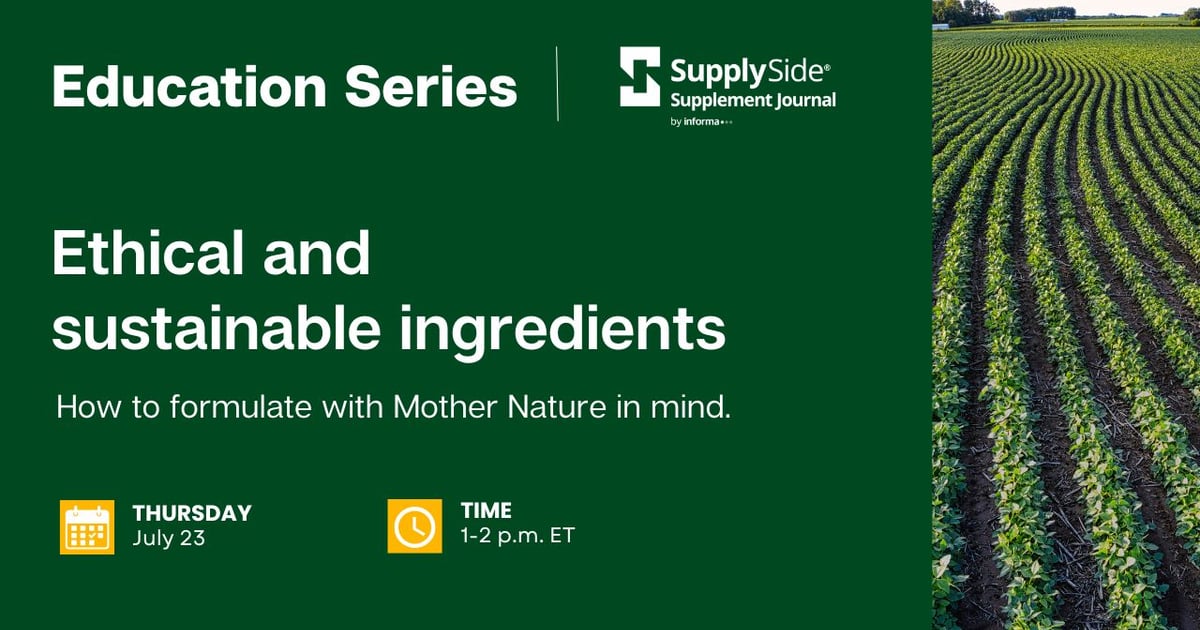
The global supplement industry is currently confronting a complex web of challenges, with persistent supply chain disruptions and a growing scarcity of key resources amplifying existing concerns. These intertwined issues necessitate a strategic re-evaluation of ingredient procurement, formulation practices, and the overarching commitment to sustainability. Recognizing the critical nature of these challenges, SupplySide Supplement Journal has announced an upcoming educational webinar series designed to equip industry professionals with the knowledge and tools to navigate this evolving landscape. The panel, comprised of leading experts, will delve into the crucial considerations for qualifying and formulating with sustainable ingredients, offering practical insights into integrating ethical sourcing and environmental stewardship into future supplement innovations.
The webinar aims to address the immediate and long-term implications of current market dynamics on the supplement sector. Factors such as geopolitical instability, extreme weather events impacting agricultural yields, and increased global demand for health and wellness products have created a volatile environment for ingredient availability and pricing. This volatility directly affects manufacturers’ ability to produce consistent, high-quality supplements, potentially leading to product shortages and increased costs for consumers. Furthermore, the increasing consumer awareness and demand for ethically produced and environmentally friendly products are placing additional pressure on companies to demonstrate a genuine commitment to sustainability throughout their supply chains.
Understanding the Current Landscape: A Deep Dive into Supply Chain Vulnerabilities

The modern supplement industry relies on a global network of suppliers for a vast array of raw materials, from botanical extracts and amino acids to vitamins and minerals. This intricate supply chain, while efficient in normal times, has proven susceptible to shocks. The COVID-19 pandemic exposed fragilities, leading to port congestion, labor shortages, and increased shipping costs that continue to ripple through the sector. More recently, conflicts in key agricultural regions have disrupted the supply of essential oils and plant-based ingredients. For instance, the availability of certain turmeric varieties, crucial for their anti-inflammatory properties, has been impacted by climate change and localized agricultural challenges in India, a primary sourcing region. Similarly, the sourcing of omega-3 fatty acids, vital for cardiovascular and cognitive health, faces pressure from overfishing and the need for sustainable aquaculture practices.
The scarcity of certain resources is not a new phenomenon, but it has been exacerbated by increased demand. The growing popularity of plant-based diets and the heightened focus on preventative health have driven up the demand for a wide range of ingredients, from plant proteins and adaptogens to probiotics and prebiotics. This increased demand, coupled with supply chain limitations, has led to price hikes and, in some cases, outright shortages of key components. For example, the market for certain adaptogenic herbs, such as ashwagandha and rhodiola, has seen exponential growth, placing strain on cultivation and harvesting capacities, and raising concerns about overharvesting and the potential for unsustainable practices.
SupplySide Supplement Journal’s Initiative: A Beacon for Industry Advancement
SupplySide Supplement Journal, a leading publication dedicated to the business and science of the dietary supplement industry, has consistently provided a platform for industry dialogue and knowledge sharing. The upcoming webinar series represents a proactive step to address the pressing challenges facing its readership. By bringing together top industry experts, the journal aims to foster a collaborative environment where practical solutions and forward-thinking strategies can be developed and disseminated.
The decision to focus on sustainable ingredient sourcing and formulation is a strategic one, acknowledging that sustainability is no longer a niche concern but a fundamental imperative for long-term business viability and consumer trust. The webinar’s learning objectives are designed to provide actionable takeaways, empowering attendees to make informed decisions that benefit both their businesses and the planet.
Key Learning Objectives: Empowering Innovation Through Sustainability
While the specific learning objectives are not detailed in the provided text, based on the context, they are likely to revolve around:
- Identifying and Qualifying Sustainable Ingredient Suppliers: This would involve understanding the criteria for evaluating suppliers, including their environmental impact, labor practices, and commitment to ethical sourcing. It might also cover the importance of third-party certifications and audits.
- Formulating with Sustainable Ingredients: This objective would focus on the practical aspects of ingredient selection, considering factors like biodegradability, recyclability of packaging, and the environmental footprint of the ingredient’s cultivation or production. It could also explore how to maintain efficacy and bioavailability while prioritizing sustainable options.
- Integrating Ethical Sourcing into Product Development: This would delve into the principles of fair trade, community engagement, and ensuring that ingredient sourcing contributes positively to the social and economic well-being of the communities involved.
- Communicating Sustainability Efforts to Consumers: This objective would likely address how companies can authentically and effectively communicate their sustainability initiatives to build consumer trust and loyalty.
Expert Panel: A Convergence of Knowledge and Experience
The caliber of the expert panel is crucial to the success of such an initiative. While the names of the experts are not provided, their selection would undoubtedly be based on their deep understanding of the supplement industry, their expertise in supply chain management, and their demonstrated commitment to sustainability. Potential speakers could include:
- Supply Chain and Logistics Specialists: Individuals with extensive experience in navigating complex global supply chains, understanding risk management, and identifying alternative sourcing strategies.
- Sustainability Officers or Consultants: Experts who can provide insights into environmental impact assessments, life cycle analysis, and the development of robust sustainability frameworks.
- Ingredient Manufacturers and Innovators: Representatives from companies at the forefront of developing and producing sustainable ingredients, who can share case studies and best practices.
- Regulatory and Compliance Experts: Professionals who can advise on the evolving regulatory landscape surrounding ingredient sourcing and sustainability claims.
- Academics and Researchers: Scientists and researchers who can provide data-driven insights into the environmental impact of various ingredients and production methods.
The Underwriting Partner: Bionap’s Commitment to Sustainable Solutions
The sponsorship of this webinar by Bionap is a significant indicator of the company’s dedication to advancing sustainable practices within the supplement industry. Bionap, as suggested by the provided image, is likely a company involved in the production or supply of ingredients. Their underwriting signifies a belief in the importance of this topic and a willingness to support initiatives that promote responsible ingredient sourcing and formulation. Companies like Bionap often play a vital role in developing and offering ingredients that meet stringent sustainability criteria, thereby enabling their clients in the supplement industry to achieve their own sustainability goals. This partnership underscores the growing recognition within the ingredient supply sector that sustainability is a key differentiator and a driver of innovation.
Broader Implications for the Supplement Industry and Consumers
The challenges posed by supply chain disruptions and limited resources, coupled with the imperative for sustainability, have profound implications for the entire supplement ecosystem.
-
For Manufacturers: Companies that proactively embrace sustainable sourcing and formulation are likely to gain a competitive advantage. They can build greater resilience into their supply chains, reduce their reliance on volatile single-source suppliers, and appeal to a growing segment of environmentally conscious consumers. This requires investment in research and development, supplier relationship management, and potentially the adoption of new technologies. The ability to secure a consistent supply of ethically and sustainably sourced ingredients can mitigate future risks and ensure business continuity.
-
For Consumers: While the transition to more sustainable ingredients might initially lead to higher product prices, it ultimately benefits consumers through the availability of higher-quality, ethically produced products. Consumers are increasingly seeking transparency and assurance that the products they purchase align with their values. Companies that can demonstrate a genuine commitment to sustainability are likely to foster greater brand loyalty and trust. Furthermore, a focus on sustainable agriculture and resource management can contribute to the long-term availability of essential nutrients and natural resources.
-
For the Environment: The supplement industry’s commitment to sustainability can have a significant positive impact on the environment. This includes reducing carbon emissions associated with ingredient production and transportation, minimizing waste, conserving water resources, protecting biodiversity, and supporting regenerative agricultural practices. The shift towards more sustainable sourcing can help mitigate the environmental degradation often associated with large-scale agricultural production and resource extraction.
Looking Ahead: A Path Towards Resilience and Responsibility
The upcoming webinar hosted by SupplySide Supplement Journal is a timely and essential initiative. It addresses the critical intersection of supply chain resilience, resource management, and the imperative for sustainable practices. By bringing together experts and fostering knowledge exchange, this event has the potential to guide the supplement industry towards a future where innovation and responsibility go hand in hand.
The challenges are significant, but so too are the opportunities. Companies that can successfully navigate these complexities by prioritizing ethical sourcing, environmental stewardship, and transparent communication will not only thrive in the current market but also contribute to a more sustainable and equitable future for the supplement industry and beyond. The focus on practical tips and actionable strategies suggests a commitment to moving beyond theoretical discussions to concrete implementation, which is crucial for driving meaningful change. This webinar represents a vital step in that direction, equipping industry stakeholders with the insights needed to build a more robust and conscientious future for dietary supplements.