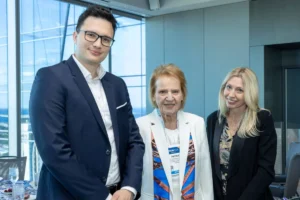








The Endocrine Society has officially announced that Rebecca Reynolds, MD, PhD, a distinguished physician-scientist and academic leader, has been selected as the recipient of the 2026 International Excellence in Endocrinology Laureate Award. This prestigious honor recognizes Dr. Reynolds’ profound contributions to the understanding of metabolic medicine, specifically regarding the complex endocrine pathways that govern maternal and fetal health. As the Personal Chair of Metabolic Medicine and Dean International at the University of Edinburgh’s College of Medicine and Veterinary Medicine, Dr. Reynolds has spent decades investigating how the intrauterine environment serves as a foundational blueprint for long-term health, influencing the risk of chronic diseases across the lifespan.
The Laureate Awards are among the highest honors in the field of endocrinology, established to recognize the highest achievements in the endocrine community, including breakthrough research, exemplary mentorship, and international leadership. Dr. Reynolds’ selection for the 2026 award highlights her role as a global authority on the "developmental origins of health and disease" (DOHaD) and her success in translating complex laboratory findings into actionable clinical protocols that improve outcomes for mothers and their children.
A Career Defined by Maternal-Fetal Metabolic Research
Dr. Reynolds’ academic journey has been driven by a fascination with the physiological "stress test" that pregnancy imposes on the female body. Her research focuses on the intersection of obesity, metabolic health, and endocrine function during gestation. In the field of endocrinology, pregnancy is viewed as a unique window of opportunity where the hormonal shifts required to support a developing fetus can reveal a mother’s underlying predisposition to metabolic disorders, such as type 2 diabetes and cardiovascular disease.

Throughout her tenure at the University of Edinburgh, Dr. Reynolds has pioneered studies into how maternal obesity and high cortisol levels during pregnancy can program the fetus for future metabolic struggles. Her work has elucidated the mechanisms by which endocrine signals cross the placenta, altering fetal growth and potentially predisposing the next generation to obesity and metabolic syndrome. By identifying these pathways, her research has provided a scientific basis for early interventions that can mitigate these risks before a child is even born.
The significance of her work is underscored by the rising global prevalence of obesity. According to the World Health Organization (WHO), maternal obesity is associated with an increased risk of complications including gestational diabetes, pre-eclampsia, and stillbirth. Dr. Reynolds’ research has been instrumental in characterizing these risks and developing strategies to manage them, ensuring that endocrinology remains at the forefront of obstetric care.
Influence on Global Health Policy and Clinical Guidelines
One of the defining characteristics of Dr. Reynolds’ career is her ability to bridge the gap between bench science and international policy. Her research has not merely existed in academic journals but has been integrated into the clinical guidelines used by healthcare providers worldwide. Her findings have informed the Royal College of Obstetricians and Gynaecologists (RCOG) in the United Kingdom, helping to shape the standards of care for pregnant women with metabolic concerns.
Furthermore, Dr. Reynolds has played a pivotal role in the Scottish Diabetes Prevention Programme, focusing on identifying women who develop gestational diabetes and ensuring they receive long-term follow-up care to prevent the transition to chronic type 2 diabetes. Her international reach is perhaps most evident in her contributions to the Obstetric Ultrasound Guideline for Malawi in 2021. This work has been vital in improving maternal and neonatal outcomes in regions with limited healthcare infrastructure and challenging socioeconomic conditions.
Professor Ruth Andrew, PhD, Chair of Pharmaceutical Endocrinology at the University of Edinburgh, noted in her nomination that Dr. Reynolds’ work has a disproportionately positive impact on vulnerable populations. By advocating for better screening and metabolic management in pregnancy, Reynolds has helped address health disparities that often affect women in low-resource settings.
Addressing the Gender Gap in Medical Research
In her reflections on receiving the Laureate Award, Dr. Reynolds has emphasized the critical need for increased funding and attention toward women’s health research. Historically, clinical research has often leaned toward male-centric models, leaving significant gaps in the understanding of female-specific physiological processes. Dr. Reynolds views pregnancy as a central pillar of this research gap, noting that while women represent half of the global population, the evidence base for maternal health often lags behind other medical disciplines.
The "stress test" of pregnancy, as Dr. Reynolds describes it, is not only a biological phenomenon but a public health indicator. When a woman’s body is unable to meet the metabolic demands of pregnancy, it serves as a warning sign for future health challenges. By prioritizing research into these windows of vulnerability, Dr. Reynolds argues that the medical community can implement preventative measures decades before chronic diseases manifest, thereby reducing the global burden of metabolic illness.
The Science of Fetal Programming and Endocrine Pathways
The core of Dr. Reynolds’ scientific contribution lies in the study of fetal programming. This concept suggests that the environment in the womb—determined largely by maternal health and endocrine balance—can permanently alter the structure and function of the fetus’s organs. For example, her research has explored how maternal stress and the subsequent rise in glucocorticoids can influence the development of the fetal brain and metabolic systems.
In the endocrine context, the placenta acts as a sophisticated sensory organ, interpreting maternal signals and adjusting fetal growth accordingly. Dr. Reynolds’ work has explored how maternal obesity can lead to placental inflammation and altered nutrient transport, which in turn affects fetal adiposity (fat storage). These insights are crucial for developing clinical trials aimed at optimizing maternal nutrition and metabolic health to ensure the best possible start for the infant.
The 2026 International Excellence Award recognizes the complexity of this work. Investigating the "mother-fetus dyad" requires a multidisciplinary approach, blending endocrinology, obstetrics, pediatrics, and epidemiology. Dr. Reynolds’ leadership in this space has fostered collaborations across these fields, resulting in a more holistic understanding of how life begins and how it can be protected.
Personal Resilience and the Pursuit of Scientific Excellence
Beyond the laboratory and the lecture hall, Dr. Reynolds attributes her professional stamina and clarity to her personal interests, which include Iyengar yoga and "Munro bagging." The latter involves climbing Scottish mountains over 3,000 feet, of which there are 282. Dr. Reynolds has nearly completed this monumental task, a feat that mirrors the persistence and endurance required in high-level scientific research.
She has noted that the physical and mental discipline of yoga and hillwalking provides a necessary counterbalance to the "all-consuming" nature of science. For Dr. Reynolds, the Scottish countryside serves as a space for reflection, where the complex problems of metabolic medicine can be processed away from the pressures of the clinic. This holistic approach to life and work has made her a role model for early-career researchers and clinicians within the Endocrine Society and beyond.
Chronology of Recognition and Future Outlook
The announcement of the 2026 Laureate Awards sets the stage for the Endocrine Society’s upcoming annual meetings. The formal presentation of the International Excellence Award will take place at ENDO 2026, the world’s premier event for endocrine research and clinical care.
- Early Career: Dr. Reynolds focused her PhD on the long-term health outcomes influenced by the intrauterine environment, establishing the foundation for her life’s work.
- Mid-Career: Appointment to the University of Edinburgh, where she rose to become the Personal Chair of Metabolic Medicine. Her work began influencing UK-wide clinical guidelines.
- 2021: Key contributions to the Malawi Obstetric Ultrasound Guidelines, demonstrating her commitment to global health equity.
- 2024: Named the 2026 International Excellence in Endocrinology Laureate.
- 2026: Scheduled to accept the award and present her findings to the global endocrine community.
Looking ahead, Dr. Reynolds remains focused on the "unanswered questions" regarding human pregnancy and fetal growth. As genomic and proteomic technologies advance, she anticipates new opportunities to refine our understanding of maternal-fetal communication. Her ongoing work continues to investigate how lifestyle interventions and pharmaceutical therapies can be safely applied during pregnancy to break the cycle of intergenerational obesity.
Broader Implications for Global Healthcare
The recognition of Dr. Reynolds by the Endocrine Society signals a broader shift in the medical community toward valuing preventative, life-course-oriented medicine. By focusing on the very beginning of life, Dr. Reynolds’ work suggests that many of the world’s most pressing health challenges—including the obesity epidemic and the rise of non-communicable diseases—can be addressed through better maternal care.
Her award serves as a reminder that endocrinology is not just about managing existing diseases like diabetes or thyroid disorders, but about understanding the fundamental hormonal triggers that shape human development. As Dr. Reynolds prepares to accept her award in 2026, her legacy is already visible in the healthier outcomes of the mothers and children who have benefited from her research, and in the international guidelines that now prioritize metabolic health during the critical window of pregnancy.