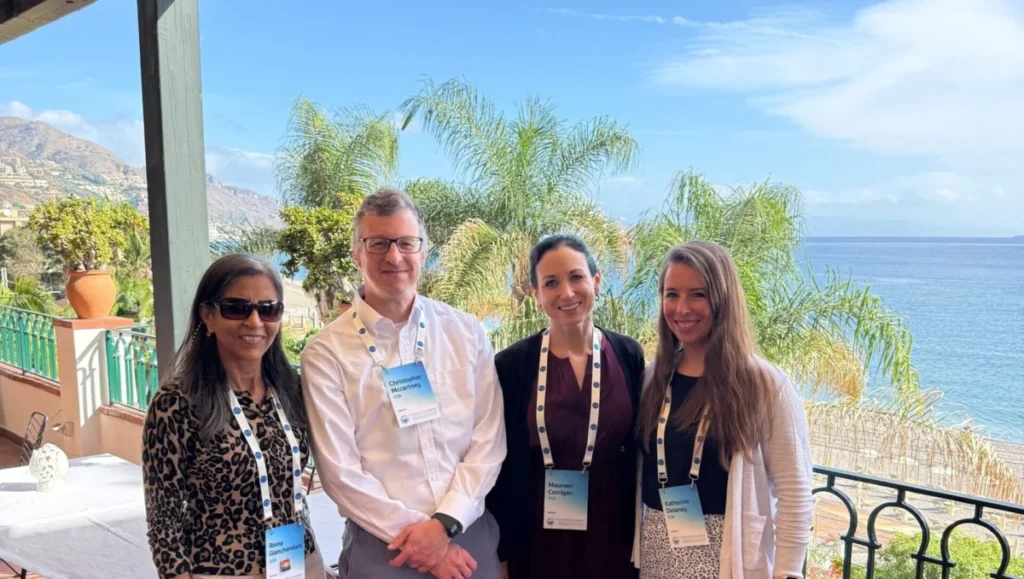
The Endocrine Society underscored its commitment to global medical excellence and the evolution of clinical methodology through its high-level participation in the Evidence Based Health Care (EBHC) 2026 Conference, held in Taormina, Italy, from October 21 to 24. Representing a pivotal moment for the intersection of endocrinology and modern data science, the delegation focused on the transformative role of artificial intelligence (AI) and digital tools in the production and implementation of clinical practice guidelines. The event served as a joint assembly, merging the 11th EBHC International Conference with the 11th Conference of the International Society for Evidence-Based Health Care (ISEHC), drawing experts from across the globe to the Sicilian coast to address the most pressing challenges in contemporary evidence synthesis.
The Society’s delegation featured prominent leaders in clinical policy and methodology, including Roma Gianchandani, MD, Chair of the Clinical Guidelines Committee, and Christopher R. McCartney, MD, a member of the Board of Directors and the Endocrine Society Guideline Methodologist. They were joined by the Society’s professional staff specialized in evidence-based practice: Maureen Corrigan, MPH, Director of Evidence Based Practice, and Katie Delaney, Program Manager of Evidence Based Practice. Their presence at the summit highlighted the Society’s proactive approach to adopting "living guidelines"—a methodology designed to ensure that clinical recommendations remain current in an era of rapid scientific discovery.
The Evolution of Evidence-Based Healthcare in a Digital Era
The EBHC 2026 conference arrived at a critical juncture for the medical community. For decades, the process of developing clinical practice guidelines (CPGs) has been a rigorous but slow-moving endeavor, often taking years from the initial literature review to final publication. However, the exponential growth of medical literature—with thousands of new studies published daily—has rendered traditional update cycles increasingly obsolete. The Taormina sessions focused extensively on how AI and automated digital tools can bridge the gap between research and practice.

The primary objective of the joint conference was to explore the "digital transformation" of healthcare research. Discussions delved into the use of machine learning algorithms to screen vast databases of clinical trials, the application of natural language processing (NLP) to synthesize data from disparate sources, and the development of platforms that allow for "real-time" evidence updates. By integrating these tools, organizations like the Endocrine Society aim to transition from static, multi-year update cycles to a dynamic "living" model where guidelines are adjusted as soon as high-impact evidence becomes available.
Strategic Representation and Methodological Leadership
The Endocrine Society’s involvement in Taormina was not merely observational but strategic. Dr. Roma Gianchandani, in her capacity as the Clinical Guidelines Committee Chair, oversees the development of the Society’s gold-standard recommendations that influence endocrine care globally. Her participation, alongside Dr. Christopher R. McCartney, ensures that the Society’s internal processes remain at the vanguard of methodological rigor.
Dr. McCartney’s role as a guideline methodologist is particularly significant in the context of the EBHC conference. Methodologists are responsible for the structural integrity of clinical advice, ensuring that recommendations are based on a transparent, reproducible, and unbiased assessment of available data. As the international community moves toward AI-assisted systematic reviews, the expertise of human methodologists is required to validate algorithmic outputs and maintain the "human-in-the-loop" oversight necessary for patient safety.
The presence of Maureen Corrigan and Katie Delaney further emphasized the operational commitment of the Society. Their work involves the practical application of evidence-based practice (EBP) frameworks, managing the complex workflow that translates raw research into actionable clinical steps. By engaging with the International Society for Evidence-Based Health Care, the staff ensures that the Endocrine Society’s administrative and programmatic structures are synchronized with the latest international standards.
The Challenge of Information Overload and the AI Solution
One of the central themes discussed by the international evidence community in Italy was the "information paradox" in modern medicine. While more data is available than ever before, the sheer volume of information makes it difficult for clinicians to discern high-quality evidence from low-quality or redundant studies.
According to data presented at various EBHC forums, the time required to conduct a high-quality systematic review has historically averaged between 12 and 24 months. By the time a guideline is published, the earliest studies included in the review may already be several years old. The experts at EBHC 2026 argued that AI-driven automation could reduce the time spent on manual tasks—such as title and abstract screening or data extraction—by as much as 30% to 50%.
The Endocrine Society’s delegation participated in workshops and panels examining these efficiencies. The goal is to move toward a "near real-time" update procedure. For endocrine disorders such as diabetes, thyroid disease, or osteoporosis, where pharmaceutical innovations and clinical trial results emerge frequently, the ability to update a guideline within months rather than years could significantly improve patient outcomes and healthcare efficiency.
Aligning with Global Standards and Future Methodologies
The participation of the Endocrine Society in the international evidence community is a vital component of its long-term strategy. Katie Delaney, the Society’s Program Manager for Evidence Based Practice, noted that taking part in such gatherings "keeps the Society’s guideline methodology in line with global standards and helps shape how guidelines will be made in the future."
This alignment is crucial for the international credibility of the Society’s publications. Clinical practice guidelines are increasingly used not only by physicians but also by insurance providers, government health agencies, and patient advocacy groups to determine standards of care and reimbursement policies. By adhering to the standards set by the International Society for Evidence-Based Health Care, the Endocrine Society ensures that its recommendations are robust enough to withstand rigorous scrutiny and are applicable across different healthcare systems worldwide.
Furthermore, the conference provided a platform for the Society to influence the development of these global standards. As AI tools are integrated into the guideline-making process, new ethical and technical questions arise regarding transparency, algorithmic bias, and data privacy. The Endocrine Society’s leadership helps ensure that the specific needs of the endocrinology community are considered as these international frameworks are drafted.
Chronology and Context of the EBHC Conference
The 11th EBHC International Conference in Taormina represents more than two decades of progress in the field of evidence-based medicine. The movement, which gained significant momentum in the early 1990s, has evolved from a focus on individual clinical expertise to a sophisticated, data-driven discipline.
- October 21, 2026: The conference opened with a focus on the history of EBHC and the foundational principles of evidence synthesis.
- October 22, 2026: Sessions shifted toward "The Digital Revolution," where the Endocrine Society delegation engaged with experts on AI-assisted literature screening and the challenges of "big data" in healthcare.
- October 23, 2026: The focus turned to "Living Evidence," discussing the logistical and technical requirements for maintaining clinical guidelines that never "expire" but are instead continuously updated.
- October 24, 2026: The final day emphasized global equity in evidence-based healthcare, ensuring that digital tools and updated guidelines are accessible to clinicians in low- and middle-income countries.
The choice of Taormina as a venue was symbolic, as the region has a long history of hosting intellectual and scientific exchanges. By bringing together the 11th EBHC International Conference and the 11th ISEHC Conference, organizers created a high-density environment of expertise, fostering collaborations that are expected to yield new methodological white papers and international consensus statements in the coming years.
Broader Implications for Clinical Practice and Patient Care
The implications of the Endocrine Society’s work at EBHC 2026 extend far beyond the technicalities of guideline production. For the average clinician, the successful integration of AI and digital tools means more reliable, up-to-date, and accessible guidance at the point of care. Instead of navigating hundreds of pages of static PDF documents, future guidelines may be delivered through interactive digital platforms that integrate directly with Electronic Health Records (EHRs).
For patients, the "living guidelines" model promises a higher standard of care. It ensures that the latest breakthroughs in endocrine research—whether a new drug for hormone replacement therapy or a more effective monitoring device for glucose levels—are vetted and incorporated into clinical recommendations with minimal delay.
As the Endocrine Society continues to refine its methodology in the wake of the Taormina conference, the focus remains on the balance between innovation and integrity. While AI offers unprecedented speed, the Society’s leadership emphasizes that the clinical judgment of experienced practitioners like Dr. Gianchandani and Dr. McCartney remains the final arbiter of medical evidence. The goal is a synergistic relationship where technology handles the data processing and human experts provide the nuance, ethics, and clinical context.
Conclusion and Looking Forward
The Endocrine Society’s participation in EBHC 2026 marks a proactive step toward a future where clinical guidelines are as dynamic as the science they represent. By engaging with the global evidence community, the Society is not only adopting new technologies but is also helping to define the ethical and methodological boundaries of their use.
As the healthcare industry continues its digital transformation, the work done in Taormina will serve as a blueprint for the next generation of clinical practice guidelines. For more information on the conference and the ongoing efforts of the international evidence community, stakeholders are encouraged to visit the official EBHC conference portal. The Endocrine Society will continue to update its members and the broader medical community on the implementation of these new methodologies as they are integrated into the Society’s clinical practice portfolio.