


For years, the insidious grip of an eating disorder held me captive, a secret burden shrouded in shame and embarrassment. Unlike many who seek formal treatment, my journey through college and the early stages of my professional squash career was characterized by silence. Denial was a powerful shield, and the thought of engaging in specialized therapy or consulting an eating disorder specialist felt like an admission of a reality I wasn’t prepared to face. This internal resistance prevented me from acknowledging the severity of my struggle, effectively delaying the crucial first step toward recovery.
The weight of this secret was immense, an invisible shackle that I carried for years, concealed from my family, friends, coaches, college teammates, and later, my peers on the professional squash circuit. This hidden battle impacted every facet of my life, creating a chasm between my outward performance and my internal turmoil.
The Breaking Point and the Unconventional Path to Recovery

The fall of 2018 marked a critical turning point. The binge-purge cycle that followed my professional squash tournaments had escalated to a point where continuing to live in such a state felt untenable. In a moment of desperation, I sought out a therapist specializing in eating disorders. However, the financial barrier proved insurmountable; my insurance did not cover the specialized care, and the out-of-pocket expenses were beyond my means. This promising avenue for support was limited to a single introductory session, leaving me once again without the structured guidance I desperately needed.
What followed was not a linear path to healing, but rather a protracted and often non-linear recovery process that spanned from 2015 until I chose to share my story publicly in 2021. This journey was primarily shaped by mindfulness-based interventions, extensive personal experimentation, lived experience, and the invaluable support of two key professionals: holistic sports psychologist Amy Gross and sports dietitian Nyree Dardarian. While our work together was not formally framed as eating disorder treatment—as they were integral parts of my squash coaching team—our sessions were instrumental in addressing the complex psychological and nutritional patterns that fueled my binge-purge cycle.
The Transformative Power of Mindfulness and Sports Psychology
My professional athletic career officially began in 2015, following my college graduation, when I transitioned to full-time professional squash. It was during this period that I commenced working with Amy Gross. Her approach transcended the typical focus on immediate match performance. Instead, Amy adopted a holistic perspective, recognizing that peak performance on the court was intrinsically linked to my overall mental well-being, encompassing both my life off the court and, crucially, my internal thought processes.
Together, we embarked on an in-depth exploration of the dominant traits shaping my inner world: perfectionism, an all-or-nothing mentality, a relentless inner critic, limited emotional regulation capabilities, and underdeveloped coping mechanisms. Amy’s keen observational skills quickly identified my recurring patterns of coping, particularly in the aftermath of losses, periods of burnout, emotional dysregulation, or challenging days.
Within the safe and non-judgmental environment Amy cultivated, I found the courage to articulate experiences I had previously kept hidden. This included acknowledging my struggles with bingeing and purging, a disclosure I was still hesitant to fully embrace as an eating disorder due to my continued high functioning as an athlete. From this foundation of tentative honesty, we began to systematically address these issues through mindfulness-based interventions.
These interventions were designed to foster present-moment awareness, encourage non-judgmental observation of thoughts and feelings, introduce meditation practices, help identify healthier coping strategies when triggers arose, and, most importantly, create a crucial space between my internal thoughts and my subsequent actions.
For an extended period, my binge-purge cycle operated almost on autopilot, an ingrained response to stress and emotional discomfort. Mindfulness served as a powerful tool to disrupt this automatic loop. I started to recognize the emergence of urges without feeling completely overwhelmed by them. This newfound awareness provided me with the critical pause needed to engage in alternative behaviors: taking a walk, practicing breathwork, journaling, meditating, or reflecting on the negative repercussions of a binge. This shift allowed me to make choices that prioritized my future well-being over immediate, albeit destructive, impulses.
This transformation was not instantaneous. Relapses were a recurring part of the process. However, with each setback, the overwhelming feelings of shame and self-loathing began to diminish. Judgment gradually yielded to self-compassion, and guilt and disgust were systematically replaced by acceptance, kindness, and the reassuring understanding that I was still making progress.
A pivotal element of my recovery involved dismantling my perfectionist, all-or-nothing mindset. I learned that a single bad day, a lost match, or an imperfect training session did not diminish my intrinsic worth. These instances did not signify failure or the ruin of an entire day. The ability to tolerate imperfection, to embrace my humanity, became a cornerstone of my healing.
Rebuilding a Healthy Relationship with Food
Another profoundly influential figure in my recovery journey was sports dietitian Nyree Dardarian. Our collaboration began in the fall of 2017, coinciding with my rehabilitation from my first Achilles rupture. At this juncture, my relationship with food remained deeply disordered, characterized by a lack of control and significant distress.
Entrusting Nyree with the truth about my struggles with food was a deeply terrifying prospect. However, I recognized that to return to competing at a high level, professional guidance was indispensable.
Nyree’s expertise extended beyond simply optimizing my nutrition as an athlete; she played a crucial role in helping me relearn how to experience enjoyment around food. Early in our work, we collaboratively developed a weekly "life calendar." This comprehensive planning tool incorporated training schedules, tournament dates, travel days, social engagements, and essential recovery periods. Based on this framework, we meticulously planned meals that not only supported my athletic performance but also seamlessly integrated into the realities of my demanding professional life.
The critical distinction was that these meals were foods I genuinely enjoyed and anticipated, rather than those dictated by restriction or fear. Our focus was on simple, sustainable dietary choices and fostering flexibility. During international tournaments, where I often stayed in hotels in diverse locations like Egypt or Malaysia, I would share restaurant menus with Nyree. Her guidance helped me navigate these situations supportively, alleviating the overwhelming pressure of making food choices independently.
We also established a simple yet reliable pre-match meal: a peanut butter, banana, and honey sandwich, a comforting staple that remains part of my match routine to this day.
Over the years, Nyree educated me on the science of fueling for athletic performance, equipping me with strategies for navigating social eating situations, and encouraging the intentional inclusion of dessert post-tournaments. This allowed me to savor these treats without resorting to private binges. Her approach fundamentally rejected diet culture. There were no forbidden foods, no concept of "cheat days," and no labeling of foods as inherently "good" or "bad." Her philosophy centered on connection, enjoyment, and the communal aspect of shared meals.
Although our direct collaboration has lessened, the principles of the life calendar structure and the tools she provided continue to be invaluable. One of the most cherished aspects of my tournaments today is the opportunity to explore local cuisine with friends—an experience that would have been unimaginable for my 2017 self.
The Liberating Act of Sharing My Story
The final and perhaps most profound step in my recovery unfolded in the summer of 2021. A quiet yet persistent inner voice signaled my readiness to share my journey publicly. After years of diligently acquiring coping mechanisms and actively engaging in the process of healing, I finally felt liberated from the binge-purge cycle that had so long dictated my life.
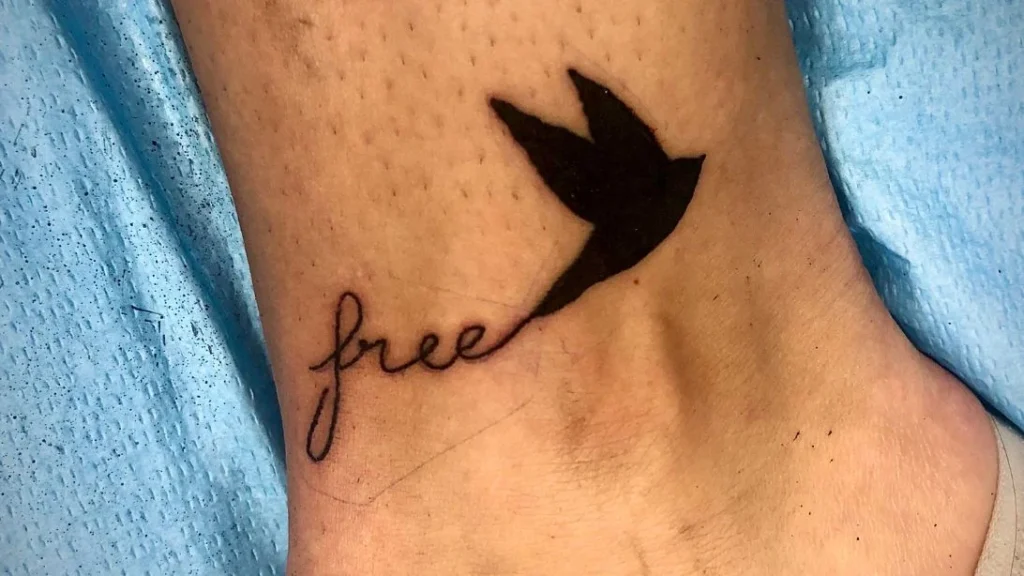
To commemorate this significant milestone, I chose to get an ankle tattoo: a bird with the word "free" inscribed beside it. This imagery served as a powerful symbol of my release from the invisible burden I had carried for over a decade.
My decision to share my story was an act of reclaiming personal power. More importantly, it was about fostering connection and finally experiencing the feeling of being truly seen. I was acutely aware that countless individuals were silently navigating similar battles, and I was determined to prevent anyone from experiencing the profound isolation I had once felt. The hope was that if my narrative could resonate with even one person, offering a sense of recognition, understanding, or the courage to take that initial step toward recovery, then it would be profoundly worthwhile.
For a considerable period, I grappled with the validity of my own eating disorder experience. I had never received a formal diagnosis, nor had I completed structured treatment programs. My ability to continue performing at a high athletic level often led me to minimize the severity of my struggles.
However, I now understand the profound inaccuracy of that perspective. Eating disorders do not adhere to a singular presentation or narrative. As highlighted by National Eating Disorders Awareness Week and its theme, Every Body Belongs, these illnesses do not discriminate. They can manifest in highly disciplined, outwardly successful athletes. They can affect individuals who never seek formal treatment, who are paralyzed by fear or shame, and who endure their suffering in silence for years. These disorders impact people across all communities, backgrounds, and identities.
There is no universal blueprint for experiencing an eating disorder. In the spirit of National Eating Disorders Awareness Week and its vital message that Every Body Belongs, I share my story with the earnest hope that more individuals will feel seen, recognize their worthiness of support, and be empowered to seek help, precisely as they are.
The act of sharing my story remains one of the most personally fulfilling achievements of my life. It serves as a constant reminder that healing is attainable, that vulnerability is a profound source of strength, and that, in our shared human experience, none of us are ever truly alone.
Resources and Background
Amanda Sobhy stands as the most accomplished squash player in American history. She achieved the distinction of being the first American to break into the top five in world rankings, reaching a career-high and American record of world #3 before experiencing two career-altering torn Achilles tendons. Currently ranked #2 in the U.S. and #11 globally on the Professional Squash Association (PSA) Tour, Sobhy made a remarkable comeback following her second Achilles rupture in December 2023. Her decorated career includes six U.S. National Championships, two Pan American Games triple gold medals (2015 & 2019), 22 PSA Titles, and a pivotal role in guiding Team USA to its first-ever World Team Championships final, securing silver medals in 2022 and 2024.
During her collegiate career at Harvard University, Sobhy was a four-time All-American and a four-time Ivy League Player of the Year. She compiled a historic undefeated record of 62-0, dropping only two games throughout her entire college career. She was instrumental in leading the Crimson to three College Squash Association (CSA) Team National Championships and became only the second squash player to achieve four Individual National Titles.
Amidst her considerable success, Sobhy privately battled challenges stemming from the intense pressures and perfectionism inherent in her sport, both on and off the court. These pressures significantly impacted her mental health, contributing to an eating disorder, anxiety, and depression. With remarkable courage, Sobhy has openly shared her personal struggles and experiences with bulimia, aiming to inspire and encourage help-seeking behavior among others who may be facing similar adversities. She has recently returned to competitive play in 2024 following her second Achilles injury, with aspirations for the LA28 Summer Games, where squash will make its Olympic debut.
Beyond her athletic achievements, Sobhy is an active participant in the broader squash community, serving on the board of the Professional Squash Association, the Squash & Education Alliance, and as an ambassador for the recently launched USSquash Foundation.
This blog post reflects the author’s personal views and experiences. It should not be construed as professional medical advice or be endorsed by the National Eating Disorders Association (NEDA).
For those seeking support and information regarding eating disorders, the National Eating Disorders Association (NEDA) provides a wealth of resources. Their helpline, website, and awareness campaigns offer guidance, support, and pathways to recovery for individuals and their loved ones.
- NEDA Helpline: Available at 1-800-931-2237.
- NEDA Website: www.nationaleatingdisorders.org
You can follow Amanda Sobhy’s journey and her ongoing advocacy on Instagram at: @asobhy93.