







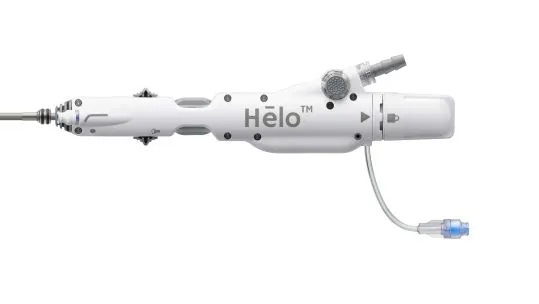
Endovascular Engineering, a medical technology firm focused on the treatment of venous thromboembolism, has successfully closed a Series C financing round intended to accelerate the development and commercialization of its proprietary HÄlo system. This latest injection of capital arrives at a pivotal moment for the mechanical thrombectomy sector, which has recently witnessed multi-billion-dollar consolidations and a paradigm shift in how clinicians approach life-threatening blood clots. The financing round was co-led by Norwest Venture Partners and Gilde Healthcare, drawing significant support from a diverse syndicate of venture capital firms and strategic industry players.
The HÄlo system represents a technological evolution in the treatment of pulmonary embolism (PE), a condition where a blood clot becomes lodged in an artery in the lung, blocking blood flow and potentially leading to heart failure or death. Traditionally, PE has been managed through the administration of systemic thrombolytics—"clot-busting" drugs—which, while effective, carry a significant risk of major bleeding complications, including intracranial hemorrhage. The move toward mechanical thrombectomy, where the clot is physically removed via a catheter-based intervention, has become the preferred clinical pathway for many high-risk and intermediate-risk patients.
The Technological Advantage of the HÄlo System
Central to Endovascular Engineering’s (E2) value proposition is the HÄlo system’s unique dual-action mechanism. Unlike many existing devices that rely solely on aspiration (suction) or mechanical maceration (breaking up the clot), the HÄlo system integrates both functions into a single platform. This dual approach is designed to address the inherent challenges of venous clots, which can vary significantly in age, density, and adherence to the vessel wall.

A primary hurdle in endovascular design has been the trade-off between device size and efficacy. Large-bore catheters are generally more effective at removing large, organized clots but can be difficult to navigate through the tortuous anatomy of the heart and into the pulmonary arteries. Conversely, smaller catheters offer better maneuverability but often lack the "power" to clear a massive embolism efficiently. E2 claims that the HÄlo system’s small-profile catheter achieves the clot-clearing capabilities of much larger devices, potentially reducing the risk of vessel damage and access-site complications while maintaining high procedural success rates.
By providing a smaller-footprint device that does not compromise on suction or disruption power, E2 aims to streamline the procedure for interventional radiologists, cardiologists, and vascular surgeons. This efficiency is critical in the context of pulmonary embolism, where hemodynamic stability can deteriorate rapidly, necessitating a fast and definitive intervention.
Strategic Context: A Market in Consolidation
The Series C funding for Endovascular Engineering does not occur in a vacuum; it follows a series of landmark acquisitions that have reshaped the vascular intervention landscape. In January, Boston Scientific sent shockwaves through the industry with its announcement of a $14.5 billion deal to acquire Penumbra, a leader in the mechanical thrombectomy space. This acquisition underscored the massive market potential for clot-management technologies, as Penumbra’s portfolio covers stroke, PE, and deep vein thrombosis (DVT).
The Penumbra deal followed another significant move in late 2023: Stryker’s $4.9 billion acquisition of Inari Medical. Inari had previously established itself as a dominant force in the venous space with its FlowTriever and ClotTriever systems. These high-valuation acquisitions signal a clear consensus among MedTech giants: mechanical thrombectomy is no longer a niche alternative but a core pillar of modern vascular care.
For E2, the participation of three undisclosed strategic investors in the Series C round suggests that the company is already on the radar of major industry players looking to bolster their portfolios. In the MedTech sector, "strategic investor" is often a euphemism for a large corporation that may eventually seek to acquire the startup once clinical milestones or regulatory approvals are met.
The Growing Clinical Need for Advanced PE Interventions
Pulmonary embolism remains a leading cause of cardiovascular death worldwide, trailing only heart attack and stroke. In the United States alone, an estimated 600,000 cases of PE occur annually, resulting in approximately 100,000 deaths. The economic burden is equally staggering, as patients often require intensive care unit (ICU) stays and long-term anticoagulation therapy.
The shift toward mechanical intervention is driven by several clinical factors:
- Bleeding Risks: Systemic thrombolysis is contraindicated in many patients, such as those who have recently undergone surgery or those with a history of stroke.
- Procedural Speed: Mechanical thrombectomy can often provide immediate relief of right-heart strain, which is the primary cause of death in PE patients.
- Hospital Efficiency: By removing the clot quickly and reducing the need for prolonged ICU monitoring (often required when administering clot-dissolving drugs), mechanical solutions can reduce the total cost of care.
E2’s focus on the HÄlo system addresses these needs by offering a tool that aims to be more versatile than its predecessors. Zack Scott, a general partner at Norwest, emphasized this potential, stating that the technology is positioned to become the "platform of choice" for treating PE. This sentiment reflects an investor confidence based on the HÄlo system’s ability to potentially outperform current "gold standard" devices in terms of ease of use and clinical outcome.
Timeline and Investment Synergy
The Series C round follows a successful $42 million Series B round raised by E2 last year. The rapid succession of these funding rounds indicates a high "burn rate" typical of companies entering intensive clinical trial phases or preparing for commercial scale-up. The syndicate for the Series C is notable for its depth, including Santé Ventures, 415 Capital, S3 Ventures, Panakès Partners, and M&L Healthcare Investments.
This diverse group of investors brings more than just capital. Firms like Gilde Healthcare and 415 Capital specialize in medical devices and cardiovascular health, providing E2 with a network of clinical advisors and regulatory experts. The involvement of M&L Healthcare Investments and S3 Ventures further suggests a long-term commitment to the company’s growth trajectory as it moves toward potential FDA clearance or expanded clinical indications.
The chronology of E2’s development suggests a disciplined approach to evidence-based medicine. Following the Series B, the company likely utilized funds to refine the HÄlo system’s design and gather preliminary data. The Series C is expected to fund larger, more definitive clinical trials—such as a pivotal study intended to support a Premarket Notification [510(k)] or Premarket Approval (PMA) submission to the U.S. Food and Drug Administration.
Implications for the MedTech Ecosystem
The success of Endovascular Engineering’s latest funding round has broader implications for the MedTech startup ecosystem. It demonstrates that despite a generally tighter venture capital environment, high-quality "pure-play" device companies can still attract significant capital if they target high-growth markets like venous thromboembolism.
Furthermore, E2’s progress highlights the continuing evolution of catheter-based technology. As the "first generation" of mechanical thrombectomy devices (like those from Inari and Penumbra) matures, the "second generation" represented by E2 is focusing on miniaturization and hybrid mechanisms. If the HÄlo system can truly deliver large-bore results from a small-bore footprint, it may force established players to innovate their own hardware or look to E2 for a technology refresh via acquisition.
The competition in this space is not limited to startups and recent acquisitions. Other giants, including Medtronic and Abbott, maintain a presence in the peripheral vascular space and are likely monitoring the success of the HÄlo system. The clinical goal remains the same: reducing the "clot burden" in the lungs as safely and quickly as possible to prevent the onset of chronic thromboembolic pulmonary hypertension (CTEPH), a debilitating long-term complication of PE.
Future Outlook and Market Projections
As Endovascular Engineering moves forward, the primary focus will be on the execution of its clinical program. The medical community increasingly demands robust, randomized controlled trial (RCT) data to support the use of mechanical devices over traditional medical management. While early-stage data for the HÄlo system has been promising, the transition to large-scale human trials will be the ultimate test of the dual-mechanism theory.
The global mechanical thrombectomy market is projected to grow at a double-digit compound annual growth rate (CAGR) over the next decade. This growth is fueled by an aging global population, rising rates of obesity and sedentary lifestyles (which increase the risk of DVT and PE), and expanding healthcare infrastructure in emerging markets.
For Endovascular Engineering, the path ahead involves navigating a complex regulatory landscape and a highly competitive commercial environment. However, with the backing of top-tier venture firms and the strategic interest of industry leaders, the company is well-positioned to challenge the status quo in pulmonary embolism treatment. The HÄlo system represents more than just a new tool; it is a testament to the ongoing innovation in endovascular surgery aimed at making life-saving interventions safer, faster, and more accessible to patients worldwide.