








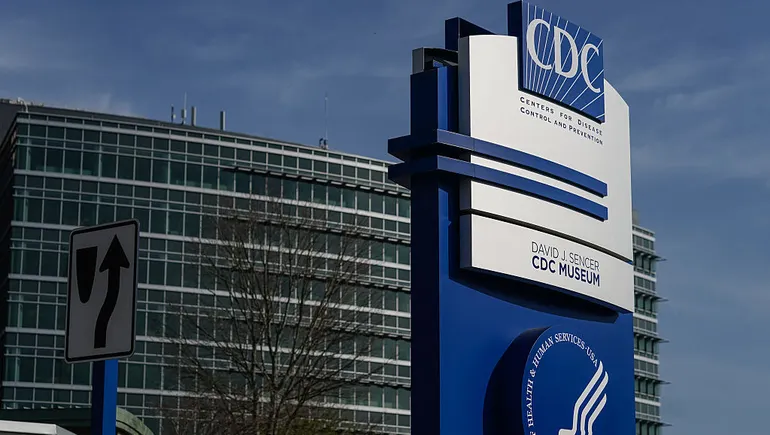
President Donald Trump announced on Thursday his selection of Erica Schwartz, a veteran public health official and former Deputy Surgeon General, to serve as the next Director of the Centers for Disease Control and Prevention (CDC). The nomination, shared via the social media platform Truth Social, marks a pivotal attempt by the administration to install permanent leadership at an agency that has been overseen by a rotating series of acting directors for nearly a year. Alongside Schwartz, the President named three other high-level officials to the CDC’s executive tier, signaling a broader restructuring of the nation’s leading public health protection agency.
If confirmed by the Senate, Schwartz would become the first full-time, non-acting director of the CDC since August of last year. Her appointment comes at a time when the agency faces intense scrutiny from both the scientific community and political figures over its handling of vaccine policy, its internal organizational structure, and its evolving role within the Department of Health and Human Services (HHS) under Secretary Robert F. Kennedy Jr.
A Veteran of the Uniformed Services
Erica Schwartz brings over two decades of experience within the United States’ uniformed services to the role. During President Trump’s first term, she served as the Deputy Surgeon General, where she played a significant role in the federal government’s administrative response to various health crises. Her career spans service in the U.S. Navy, the U.S. Coast Guard, and the Commissioned Corps of the U.S. Public Health Service.

Schwartz, an alumna of Brown University and the University of Maryland, is viewed by many as a "stability pick." Unlike some previous nominees who lacked deep experience within the federal health bureaucracy, Schwartz has navigated the complexities of inter-agency coordination for twenty years. Her background as a Rear Admiral in the Coast Guard, where she served as Chief Medical Officer, provided her with a unique perspective on the intersection of national security and public health—a background that may assist her in navigating a polarized Senate confirmation process.
Strengthening the CDC Executive Branch
The President’s announcement was not limited to the top post. In a move intended to bolster the agency’s operational and medical expertise, Trump named three additional senior leaders:
- Dr. Jennifer Shuford: Tapped as CDC Deputy Director and Chief Medical Officer. Shuford is an infectious disease physician who previously served as the Commissioner of the Texas Department of State Health Services. Her experience managing health policy at the state level is expected to bridge the gap between federal mandates and local implementation.
- Sean Slovenski: Appointed as Deputy Director and Chief Operating Officer. A former executive at Walmart, where he led the company’s health and wellness division, Slovenski is tasked with bringing private-sector efficiency to the CDC’s administrative functions.
- Dr. Sara Brenner: Named as Senior Counsel for Public Health. Brenner is a high-ranking official from the Food and Drug Administration (FDA) and has previously served as an acting commissioner. Her expertise in regulatory science and diagnostics is expected to be a key asset in the agency’s future pandemic preparedness efforts.
Secretary Robert F. Kennedy Jr. praised the selections, stating on the social media platform X that he looks forward to working with the new team to "restore trust, accountability, and scientific integrity" at the agency. Kennedy emphasized that the goal of the new leadership is to return the CDC to its "core mission" under the administration’s broader "Make America Healthy Again" (MAHA) initiative.
A Timeline of Leadership Instability
The CDC has navigated an unusually turbulent period regarding its leadership. Since the departure of the last permanent director in the summer of the previous year, the agency has struggled to find a leader who could balance the administration’s health reform goals with the requirements of Senate confirmation and the expectations of the career scientific staff.
The chronology of this leadership vacuum highlights the challenges Schwartz may face:
- Late Previous Year: President Trump’s first nominee, Dave Weldon, a former congressman and physician, withdrew his name from consideration. Weldon faced significant opposition in the Senate, where several key Republicans expressed concerns over his past statements regarding vaccines and his ability to garner bipartisan support.
- July: The White House nominated Susan Monarez, who was then serving as the CDC’s acting director. While she initially appeared to have a smoother path toward confirmation, she was abruptly fired less than a month after her selection.
- Post-Firing Revelation: In subsequent congressional testimony, Monarez revealed that her dismissal followed her refusal to "rubber-stamp" new vaccine guidelines directed by Secretary Kennedy. Monarez argued that the proposed changes lacked sufficient peer-reviewed evidence, a stance that reportedly led to her removal and the subsequent resignation of several other senior career officials at the agency.
- February to Present: Following Monarez’s exit, Jim O’Neill served as acting director before leaving in February. He was succeeded by Jay Bhattacharya, the Director of the National Institutes of Health (NIH), who has been juggling dual roles while the White House searched for a permanent CDC head.
Policy Shifts and the ACIP Controversy
The leadership turnover has occurred against a backdrop of radical shifts in public health policy. Under Secretary Kennedy’s guidance, the administration has moved to reform the Advisory Committee on Immunization Practices (ACIP). Traditionally, ACIP is an independent body of experts that provides recommendations on vaccine use, which in turn heavily influence insurance coverage and state-level mandates.
The recast ACIP has moved to soften recommendations for several standard immunizations and has raised public questions regarding the long-term safety of vaccine adjuvants, such as aluminum. In January, the CDC bypassed several traditional internal protocols to announce a plan that would reduce the number of universally recommended childhood vaccines.
These moves sparked a fierce backlash from major medical organizations, including the American Academy of Pediatrics and the American Medical Association. Critics argued that the changes were politically motivated rather than evidence-based. The controversy culminated in a legal challenge, leading a federal judge to block several of the administration’s vaccine policy changes, citing a lack of procedural adherence to the Administrative Procedure Act.
Data and Public Health Implications
The CDC’s internal shifts come at a time when national health data shows a complex picture of American public health. According to recent data from the National Center for Health Statistics (NCHS), childhood vaccination rates for measles, mumps, and rubella (MMR) have seen a slight but steady decline in several states, dropping below the 95% threshold required for herd immunity in some jurisdictions.
Conversely, the administration’s focus on "metabolic health" and nutrition—a cornerstone of the MAHA platform—addresses a different set of alarming statistics. Data suggests that over 40% of American adults are obese, and nearly 1 in 10 children have been diagnosed with a developmental disability or chronic metabolic condition.
The Schwartz nomination appears to represent a strategic pivot. Recent reports suggest the White House is aiming to move away from the high-friction "vaccine wars" that characterized the early part of the term. Instead, the administration is shifting its messaging toward more broadly popular topics, such as the regulation of ultra-processed foods, the removal of certain chemicals from the food supply, and the promotion of physical activity.
Analysis of the Strategic Shift
The appointment of Schwartz and her team of seasoned professionals suggests that the administration is seeking to professionalize its health agenda ahead of the upcoming midterm elections. By selecting a director with military and public health service credentials, the White House may be attempting to lower the political temperature surrounding the CDC.
"Schwartz is a known quantity in Washington," says a former HHS official who requested anonymity. "She knows how the building works. By surrounding her with a state health commissioner like Shuford and a retail operations expert like Slovenski, they are trying to prove they can actually govern the agency, not just disrupt it."
The inclusion of Jennifer Shuford is particularly telling. State-level health departments often clashed with the CDC during the COVID-19 pandemic over data reporting and mandate enforcement. Shuford’s presence suggests a move toward a "federalist" approach to public health, where the CDC acts more as a resource for states rather than a central command.
The Road to Confirmation
The next step for Erica Schwartz is a confirmation hearing before the Senate Health, Education, Labor, and Pensions (HELP) Committee. While a date has not yet been set, the hearing is expected to be a rigorous examination of her views on vaccine safety, agency transparency, and her willingness to maintain scientific independence from political appointees at HHS.
Schwartz will likely face questions regarding the recent ACIP reforms and the agency’s role in managing future infectious disease outbreaks. However, her long history of service under both Democratic and Republican administrations may provide her with a degree of "institutional cover" that previous nominees lacked.
The outcome of this confirmation process will determine the trajectory of American public health for the remainder of the President’s term. If Schwartz is confirmed, she will inherit an agency that is currently undergoing its most significant reorganization since its founding in 1946. Her primary challenge will be to reconcile the administration’s "Make America Healthy Again" agenda with the traditional scientific mandates that have historically defined the CDC’s global reputation.
As the administration prepares for the midterms, the Schwartz-led CDC will likely focus on initiatives that resonate with a wider segment of the electorate, particularly regarding food safety and chronic disease prevention. Whether this shift can restore the "scientific integrity" cited by Secretary Kennedy—or whether it will further alienate the traditional medical establishment—remains the central question for the future of the agency.