








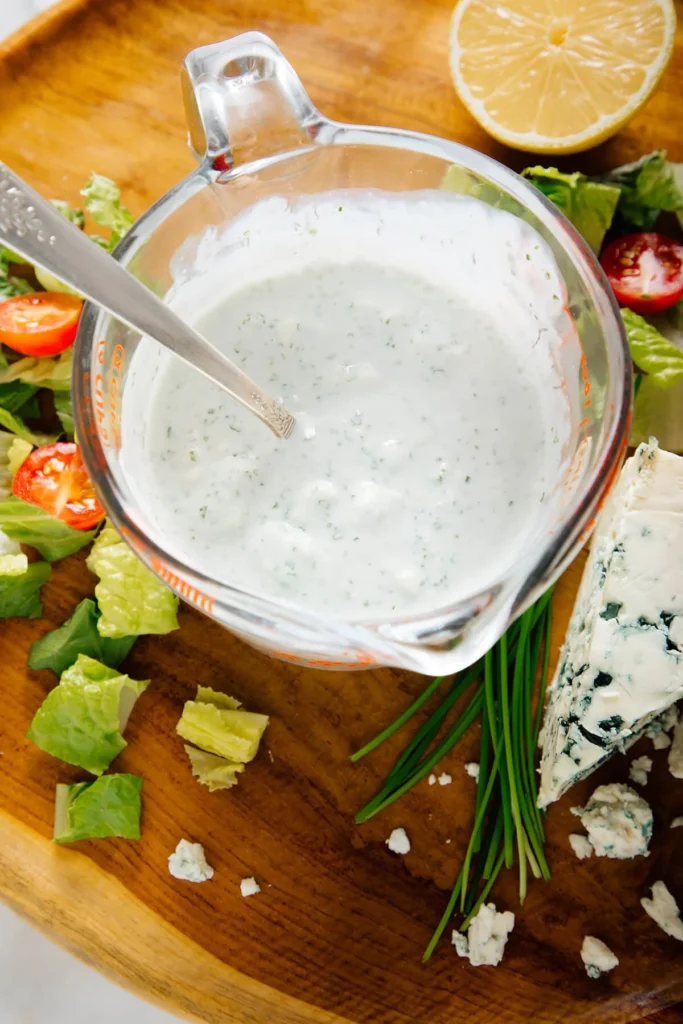
The recent publication of a refined blue cheese dressing recipe by prominent food blogger Kathryne Taylor of Cookie and Kate has sparked renewed interest in this classic American condiment, underscoring a broader culinary trend towards elevated home cooking and fresh ingredient utilization. This particular rendition, lauded for its creamy yet light texture and vibrant tang, positions itself as both an accessible entry point for blue cheese novices and a sophisticated staple for connoisseurs, deviating from traditional mayonnaise-heavy versions by employing sour cream and buttermilk as its base.
The Enduring Appeal of a Classic Condiment

Blue cheese dressing holds a distinct, often nostalgic, place in Western culinary traditions, particularly in the United States. Its robust, piquant flavor, derived from various blue-veined cheeses, offers a compelling counterpoint to crisp greens, hot wings, or even steak. The dressing’s versatility has cemented its status, moving beyond the traditional wedge salad to become a dipping sauce, a burger topping, and an integral component of numerous appetizer platters. Market data from Statista indicates that the salad dressing market globally reached approximately $20 billion in 2022, with creamy dressings, including blue cheese, consistently representing a significant segment due to their perceived indulgence and flavor complexity. However, a growing consumer shift towards natural ingredients and away from highly processed foods has led to increased demand for homemade alternatives, a niche that Taylor’s recipe adeptly addresses.
Deconstructing the Flavor Profile: Key Ingredients and Their Roles
The recipe’s foundation rests on a thoughtful selection of ingredients, each contributing to its balanced profile. Unlike many commercial varieties that rely heavily on mayonnaise for emulsification and richness, this recipe opts for a sour cream base. Sour cream provides a naturally creamy texture and a distinct lactic tang, which harmonizes well with the pungency of blue cheese without overwhelming it. This choice also often results in a lighter mouthfeel compared to mayonnaise-dominated dressings, aligning with contemporary preferences for less heavy, yet still satisfying, food options.

Buttermilk serves a dual purpose: it thins the dressing to an ideal drizzling consistency and introduces an additional layer of fermented dairy tang. The culturing process in buttermilk imparts a unique flavor that cannot be replicated by simply diluting regular milk. Food scientists note that the lactic acid in buttermilk acts as a tenderizer and flavor enhancer, making it a valuable component in dressings and marinades. For those unable to source real buttermilk, the recipe suggests a substitution of milk with an extra squeeze of lemon juice, a practical adaptation that maintains a degree of acidity, though perhaps not the full depth of flavor.
Fresh lemon juice is critical, providing a "zing" that brightens the entire composition. Citrus acidity is a well-known culinary technique to cut through richness and elevate other flavors, preventing the dressing from becoming cloying. The inclusion of fresh chives and minced garlic is another hallmark of a high-quality, homemade dressing. Chives, a member of the allium family, offer a delicate oniony flavor and vibrant green color, while fresh garlic delivers an aromatic pungency that is far superior to its powdered counterpart. These fresh aromatics are essential in achieving the "best restaurant versions" taste, as highlighted by the author. The final seasoning with salt and freshly ground pepper ensures the flavors are properly balanced and accentuated, a fundamental principle in all culinary preparations.
The Art of Blue Cheese Selection

A critical element in tailoring this dressing to individual palates is the choice of blue cheese. The article correctly points out that the "best blue cheese for dressing depends on your taste buds." Blue cheeses vary significantly in intensity, texture, and flavor profile, influenced by the specific mold cultures (typically Penicillium roqueforti or Penicillium glaucum), milk type (cow, sheep, or goat), and aging process.
- Milder Options: Gorgonzola Dolce, an Italian cow’s milk cheese, is renowned for its sweet, creamy, and relatively mild blue notes. Danish Blue (Danablu), another cow’s milk cheese, offers a creamy texture with a slightly stronger, saltier tang than Gorgonzola Dolce, but remains more approachable than some of its more assertive counterparts. These milder varieties are ideal for those new to blue cheese or who prefer a less aggressive flavor.
- Stronger Options: Roquefort, a sheep’s milk cheese from France, is perhaps the most famous and potent blue cheese, characterized by its crumbly texture, sharp, salty, and complex flavor. Stilton, an English cow’s milk cheese, offers a rich, pungent, and earthy profile. For blue cheese aficionados, these stronger varieties can deliver a bolder, more pronounced flavor experience in the dressing.
The general rule of thumb provided—creamier blue cheese with less veining tending to be milder than hard, crumbly cheese with lots of marbling—is a valuable guide for consumers navigating the diverse world of blue cheeses. This nuanced approach to ingredient selection empowers home cooks to customize the dressing to their specific preferences, enhancing the appeal of the recipe.
From Pantry to Plate: The Homemade Advantage

The emphasis on homemade dressings, exemplified by this recipe, reflects a broader consumer trend toward greater control over food ingredients and a desire for fresher, less processed options. Commercial salad dressings often contain preservatives, artificial flavors, and high levels of sugars or unhealthy fats to ensure shelf stability and broad palatability. A 2023 report by the Food Marketing Institute (FMI) indicated that a significant portion of consumers prioritize "clean labels" and recognizable ingredients.
Preparing dressing at home allows for:
- Ingredient Control: Home cooks can select high-quality, fresh ingredients, avoiding unwanted additives.
- Customization: Adjusting the balance of tang, saltiness, creaminess, and blue cheese intensity is simple.
- Freshness: Homemade dressings, particularly those with fresh herbs and garlic, offer a vibrant flavor profile that pre-packaged alternatives struggle to match.
- Cost-Effectiveness: Often, making dressings from scratch can be more economical than purchasing premium store-bought versions.
This recipe specifically highlights its superiority over store-bought options, a common sentiment among culinary enthusiasts. The ability to create a dressing that rivals or surpasses restaurant quality at home is a powerful motivator for many.

A Culinary Timeline: The Evolution of Salad Dressings
The history of salad dressings is intertwined with the evolution of cuisine itself. Early forms of dressing, dating back to ancient civilizations, were often simple mixtures of oil, vinegar, and herbs. The Romans used oil and vinegar, while the Egyptians favored oil and spices. The Middle Ages saw the introduction of more complex mixtures, often incorporating mustard and various fermented liquids.
Creamy dressings, however, largely gained prominence in the 19th and 20th centuries, coinciding with advancements in dairy production and refrigeration. Ranch dressing, developed in the 1950s, became an iconic American creamy dressing. Blue cheese dressing, while its exact origins are debated, likely evolved from earlier cheese-based sauces and dips, gaining widespread popularity in the early to mid-20th century. Its strong association with the American steakhouse culture and the rise of the "wedge salad" in the mid-20th century cemented its place. The continuous refinement of these classic recipes, as demonstrated by Taylor’s rendition, reflects an ongoing culinary dialogue between tradition and innovation.

Nutritional Insights and Dietary Adaptability
While the article includes a standard nutritional disclaimer, a deeper look at the ingredients offers valuable insights. Sour cream and buttermilk, while dairy products, contain beneficial probiotics due to their fermentation processes, which can support gut health. Fresh garlic is known for its immune-boosting properties and cardiovascular benefits, attributed to compounds like allicin. Chives also offer vitamins and antioxidants.
For individuals with dietary considerations, this recipe offers a degree of adaptability. The original article notes categories like "egg-free," "gluten-free," "nut-free," and "soy-free," highlighting its suitability for various dietary needs. The absence of mayonnaise (which typically contains egg) makes it naturally egg-free, and its base ingredients are inherently gluten-free, nut-free, and soy-free. This broad compatibility makes it an attractive option for a wider audience, catering to the increasing prevalence of food sensitivities and allergies. The flexibility to choose different types of blue cheese also allows for variations in fat and sodium content, depending on the specific cheese selected.

Market Trends and Consumer Preferences
The culinary landscape is constantly evolving, driven by consumer preferences, health trends, and technological advancements. The renewed focus on homemade classics like blue cheese dressing aligns with several key market trends:
- "Back to Basics" Movement: A rejection of highly processed foods in favor of simple, wholesome ingredients.
- Customization: Consumers increasingly desire the ability to tailor food to their specific tastes and dietary needs.
- Food Transparency: Demand for clear labeling and understanding the origin and components of food.
- Culinary Exploration: Home cooks are more adventurous, seeking to recreate restaurant-quality dishes or explore new flavor profiles.
- Digital Influence: Food blogs and online recipes, like those from Cookie and Kate, play a significant role in disseminating culinary knowledge and inspiring home cooking. Kathryne Taylor’s platform, known for its focus on whole foods and plant-forward recipes, lends credibility and reach to this particular dressing, introducing it to a demographic that might prioritize fresh ingredients.
Beyond the Salad Bowl: Versatility and Pairing Suggestions

While primarily a salad dressing, the inherent robustness and tang of blue cheese dressing make it incredibly versatile. The article provides excellent suggestions for salad bases (romaine, iceberg, spinach, arugula) and additions (tomatoes, radishes, carrots, celery, bell peppers, cucumbers, red onion, pecans, walnuts, croutons, bacon, grilled chicken, steak, shrimp, hard-boiled eggs). The specific salad pictured—a wedge of romaine with cherry tomatoes, radish, bread crumbs, and chives—is a classic presentation that showcases the dressing’s ability to elevate simple ingredients.
Beyond salads, blue cheese dressing is a staple accompaniment for:
- Buffalo Wings: A quintessential pairing, offering a cooling counterpoint to the spicy heat.
- Burgers and Sandwiches: A flavorful condiment that adds a gourmet touch.
- Vegetable Platters: A sophisticated dip for crudités like celery sticks, carrot sticks, and broccoli florets.
- Steak: Drizzled over grilled steak, it adds a layer of creamy, tangy richness.
- Baked Potatoes: A luxurious topping for a simple baked potato.
This broad applicability further contributes to its enduring popularity and ensures that a batch made at home will find many uses, minimizing waste and maximizing enjoyment.

The Broader Impact on Home Cooking and Food Culture
The publication and promotion of recipes like this blue cheese dressing by influential food platforms contribute significantly to contemporary food culture. They empower individuals to bypass store-bought options, fostering a greater connection to the food they consume. This movement toward scratch cooking, even for items as seemingly simple as salad dressing, represents a subtle but impactful shift in consumer behavior, emphasizing quality, freshness, and culinary skill. It also encourages a deeper appreciation for individual ingredients and their roles in creating harmonious flavors. As consumers continue to seek healthier, more authentic, and personalized food experiences, well-crafted homemade recipes like this blue cheese dressing are poised to remain central to the culinary narrative.