





The Endocrine Society, the world’s oldest and largest organization devoted to hormone research and the clinical practice of endocrinology, has announced a comprehensive expansion of its support systems for basic and clinical researchers. This strategic initiative, approved unanimously by the Society’s Board of Directors, focuses on a three-pronged framework: Presenting, Publishing, and Mentorship. By increasing financial aid for conference attendance, streamlining the path to academic publication, and fostering early-career development through intensive networking, the Society aims to fortify the "bench-to-bedside" pipeline that drives medical breakthroughs in metabolic health, oncology, and reproductive medicine.
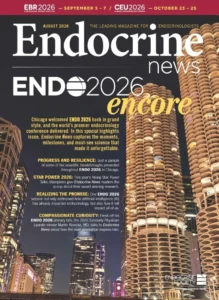
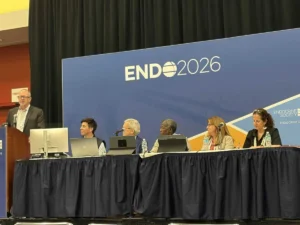
The cornerstone of this expansion is a significant one-year increase in the ENDO 2026 travel grant programs. This decision comes at a critical juncture for the scientific community, as researchers globally grapple with rising travel costs and a highly competitive funding environment. By providing additional financial resources, the Society intends to ensure that the ENDO 2026 annual meeting, scheduled for June 13–16 in Chicago, Illinois, remains a diverse and inclusive forum for the exchange of cutting-edge endocrine science.
Strengthening the Platform for Scientific Exchange
The first prong of the Society’s strategy, focused on "Presenting," centers on the ENDOExpo. This massive scientific showcase traditionally features more than 2,500 abstracts, representing the latest discoveries in hormone-related research. The expanded travel grant program is specifically designed to lower the barrier to entry for researchers who might otherwise be unable to attend due to institutional budget constraints or the precarious nature of modern research grants.
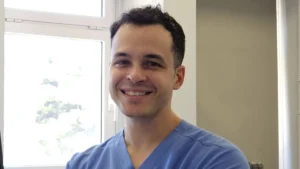
For many scientists, particularly those in the early stages of their careers, presenting a poster or oral abstract at ENDO is a career-defining milestone. The Society has recognized that visibility is as important as the research itself. To this end, the organization has integrated digital media strategies into its presentation framework. Members who submit abstracts may be selected for video interviews that are broadcast across the Society’s social media channels. In previous years, these spotlights have garnered thousands of views, providing researchers with a global platform that extends far beyond the physical confines of the convention center.
Industry analysts suggest that this emphasis on digital visibility is a response to the evolving nature of scientific communication. By leveraging social media, the Endocrine Society is helping its members reach not only their peers but also patient advocacy groups and the general public, thereby increasing the real-world impact of their findings.
Advancing Research Through High-Impact Publishing
The second prong of the Society’s initiative involves its robust publishing ecosystem. The transition of scientific research from the laboratory to the public record is facilitated through a suite of top-ranked journals that have been at the forefront of the field since 1917. A key component of the new strategy is the integration between the ENDO meeting and the Journal of the Endocrine Society (JES).
Research abstracts submitted to the ENDO conference are eligible for publication in a special supplement of JES, which is an open-access journal. Each abstract is assigned a unique Digital Object Identifier (DOI). This ensures that the research is not only archived permanently but is also fully citable and accessible to the global scientific community from the moment of publication.
The Society’s broader portfolio, which includes prestigious titles like Endocrinology and The Journal of Clinical Endocrinology & Metabolism (JCEM), continues to uphold rigorous standards of research integrity. Each submission undergoes a stringent peer-review process led by thought leaders in the field. To support its members, the Society offers discounted production costs for accepted manuscripts, a move intended to alleviate the financial burden of open-access publishing fees, which can often exceed several thousand dollars per article in the current academic market.
Mentorship and the Development of Future Leaders
Recognizing that the long-term health of the field depends on a steady influx of new talent, the third prong of the initiative focuses on Mentorship. The Endocrine Society has developed several flagship programs to guide graduate students, medical students, and early-career faculty through the complexities of a career in endocrine science.
The Research Experiences for Graduate and Medical Students (REGMS) program is a primary example of this commitment. REGMS provides students with the opportunity to engage in collaborative laboratory work under the guidance of expert mentors. The program is designed to be a year-round experience, helping participants build professional networks and master the technical skills required for high-level research.
Simultaneously, the Future Leaders Advancing Research in Endocrinology (FLARE) program targets a slightly more advanced demographic, including postdoctoral fellows and junior faculty. FLARE provides specific training in leadership and the administrative aspects of running an independent research lab—skills that are rarely taught in traditional doctoral programs. This year’s FLARE participants will convene for a specialized workshop from March 26–28, focusing on grant writing, lab management, and navigating the path to tenure.
Chronology of Initiatives and Upcoming Milestones
The current expansion is part of a multi-year roadmap designed to sustain the endocrine research community through the mid-2020s. The timeline of these efforts reflects a calculated approach to growth and support:
- January 2024: The Board of Directors unanimously approves the expansion of the ENDO 2026 travel grant programs, anticipating the needs of researchers two years in advance.
- March 2024: The FLARE workshop takes place, providing leadership training to a new cohort of junior faculty and fellows.
- Summer 2024: Review of REGMS applications concludes, and selected students begin their mentored research experiences.
- Fall 2024: The Society will host a focused Basic Science Summit on Nuclear Receptors in Chicago. This summit serves as a specialized deep-dive into the molecular mechanisms of hormone action.
- June 2026: The ENDO 2026 meeting in Chicago will serve as the culmination of these expanded support efforts, expected to draw thousands of delegates from around the world.
Data and Analysis: The Rationale for Increased Support
The Society’s decision to increase financial support is backed by data suggesting a tightening of the global research economy. According to recent reports on biomedical funding, while topline budgets for organizations like the National Institutes of Health (NIH) have seen incremental increases, the "purchasing power" of individual grants has been eroded by inflation and the rising costs of specialized laboratory equipment.
Furthermore, a 2023 survey of early-career researchers indicated that nearly 40% cited "lack of travel funding" as a primary reason for not attending international conferences. By addressing this specific pain point, the Endocrine Society is positioning itself as a vital advocate for the scientific workforce.
The focus on "Nuclear Receptors" for the upcoming Basic Science Summit is also a data-driven choice. Nuclear receptors are a class of proteins found within cells that are responsible for sensing steroid and thyroid hormones and certain other molecules. They play a fundamental role in almost every aspect of human physiology. Advances in this area are directly linked to the development of new treatments for type 2 diabetes, obesity, and various hormone-dependent cancers. By fostering specialized summits, the Society ensures that basic science remains the engine of clinical innovation.
Broader Implications for Global Health
The implications of the Endocrine Society’s expanded programs extend far beyond the laboratory. Endocrinology is a field that sits at the intersection of some of the most pressing global health challenges of the 21st century. The rise of metabolic syndromes, the aging of the global population, and the impact of environmental endocrine disruptors all require a robust and well-funded research community.
By investing in the "research pipeline," the Society is effectively investing in future healthcare solutions. The "bench-to-bedside" model relies on a seamless transition where a basic scientist identifies a molecular pathway, a clinical researcher tests a targeted intervention, and a practitioner applies that intervention to improve patient outcomes. If the first step of that process—the basic research—is hindered by a lack of funding or mentorship, the entire pipeline stalls.
Official responses from within the academic community have been largely positive. Dr. Elena Rossi, a hypothetical representative of a major research university, noted, "The Society’s proactive stance on travel grants and mentorship is a lifeline for departments that are seeing their internal budgets slashed. Without these external supports, we risk losing a generation of talent to other industries."
As the Society moves toward ENDO 2026, its leadership remains focused on the mission of scientific discovery and hormone health. By doubling down on its support for researchers, the Endocrine Society is not merely hosting a conference; it is curated a global ecosystem designed to sustain the field of endocrinology for decades to come. Through the strategic pillars of presenting, publishing, and mentorship, the organization is working to ensure that the next major breakthrough in hormone health is supported from its very inception in the laboratory.