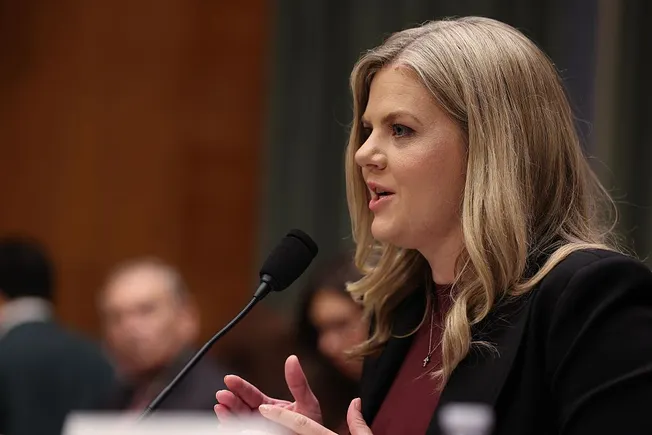
The White House has officially withdrawn the nomination of Dr. Heidi Overton to serve as the Commissioner of the Food and Drug Administration (FDA), marking a significant setback for the administration’s efforts to install permanent leadership at the nation’s primary public health regulatory agency. The decision to pull the nomination came after a series of policy stances regarding vaccine schedules, reproductive health access, and the regulation of flavored nicotine products led to a collapse of support within the United States Senate. The withdrawal occurred just as the Senate Health, Education, Labor, and Pensions (HELP) Committee was prepared to vote on her confirmation, a move that would have advanced her name to the full Senate floor.
The collapse of Overton’s candidacy highlights the deep ideological fissures currently permeating the intersection of public health policy and federal governance. While the administration had hoped to secure a confirmed commissioner while Republicans still maintained a favorable balance of power in the current legislative session, the loss of critical support from both centrist and conservative factions rendered her path to confirmation untenable.
The Canceled Confirmation Vote and Senate Dynamics
The Senate HELP Committee had originally scheduled a high-stakes meeting for Wednesday to deliberate on a slate of nominations, with Overton’s confirmation as the centerpiece. Given the fast-approaching conclusion of the current congressional session, the White House viewed the timing as essential. However, by Tuesday evening, reports began to surface that the administration was reconsidering its position. A report published by Axios confirmed that the White House had abandoned the effort after internal whip counts suggested Overton lacked the necessary votes to clear the committee, let alone survive a full Senate floor vote.

On Wednesday morning, Senator Bill Cassidy (R-LA), the Chairman of the HELP Committee, confirmed the withdrawal during the scheduled hearing. Cassidy, a physician himself, expressed a degree of surprise at the sudden reversal. He noted that he had engaged in "productive conversations" with Dr. Overton prior to the hearing, which had led him to believe she was committed to a science-first approach at the FDA.
"I think she would have had the votes to pass out of a committee and to pass the full Senate," Cassidy stated during the proceedings. He lamented the missed opportunity, noting that the responsibility for confirming a permanent commissioner would now likely fall to a future Senate configuration. Cassidy’s comments suggested a disconnect between the committee leadership’s assessment and the broader concerns held by other members of the Republican caucus and various advocacy groups.
Policy Friction Points: Vaccines, Abortion, and Vaping
The downfall of Dr. Overton’s nomination can be traced to three primary policy areas where her views or past statements conflicted with the expectations of key stakeholders. These issues created a rare "pincer movement" of opposition, where she faced criticism from both public health traditionalists and "Make America Healthy Again" (MAHA) advocates.
The MMR Vaccine Controversy
One of the most contentious aspects of Overton’s candidacy was her alignment with a proposal to alter the administration of the Measles, Mumps, and Rubella (MMR) vaccine. The proposal, which has been championed by some figures within the Trump administration, suggests splitting the combined MMR vaccine into three separate injections. Proponents of this change, including the President, have characterized the combined shot in inflammatory terms, despite a lack of scientific evidence supporting the safety or efficacy of splitting the doses.
Overton’s willingness to entertain or support this shift drew immediate fire from the medical and scientific community. Public health experts argue that splitting the vaccine would decrease compliance rates, increase the cost of administration, and leave children vulnerable to outbreaks for longer periods. For many Senate Democrats and some moderate Republicans, this stance was seen as a departure from the FDA’s historical reliance on rigorous, evidence-based immunization schedules.
Reproductive Health and Mifepristone
Overton also faced intense scrutiny regarding the FDA’s regulation of mifepristone, a medication used in more than half of all abortions in the United States. During her confirmation hearing in September, Overton attempted to walk a fine line, pledging to "follow the law" and acknowledging that the drug had previously met agency standards for safety and effectiveness.
However, this stance failed to satisfy either side of the debate. Anti-abortion groups and several conservative lawmakers have pressured the FDA to rescind the approvals and flexibilities granted to the drug over the last decade, citing safety concerns that mainstream medical organizations, such as the American College of Obstetricians and Gynecologists (ACOG), maintain are unfounded. Meanwhile, supporters of reproductive rights remained skeptical of Overton’s long-term commitment to maintaining access, especially as the FDA continues a court-ordered safety review of the drug, with results expected by March 2027.
Flavored Vapes and the "MAHA" Influence
In a surprising turn, Overton also faced opposition from the burgeoning "MAHA" movement—a coalition focused on addressing chronic disease and environmental toxins, often through unconventional or populist health policies. This group, along with several GOP lawmakers, reportedly took issue with Overton’s history or perceived willingness to loosen restrictions on flavored electronic cigarettes and vapes. While the industry has lobbied for fewer restrictions, public health advocates argue that flavored products are a primary driver of nicotine addiction among minors. The internal conflict within the Republican party over tobacco and nicotine regulation added a final layer of complexity that Overton was unable to navigate.
A History of Leadership Instability at the FDA
The withdrawal of Overton’s nomination prolongs a period of leadership uncertainty at the FDA that began with the resignation of Marty Makary. Makary’s tenure was widely described by agency insiders as "rocky," characterized by frequent shifts in policy and a perceived disregard for the traditional hierarchy of career staff scientists. His departure in May left the agency in the hands of Kyle Diamantas, the deputy commissioner for food, who has served as acting commissioner since.
Under federal law, specifically the Federal Vacancies Reform Act of 1998, an acting official is generally limited to serving for 210 days. However, the law contains provisions that allow this clock to "reset" when a formal nomination is submitted to the Senate. Because the White House officially nominated Overton and subsequently withdrew her name, the 210-day limit for Diamantas has been effectively extended, providing the administration with a temporary window to find a new candidate without the immediate threat of a leadership void.
Despite the lack of a permanent commissioner, the FDA has recently made strides toward internal stabilization. Over the last several months, the agency has reversed several controversial decisions from the Makary era and appointed traditional, career-oriented leaders to head two major drug offices. This "return to normalcy" has been welcomed by the pharmaceutical industry, which thrives on regulatory predictability.
Economic and Industry Implications
The biotech and pharmaceutical sectors have watched the confirmation process with a mixture of hope and apprehension. Dr. Overton had initially gained some favor among investors for her advocacy of policies designed to accelerate the development of drugs for rare diseases. She had also promised to increase the frequency of expert advisory panels—a practice that had dwindled under Makary—and to rely more heavily on the expertise of career staff.
Following the news of her withdrawal, market analysts suggested that the immediate impact on drug approval processes would likely be minimal. Brian Abrahams, an analyst at RBC Capital Markets, noted in a memo to investors that the FDA’s core operations are "likely to continue running reasonably smoothly" under the current acting leadership.
"While a permanent commissioner provides long-term strategic direction, the current team under Diamantas has demonstrated a commitment to stability," Abrahams wrote. He cautioned, however, that should Diamantas depart before a successor is confirmed, the sector could face renewed volatility.
The Search for a Successor: Is Roger Marshall Next?
With Overton out of the running, speculation has immediately turned to who the administration might tap next. One name that has surfaced prominently is Senator Roger Marshall (R-KS). Marshall, a physician and former obstetrician, recently lost his re-election bid in Kansas, making him available for an executive branch appointment.
Analysts view Marshall as a potentially more viable candidate for confirmation. He possesses a track record that is generally viewed as pro-innovation and industry-friendly, which could secure the support of the business community and Senate moderates. Furthermore, his status as a former colleague of many in the Senate could smooth the path through the HELP Committee. However, any nominee will still have to navigate the same minefield of issues—vaccines, abortion, and tobacco—that ultimately derailed Overton.
Conclusion
The withdrawal of Heidi Overton’s nomination serves as a stark reminder of the political challenges inherent in leading the FDA. As the agency nears the 2027 deadline for its safety review of mifepristone and continues to grapple with the fallout of the youth vaping epidemic and vaccine skepticism, the need for a permanent, Senate-confirmed leader remains acute.
For now, the FDA remains in a state of transition. While the acting leadership has provided a measure of calm after a period of upheaval, the absence of a confirmed commissioner leaves the agency without a clear, long-term mandate at a time when public trust in health institutions is under significant strain. The administration’s next choice will not only need to possess the requisite scientific and administrative expertise but also the political acumen to bridge the growing divide between traditional public health standards and the evolving demands of the American political landscape.