







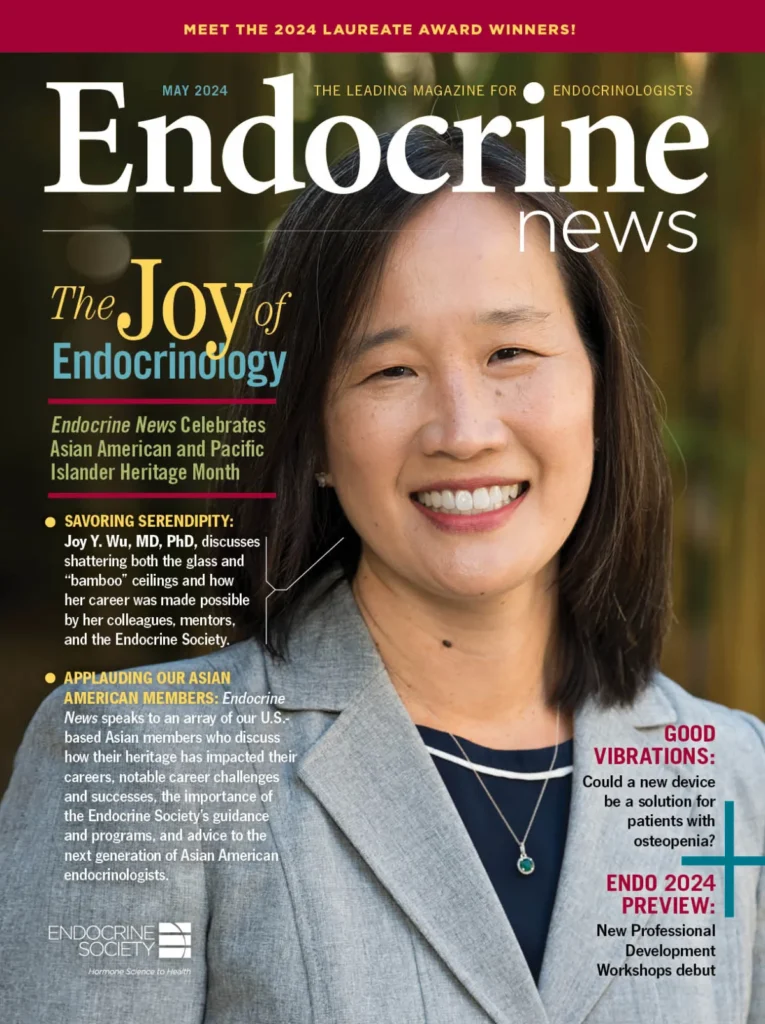
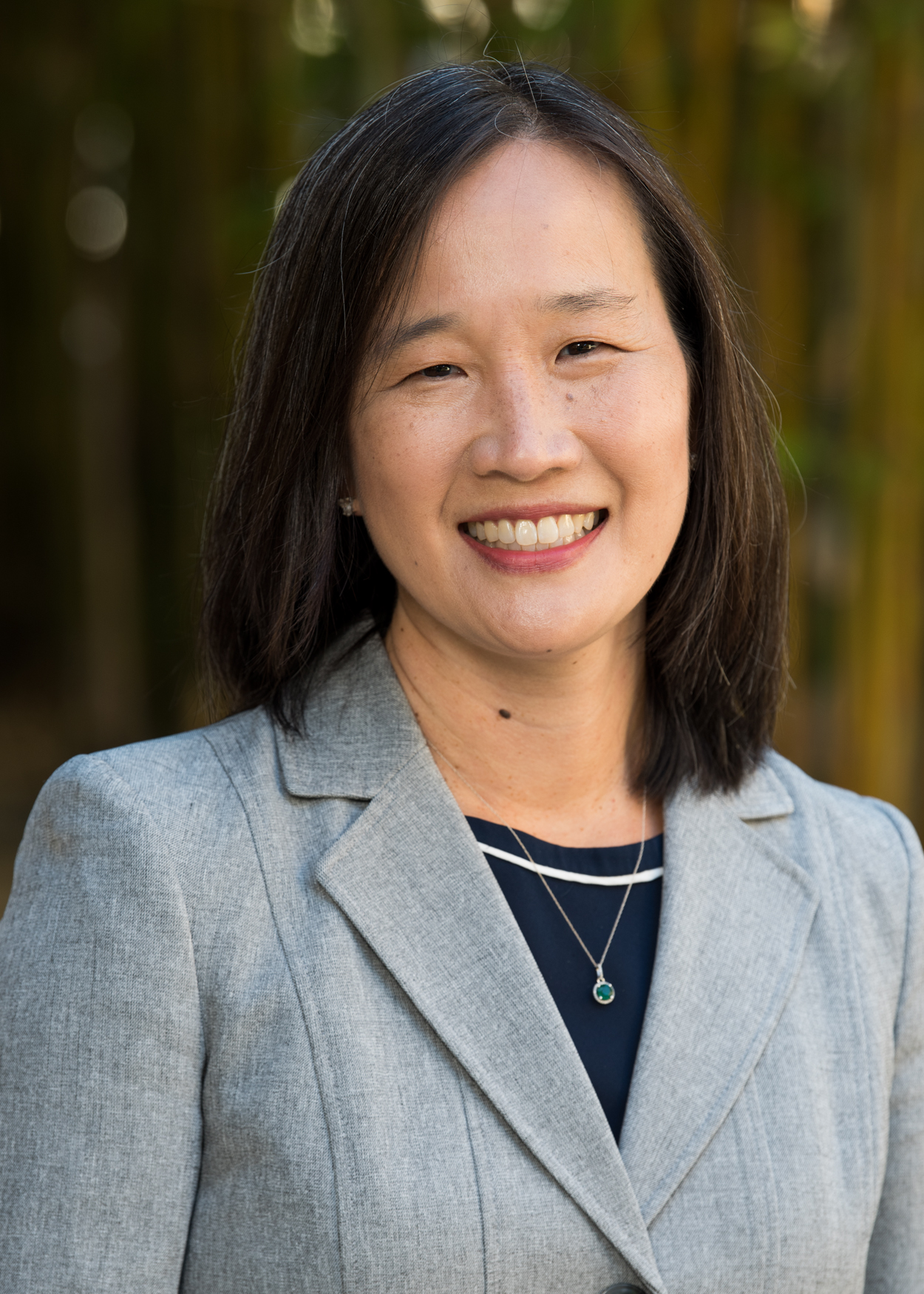
The Endocrine Society, the world’s oldest and largest organization dedicated to hormone research and the clinical practice of endocrinology, has officially announced that its members have elected Joy Wu, MD, PhD, as the Society’s President for the 2027–2028 term. Dr. Wu, a distinguished physician-scientist currently serving at the Stanford University School of Medicine, will assume the role of President-Elect in June 2026, following the conclusion of the Society’s annual meeting, ENDO 2026, in Chicago. Her full term as President will commence in June 2027, marking a significant milestone in her career and for the leadership of the international endocrine community.
Dr. Wu’s election comes at a pivotal time for the field of endocrinology, as the discipline faces evolving challenges ranging from the global rise in metabolic disorders to the increasing complexity of bone and mineral diseases. As a leading figure in both clinical care and basic science research, Dr. Wu is uniquely positioned to bridge the gap between laboratory discovery and patient-side application, a core mission of the Endocrine Society.
A Distinguished Career in Academic Medicine and Clinical Care
Dr. Joy Wu currently holds several high-level positions at Stanford University, where her work has had a profound impact on the Department of Medicine. She is the Gerald M. Reaven, MD Professor of Endocrinology, a title named in honor of the legendary Stanford researcher known for his pioneering work in insulin resistance and metabolic syndrome. In addition to this professorship, Dr. Wu serves as the Chief of the Division of Endocrinology and the Vice Chair of Basic Science in the Department of Medicine.
A board-certified endocrinologist, Dr. Wu has dedicated much of her clinical career to the study and treatment of osteoporosis and other bone and mineral diseases. Her clinical expertise is particularly vital in the context of an aging global population. According to data from the National Osteoporosis Foundation, approximately 10 million Americans currently have osteoporosis, and another 44 million have low bone density, placing them at increased risk for fractures. Dr. Wu’s work focuses on these vulnerable populations, with a specific emphasis on optimizing skeletal health for patients undergoing cancer treatments.
The intersection of oncology and endocrinology is a specialized area of medicine where Dr. Wu has made significant contributions. Many modern cancer therapies, while effective at treating tumors, can have detrimental effects on bone health, leading to accelerated bone loss and increased fracture risk. Dr. Wu’s clinical focus ensures that cancer survivors do not suffer from long-term skeletal complications, thereby improving their overall quality of life following primary treatment.
Pioneering Research in Bone Biology and Stem Cell Therapy
Beyond her clinical responsibilities, Dr. Wu directs a robust basic and translational research program that seeks to uncover the fundamental mechanisms of bone formation and maintenance. Her laboratory at Stanford focuses on the skeletal development and the bone marrow hematopoietic niche—the complex microenvironment within the bone marrow where blood cells are produced and where stem cells reside.
One of the most promising avenues of Dr. Wu’s research involves stem cell therapies for bone formation. As the body ages or suffers from chronic disease, the natural ability to regenerate bone tissue diminishes. By studying how stem cells can be harnessed to stimulate new bone growth, Dr. Wu’s team is laying the groundwork for future regenerative medicine treatments that could potentially reverse the effects of severe osteoporosis or repair complex fractures that fail to heal on their own.
Furthermore, Dr. Wu’s laboratory is investigating the prevention of cancer metastases to the bone. Bone is one of the most common sites for the spread of advanced cancers, including breast, prostate, and lung cancers. Once cancer spreads to the skeleton, it can cause debilitating pain, fractures, and hypercalcemia. Understanding why certain cancer cells are drawn to the bone marrow niche is a critical step in developing therapies that can block this migration, effectively containing the cancer and preventing its most painful complications.
Longstanding Service to the Endocrine Society
Dr. Wu’s election as President is the culmination of years of dedicated service to the Endocrine Society. She has been an active member for much of her professional life, contributing her expertise to various internal structures that guide the Society’s scientific and clinical priorities. Her previous roles include serving on the Society’s Board of Directors, where she helped oversee the organization’s strategic direction and financial health.
She has also been a key contributor to the development of clinical practice guidelines, which serve as the gold standard for endocrinologists worldwide. Dr. Wu was a member of the Society’s Hypercalcemia of Malignancy Guideline Writing Committee, a group tasked with establishing evidence-based protocols for managing high calcium levels in cancer patients—a life-threatening condition if left untreated. Currently, she continues to influence the field through her work on the Bone and Mineral Special Interest Group, ensuring that the latest research in skeletal health is disseminated to the Society’s nearly 18,000 members.
Chronology of Leadership and Transition
The transition of leadership within the Endocrine Society is a carefully structured process designed to ensure continuity and stability. The timeline for Dr. Wu’s presidency is as follows:
- June 2026: Following the ENDO 2026 annual meeting in Chicago, Dr. Wu will officially begin her one-year term as President-Elect. During this period, she will work closely with the sitting President to prepare for her upcoming leadership role.
- June 2027: Dr. Wu will be inaugurated as the President of the Endocrine Society. She will serve as the primary spokesperson and leader of the organization for one year.
- June 2028: Upon the conclusion of her term, she will transition into the role of Past President, providing counsel to her successor.
This multi-year commitment ensures that the President is fully integrated into the Society’s ongoing initiatives, including advocacy for research funding, the promotion of endocrine health on a global scale, and the organization of the Society’s massive annual scientific sessions.
Analyzing the Broader Impact: Representation and Innovation
The election of Dr. Wu is also significant from a sociopolitical perspective within the medical community. In recent years, there has been an increasing focus on breaking the "glass and bamboo ceilings" in academic medicine—referring to the barriers faced by women and individuals of Asian descent in reaching the highest echelons of institutional leadership. Dr. Wu’s ascent to the presidency of a major international medical society is seen by many as a testament to her excellence and a sign of progress in the diversification of medical leadership.
The Endocrine Society has historically been a leader in promoting diversity, and Dr. Wu’s presidency is expected to further these efforts. Her dual background as an MD and a PhD also reflects the Society’s commitment to "bench-to-bedside" medicine. In an era where clinical practice and laboratory research are becoming increasingly specialized, having a leader who is fluent in both languages is essential for fostering the interdisciplinary collaboration needed to solve complex health issues.
Implications for the Future of Endocrinology
Under Dr. Wu’s leadership, the Endocrine Society is expected to continue its aggressive advocacy for National Institutes of Health (NIH) funding, particularly in the areas of metabolic health and bone biology. With the rising costs of healthcare associated with chronic endocrine conditions, the Society’s role in influencing public policy and research priorities has never been more critical.
Dr. Wu’s specific expertise in bone health may also lead to a renewed focus on the "silent epidemic" of osteoporosis. While conditions like diabetes often dominate the endocrine conversation, the morbidity and mortality associated with osteoporotic fractures are staggering. Experts suggest that Dr. Wu may use her platform to advocate for earlier screening, better access to bone-density testing, and the development of new pharmacological agents that can build bone rather than just slowing its loss.
Furthermore, as the chief of a major division at Stanford, Dr. Wu brings a wealth of administrative and mentorship experience. Her presidency will likely emphasize the importance of training the next generation of endocrinologists. The field currently faces a shortage of specialists, particularly in rural and underserved areas. Addressing this workforce gap through educational initiatives and recruitment programs will undoubtedly be a key component of the Society’s agenda during her tenure.
Official Reactions and Community Sentiment
While formal statements from all affiliated institutions are typically released closer to the inauguration, initial reactions from the academic and medical community have been overwhelmingly positive. Colleagues at Stanford have noted that Dr. Wu’s election is a well-deserved recognition of her contributions to the university and the broader scientific community.
The Endocrine Society’s membership, which spans over 120 countries, looks to its president to set a global tone for the profession. Dr. Wu’s international reputation as a researcher and her history of collaborative work suggest that her presidency will be marked by a spirit of global cooperation.
As the Society prepares for its upcoming meetings and the transition of power, the election of Joy Wu, MD, PhD, stands as a clear signal of the organization’s dedication to scientific rigor, clinical excellence, and inclusive leadership. Her term promises to be a period of significant growth and innovation for the field of endocrinology, as she brings her unique perspective to the forefront of global health.