


In the wake of a pivotal March 2026 meeting convened to "explore the scope of dietary supplement ingredients," the U.S. Food and Drug Administration (FDA) has opened a significant period for public comment. This initiative, designed to solicit industry and public input, has already garnered an overwhelming response, with 952 distinct submissions flooding the agency’s docket. This widespread engagement signals a critical juncture for the dietary supplement industry, poised to potentially redefine its legal boundaries nearly three decades after the landmark Dietary Supplement Health and Education Act of 1994 (DSHEA).
The overwhelming majority of these public comments advocate for an expanded definition of what constitutes a "dietary supplement," a move that industry leaders see as a crucial opportunity to align regulatory frameworks with the dynamic evolution of scientific innovation and consumer demand. While a consistent, albeit smaller, contingent of concerned citizens has voiced strong opinions regarding the classification of specific substances like 7-OH and kratom, the broader industry commentary reflects a strategic effort to leverage the current administrative climate for substantial regulatory reform.
The "Innovation Clause" at the Heart of the Debate

The core of this regulatory discussion centers on Section 201(ff)(1)(E) of the Food, Drug, and Cosmetic Act, as amended by DSHEA. This particular clause, often referred to as the "innovation clause" or a "catch-all" provision, has been the subject of intense scrutiny and interpretation since DSHEA first established the legal definition of a dietary supplement. Its broad language was intended to accommodate the unforeseen development of new ingredients and technological advancements that were not predictable decades ago, allowing the industry to adapt and grow.
However, the FDA’s subsequent attempts to interpret and apply this clause have, according to industry stakeholders, introduced an unintended hurdle. The prevailing industry argument is that the FDA’s efforts to restrict the definition of a "dietary substance" to ingredients with a history of use in conventional foods are not supported by the original statutory text.
The Council for Responsible Nutrition (CRN), a prominent industry trade association, articulated this position clearly in its submitted comments. "The statutory text is unambiguous and deliberately broad," CRN stated. "It contains no requirement that a dietary substance be present in, or previously marketed in, the conventional food supply." CRN contends that the FDA’s attempts to impose such a prerequisite add a layer of regulatory complexity that was not envisioned by the framers of DSHEA.

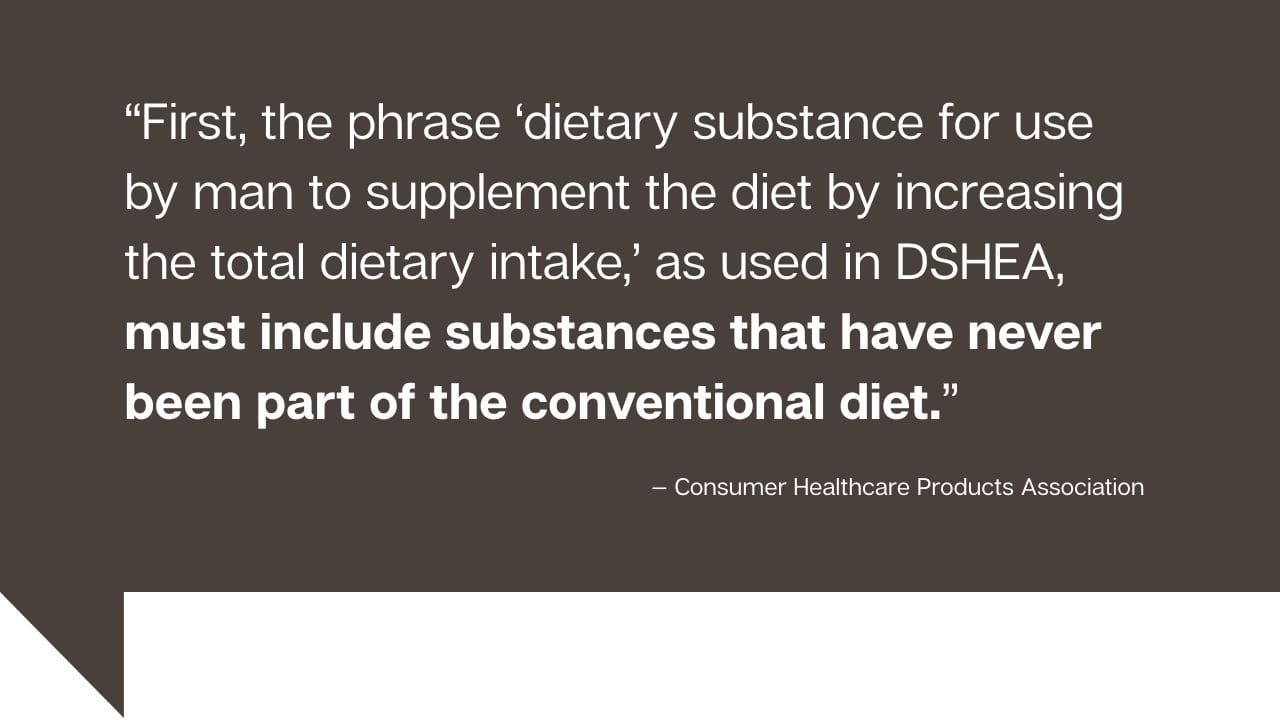
Similarly, the Consumer Healthcare Products Association (CHPA) echoed this sentiment. "First, the phrase ‘dietary substance for use by man to supplement the diet by increasing the total dietary intake,’ as used in DSHEA, must include substances that have never been part of the conventional diet," CHPA wrote. "Congress did not impose a ‘traditional food’ prerequisite." This highlights a fundamental disagreement on the scope and intent of the original legislation, with industry groups arguing that the FDA’s current interpretation unduly narrows the category of eligible ingredients.
The Natural Products Association (NPA) further reinforced this perspective. The organization "urge[s] FDA to interpret the term, ‘dietary substance,’ as covering ingredients that may be incidental to food or naturally produced in the human body." Like CRN, NPA argues against the "definitional creep" that has occurred over the years, where the FDA has seemingly mandated a food-use precedent for ingredients to be considered dietary supplements. NPA explicitly disagreed with the FDA’s stance in its 2016 draft New Dietary Ingredient (NDI) guidance, asserting that "Section 201(ff)(1)(E) does not expressly impose this limitation."
The High Stakes of Redefinition: Innovation vs. Precedent
The implications of this definitional debate extend far beyond semantic nuances. At stake is the very capacity of the dietary supplement industry to innovate and bring novel, science-backed products to market. Historically, ingredients like CoQ10, glucosamine, and primrose oil pushed regulatory boundaries, prompting a broader interpretation of "dietary substance" beyond just traditional food components.
Today, emerging categories such as peptides, proteins, enzymes, and microbials are testing these definitions anew. These are precisely the types of ingredients the FDA highlighted for further discussion during its March meeting, signaling a recognition of the evolving landscape. Advanced manufacturing technologies, including synthesis, cell culture, precision fermentation, and recombinant genetics, are also pushing the envelope. The FDA has specifically asked the industry to weigh in on when these manufacturing innovations fundamentally alter an ingredient’s identity and necessitate additional regulatory oversight.
This redefinition effort comes at a time when the industry has engaged in significant "turf battles" to secure the classification of certain new ingredients. High-profile examples include the ongoing discussions around CBD, the classification of NMN, and the complex interplay with the "drug preclusion clause" that affects substances like NAC. However, the current proceedings surrounding the definition of "dietary substance" represent a potentially more profound shift, with the possibility of a wholesale re-evaluation of the category’s scope.
Divergent Views on the Path Forward
While a significant portion of the industry is advocating for a broad interpretation, not all stakeholders share the same urgency or perspective on the matter. The American Herbal Products Association (AHPA), for instance, has expressed a more cautious approach. "AHPA believes that dietary substances should be limited to substances that have some relationship to the historical human diet or that are historically present in the human body," AHPA stated in its comments. They acknowledge exceptions for modern production methods that are analogous to traditional food preparation, but their fundamental position emphasizes a connection to food as a grounding principle.
The United Natural Products Alliance (UNPA), with its founder Loren Israelsen—a key figure involved in the original crafting of DSHEA—offering a unique historical perspective, has adopted a more pragmatic stance. UNPA suggests that legislative efforts to broadly expand the Section 201(ff)(1) definition may be "unlikely" in the current political climate. Instead, they propose that the agency could, through administrative action, "consider enumerating an expanded list of dietary substances that fall within the intended scope of DSHEA." This approach favors an updated administrative interpretation of existing frameworks rather than a legislative overhaul of the definition itself.
A Spectrum of Commenters and Their Concerns
The caliber and diversity of organizations submitting comments underscore the significance of this regulatory moment. Leading trade associations—CRN, NPA, CHPA, AHPA, and UNPA—have all actively participated, representing the broad spectrum of industry interests. Additionally, smaller, more specialized trade groups, such as the International Probiotics Association (IPA) and the Global Organization for EPA and DHA Omega-3s (GOED), have weighed in, recognizing the potential benefits of an expanded definition for their specific ingredient categories.
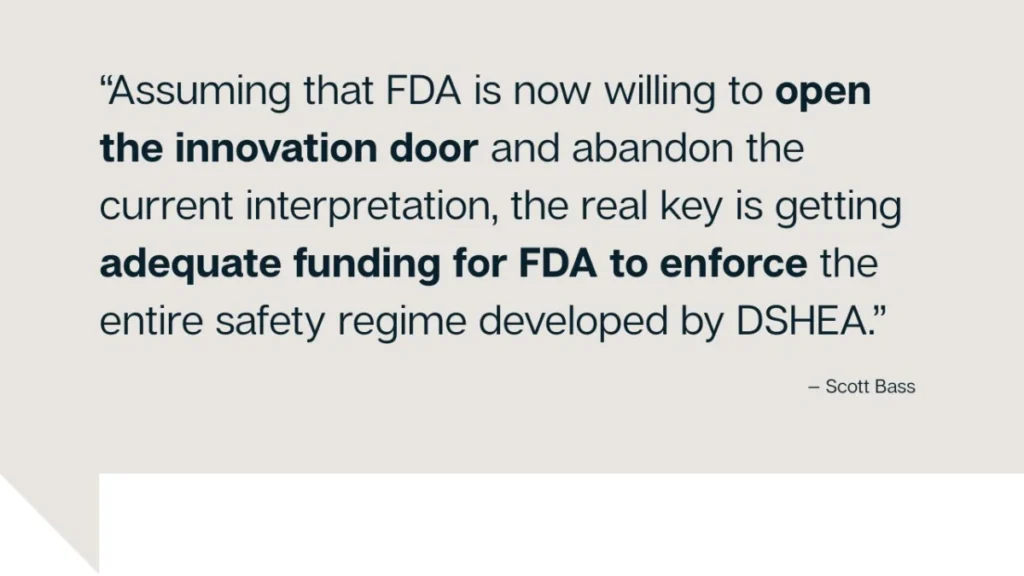
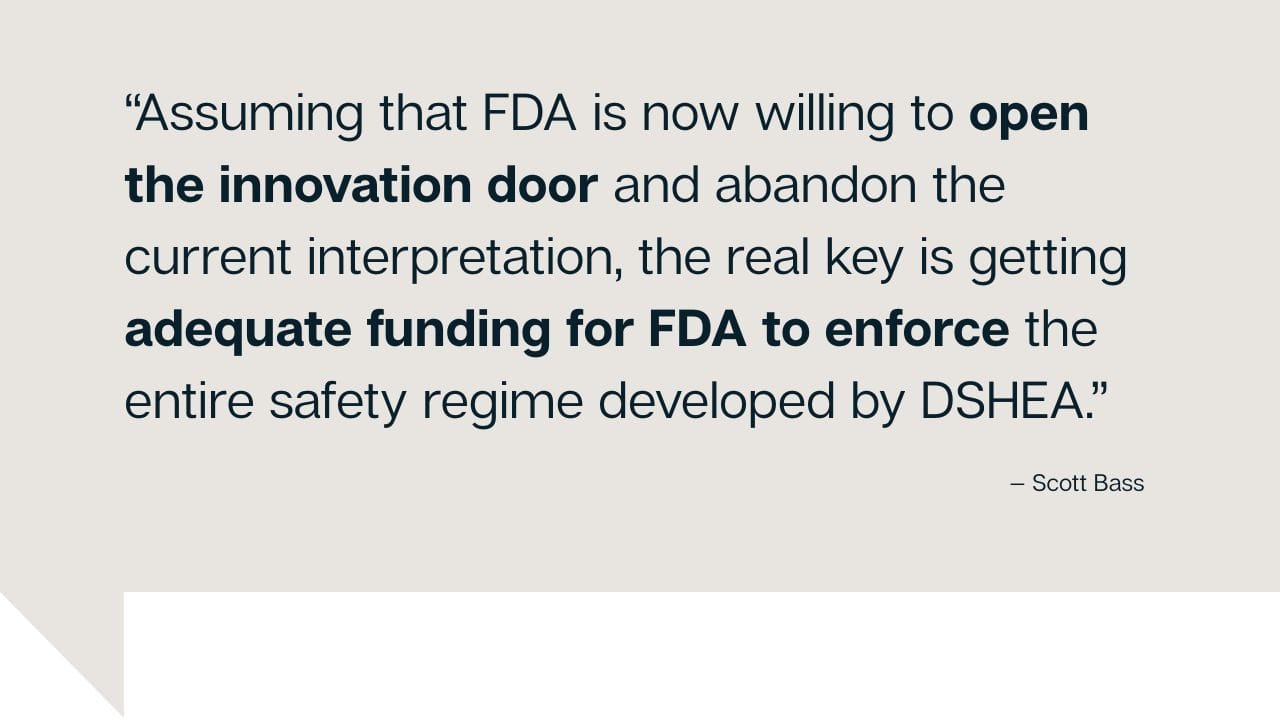
Legal experts with deep knowledge of the regulatory landscape have also contributed. Todd Harrison of Venable and Scott Bass, identified as a principal drafter of DSHEA, have provided expert analysis. Bass’s comment, " ‘Dietary substance’ means innovation," succinctly captures the industry’s core argument. He further emphasizes that for the FDA to "open the innovation door and abandon the current interpretation, the real key is getting adequate funding for FDA to enforce the entire safety regime developed by DSHEA." This highlights a crucial point: expanding the definition of what can be included in supplements necessitates robust mechanisms for ensuring safety and compliance.
The United States Pharmacopeia (USP), a non-profit organization that sets standards for the quality and purity of medicines and dietary supplements, has also commented. Their submission focuses less on advocating for a specific new definition and more on calling for heightened scrutiny of novel ingredients that lack a history of human dietary use. This perspective underscores the ongoing tension between fostering innovation and ensuring consumer safety.
Consumer advocacy groups, often critical of the supplement industry, have also made their voices heard. The Center for Science in the Public Interest (CSPI), a prominent watchdog organization, has urged caution. "Allowing novel chemicals and substances not found in our diet opens the door to a potentially enormous list of new supplement ingredients and will only make the dietary supplements market even more dangerous and fraught with fraud than it currently is," CSPI wrote. This sentiment reflects a persistent concern among public health advocates regarding the regulatory oversight of supplements.
Specific companies have also stepped forward to advocate for their interests. Nammex and M2 Ingredients, leaders in the mushroom ingredient sector, have sought to protect product integrity and ensure fair regulatory treatment for fungi, which are sometimes inaccurately categorized with botanicals. Novonesis, a biosolutions supplier specializing in enzymes and probiotics, has argued for a departure from food-use standards, stating, "while history of safe consumption is considered a relevant part of the safety evaluation, whether the substance has been isolated from (or has been marketed in) a conventional food should fundamentally have no bearing on whether they qualify as ‘dietary ingredients.’"
Pharmavite, a major player with brands like Nature Made, MegaFood, and Bonafide, has also submitted comments critical of the FDA’s current interpretation. They argue that the FDA’s interpretation, as outlined in the 2016 NDI Guidance, which limits "dietary substance" to "foods and food components that humans eat as part of their usual diet," unduly restricts the scope of dietary ingredients. Pharmavite advocates for a "science-based, safety-focused approach, rather than one tied to historical consumption or manufacturing novelty."
The Enduring Link to Food: A Potential Deciding Factor?
The widespread industry push to distance dietary supplements from traditional food sources is a notable theme emerging from the public comments. While innovation and an expanded playing field are certainly key objectives, the historical link between supplements and food has played a fundamental role in the industry’s development and consumer perception. The degree to which this connection remains relevant in the FDA’s final deliberations could significantly influence the future trajectory of the dietary supplement category.
The FDA’s decision following this period of public comment will have far-reaching consequences, shaping the landscape of innovation, consumer access, and regulatory oversight within the dietary supplement industry for years to come. The agency faces the complex task of balancing the industry’s desire for expansion and innovation with its mandate to protect public health and ensure the safety and integrity of the products consumers rely on. The nearly 1,000 comments submitted represent a robust dialogue, and the FDA’s response will be closely watched by all stakeholders.